Why Would God Tell You That?

Is that a question you’ve heard before? Or maybe it was implied by someone’s response to you sharing what’s been on your heart. You felt confident God was calling you in one direction, but those around you couldn’t understand it or thought you’re behavior was irrational. “Certainly God wouldn’t call you to leave what you know and go somewhere foreign.” Or “God wouldn’t call you to quit your job and start something new”. Or “God wouldn’t ask you to go into debt by going back to school”. Or [insert your situation here]. Seeds of doubt get planted, and you begin to wonder if you really heard God.

I think all of us have had at least one moment like that in our lives, and most likely more than one. It’s what we do in that moment that counts, and prayer is the best way to start. How many times in the Bible was God patient enough to encourage those who doubted what He asked or who felt inadequate to complete the task. Moses is the first person who comes to mind, and he helped to free the Israelites from slavery, gave them the Law from God and wrote the Pentateuch. There are numerous examples of God telling people to do things that we might call crazy, like Hosea being commanded to take a harlot as a wife to demonstrate Israel’s unfaithfulness to the Lord, or Noah building the ark, or Abraham leaving his country (especially at an older age) to wander in the wilderness where God led him. But one person stands out especially in this season of Christmas, and that person is Mary.

Many of us have grown up hearing the story of the nativity, and Mary being chosen by God to give birth to the Messiah. What is less taught is how all of this was counter-cultural in their day. According to scholars, Mary would have been a teenager, and Scripture tells us she was betrothed to Joseph. While in our culture, we would view this as an engagement but not an official marriage, in ancient Israel, they were viewed as husband and wife already. In the famously deemed Ten Commandments of the Law, the seventh commandment is “You shall not commit adultery” (Exodus 20:14). But there was much more detail to the Law than the Ten Commandments, especially regarding unfaithfulness. Leviticus 20 is just one chapter devoted to the consequences of the sins of sexual immorality. Usually the result was death. John 8 demonstrates that the practice of stoning an adulterous woman to death still occurred in the first century AD. This practice from the Law is written in Deuteronomy 22:23-24, “If there is a girl who is a virgin engaged to a man, and another man finds her in the city and lies with her, then you shall bring them both out to the gate of that city and you shall stone them to death; the girl because she did not cry out in the city, and the man, because he has violated his neighbor’s wife. Thus you shall purge the evil from among you.”

With this in mind, imagine Mary, a young virgin who is betrothed, winds up pregnant. A virgin getting pregnant would be seemingly impossible, so what would be the alternative thought? Adultery, most likely. Matthew’s account makes it clear that even though Mary and Joseph were betrothed, they had not consummated their marriage yet. Therefore, a pregnancy would’ve been viewed as unfaithfulness. Mary knew the Law, but when she was told by the angel Gabriel that she was chosen by God and that she would become pregnant through His power, she responds, “Behold, the bondslave of the Lord; may it be done to me according to your word” (Luke 1:38). How incredible is that! Knowing that this choice could result in death according to the Law, she trusts in the Lord. Even more, she praises the Lord for regarding a humble person as herself and exalts the Lord for His magnificence (Luke 1:46-55-The Magnificat).

Joseph’s response also demonstrates his exemplary character, and no doubt why God chose him (as well as being of the lineage of David). Matthew describes Joseph as a “righteous man” (Matt. 1:19) and says that “not wanting to disgrace her (Mary), planned to send her away secretly.” While some may find it harsh that Joseph would essentially divorce her, he was actually giving up his right to bring her before the court and have her stoned as the Law states should happen for an adulterous woman. Rather, he was willing to protect her and put the shame on himself. But thankfully, the Lord sent an angel to deter him from this decision and explained to him what happened. Just like Mary, Joseph didn’t question what was told him, but Matthew 1:24-25 says, “Joseph awoke from his sleep and did as the angel of the Lord commanded him, and took Mary as his wife, but kept her a virgin until she gave birth to a Son; and he called His name Jesus.”

If there was any time to doubt that you heard from God, the situation these two faced would be at the top of the list. Everyone knows that they haven’t officially consummated their marriage. Everyone knows that the Law says an adulteress would be stoned to death. But the Lord orchestrated everything perfectly. Since Mary was betrothed, the decision was up to Joseph, who God knew to be a righteous man who wouldn’t harm Mary. He knew Mary would fulfill the task because she was a faithful woman of God and considered God’s choice to be a blessing to her. The story of the birth of Christ is one of hope and amazing love, and it all began with faith that what God said was true and would be fulfilled.

God knew what the Law said—He wrote it! He knew what He asked of Mary and Joseph would not line up culturally. But God is above culture! God is above all things! God speaks to us if we’re willing to have ears to hear and understand. If you know that God has called you to do something, and you’ve gone before Him in prayer (this is important!), have the faith of Mary and Joseph who said, “May Your will be done, Lord.” Their faith resulted in the birth of our Savior who has redeemed us and saved us from our sin.

Even if you feel alone in your decision, the Lord will be there to guide you and provide for you along your journey. Let’s pray together:

Father, we thank you for the truth of Your Word, that it is a lamp to guide us when we falter or doubt. You’ve chosen many people before us to fulfill Your will, and we thank you that we can learn and be encouraged by their faithfulness. We have the blessing to see promises fulfilled that not many of them saw. Help us to hear your voice and drown out the world that seeks to discourage and destroy us. We desire to be a light instead, walking where you tell us to go even when we can’t see the end. Thank you for the gift of Jesus Christ, and the salvation and forgiveness You’ve given us so that we may lead others to Your kingdom. May we not fear the unknown but rejoice that You have chosen to regard the humble to exalt Your name. Give us Your strength and peace even when we feel alone, and remind us that You are always there. We pray this in Jesus’ name. Amen.

A Message to the Bride of Christ: Repent!

Wars abroad and cultural wars at home—evil thrives and preys on the innocent. The sickness permeates everything until we wonder if there’s anything good left. It’s in schools, homes, businesses, media of all kinds, nations, and yes, even in the church. “There is so much evil, how can You stand it, Lord?” I wrote on October 7th in my journal. But then another written thought proceeded, “You see it all that it makes Your love that much more profound and magnificent. Your grace is beyond words, and I’m humbled by Your goodness, such goodness that can’t exist in this sinful world.” While everything seems dark and grim, Solomon’s words ring true, “There is nothing new under the sun.”

Paul wrote in Romans 15:4, “For whatever was written in earlier times was written for our instruction, so that through perseverance and the encouragement of the Scriptures we might have hope.” Going back to those “earlier times” we read about the birth of creation, and later, the birth of the nation of Israel—a people set apart by God and for God. But if you’ve read any of the Old Testament, it doesn’t take long for their love of the Lord God to turn to lust of other idols and gods. They run with the world and their faithfulness runs with it; more explicitly, they play the harlot. According to the Law, adultery was punishable by death, and so was the fate of Israel. Everything seemed dark and grim (sound familiar?), and often times, God is described as violent and wrathful in the Old Testament. While the wrath of God is real, it’s not without proper cause. His beloved had repeatedly committed adultery against Him (human terms, of course, to help us understand the significance of Israel’s sin). If you’ve ever been in that situation, consider how you felt and still feel—angry, bitter, vengeful, wrathful, broken. The Lord doesn’t mince words when He describes what will become of His beloved. But as I reread through those passages of Scripture, such as in Hosea, the love of God pierces my heart. In addition to a husband role, the Lord God also describes Himself as a father to Israel, guiding and leading them even when they chose to follow other gods:

“When Israel was a youth I loved him,

And out of Egypt I called My son.

The more they called them,

The more they went from them;

They kept sacrificing to the Baals

And burning incense to idols.

Yet it is I who taught Ephraim to walk,

I took them in My arms;

But they did not know that I healed them.

I led them with cords of a man, with bonds of love,

And I became to them as one who lifts the yoke from their jaws;

And I bent down and fed them.” Hosea 11:1-4 (NASB)

While Hosea 11 reminisces on the earlier state of Israel, most of the book focuses on Israel’s choices and how they lead to its destruction:

“Woe to them, for they have strayed from Me!

Destruction is theirs, for they have rebelled against Me!

I would redeem them, but they speak lies against Me.

And they do not cry to Me from their heart

When they wail on their beds;

For the sake of grain and new wine they assemble themselves,

They turn away from Me.” Hosea 7:13-14

What stands out to me in this passage, and as I read Hosea as a whole, is that even though Israel has carried out such wickedness and unfaithfulness, the Lord says “I would redeem them.” If only they would turn, all the wrath and anger would turn to forgiveness and compassion, like in the story of the prodigal son (Luke 15).

To be clear, this post about Israel is nothing in relation to what’s happening in the Middle East. Rather, it’s to demonstrate God’s love in the midst of evil everywhere. To reiterate Paul’s words, what was written before is to help us now, so that we would have hope. Israel was set apart for God under the Old Covenant. But now we are under the New Covenant, ushered in by Christ’s sacrifice. The church is now the bride of Christ- God’s elect- that is set apart in this world for the Lord. Yet how often we act like the Israel of the Old Testament! How many idols do we worship? What does our faithfulness look like? Are we faithful at all? We are supposed to be armored up with the truth of God’s word, but we have to actually study and know it and live it for ourselves in order to wield it against the enemy and our flesh.  What distinguishes us from the world? Rather, we have let the world into the church for fear of being “(insert word here)phobic” or being deemed irrelevant when cultural relevancy is all the rage.

The Lord’s love is beyond our understanding, and I can confidently say that He is waiting for us, the church, to come back to Him. The problem is that many of us don’t even recognize that we’ve strayed. We fail to recognize our idols and that we follow a Sunday routine without growth or joy. We fail to question what is taught, and when we feel that tugging in our mind that says “That doesn’t seem right,” we ignore it thinking that the preacher must know what he’s talking about. STOP and LISTEN to the Holy Spirit! In truth, the Lord is angry with the church because it spews lies and appeases people’s emotions. Emotional hype is not spiritual growth—it just masquerades as growth until we realize how empty we are when things get difficult. We are accountable for what we know, and we are without excuse, just like Israel was. They had the Law written for them. They had prophets and priests to guide them. They had tangible miracles to save and provide for them. Yet, they abandoned the Lord. We have much more than they did since all the truth is at our fingertips. We have Christ as the ultimate sacrifice so that we aren’t required to bring sacrifices except to “present your bodies a living and holy sacrifice, acceptable to God, which is your spiritual service of worship” (Romans 12:1). Paul continues in Romans 12:2, “And do not be conformed to this world, but be transformed by the renewing of your mind, so that you may prove what the will of God is, that which is good and acceptable and perfect.”

One of the greatest lies I’ve given in to is that I don’t have time. I don’t have time to sit down and write. I don’t have time to study God’s word. I have to get this and that done. I know I’m not alone. In this age, we fill up our lives with so much that sometimes it seems we barely have time to breathe. But the excuse of “not even time” is a lie—we choose to create chaos in our lives. I think we even welcome the chaos because it prevents us from truly examining ourselves individually and as a body of believers. Our flesh savors this, and it is a daily fight to push through, take the blinders off, and let ourselves be still with the Lord with all our sin and pain exposed. But only when we do this can we be healed. For the sake of our nation, and really the world, we must go through the pain of recognizing our failure as the body of Christ. But thanks be to God, it doesn’t stop there! Our repentance leads to God’s magnificent forgiveness and love that is beyond human comprehension. When we are right with Him, we can stand as soldiers declaring truth and thwarting the enemy:

“Put on the full armor of God, so that you will be able to stand firm against the schemes of the devil. For our struggle is not against flesh and blood, but against the rulers, against the powers, against the world forces of this darkness, against the spiritual forces of wickedness in the heavenly places. Therefore, take up the full armor of God, so that you will be able to resist in the evil day, and having done everything, to stand firm.” Ephesians 6:11-13

Let us learn from the past and become a faithful, and spiritually strong bride of Christ. Evil is all around us, but let us stand firm as a light to the nations and demonstrate God’s truth and love.

©Lauren Demuth

Forever Yours

Darkness descends upon my soul

as fear and self-hatred entrap me.

The earth opens revealing a pit

with an insatiable appetite.

Defeated, I fall to where all seems lost,

to where light fades into hopelessness.


Tears, anguish, death.

Each attempt to escape sends me

deeper, deeper into sorrow,

transforming me into someone unrecognizable.

“Oh God, I can’t believe You love me!

How wretched I am–a failure!”


How can there be hope for me,

so undeserving,

so unlovable,

so unrighteous?

The darkness twists lies into truth–

easier to cling to than forgiveness.


“Fight, fight! Don’t let the enemy win!”

A faint cry breaks through the darkness, almost incomprehensible.

“I love you! You are Mine! Even broken, you are beautiful!”

Music to my soul, I hear my Father’s voice

leading me out,

shining His light so I could come home.


How can it be

that He loves me so?

How can it be

that I’m worth it?

How can it be

that with all my mistakes, He still blesses me?


Father, Your grace astounds me;

Your love saves me;

Your Spirit moves me;

Your joy envelops me;

Your faithfulness lifts me;

Your sacrifice will keep me

forever Yours!

~~~

It’s been almost a year since I wrote my last poem “Faith Over Fear.” Thinking about writing this post was difficult because I struggled to keep that mindset of having faith over fear; rather, for awhile, I let fear grow inside me to such a point that I became lost to who I was. As a Christian of 23 years, this did not seem right. I was ashamed of my behavior, my thoughts, my hopelessness. There really isn’t a catalyst moment for why this began, but I can say it seemed to start last summer. I had just finished a school year that I didn’t expect to end well, but it did. I was proud of being able to accomplish a teaching job that I felt was impossible and out of my league. When I wrote “Faith Over Fear,” I had finally given things over to God, and even though my job was not a piece of cake, I saw people and situations with God’s perspective more than my own. I even fought to keep my job and worked harder towards obtaining a teaching license. So why did that change? I don’t fully know. All I know is that fear and anxiety gripped me to the point of dangerous thinking. Everyone could see it, which made it worse. I have never been one to hide my emotions, but in this case, it wasn’t just my job at stake, it was my testimony. How can I say I follow God when I let fear and doubt cripple me so badly. Where was my faith? It was depleted. There’s no sugar-coating it. I felt I could not succeed at what I was doing; therefore, I was a failure. It didn’t matter God opened doors; I was unwilling to let things go and trust Him. I said “I can’t!” and I loathed my own poster I put in my classroom, which read “Don’t say you can’t until you discover that you can!” My conviction was staring at me in the face until I couldn’t take it–I quit. I quit, thinking the job was the problem. It wasn’t. The fear and anxiety continued, but now I was truly a failure. I gave up! I have never given up before! And I had to face my decision. I had to face myself and the reality of it all. “You’re stupid. You’re worthless. Look what you did to your family. How could you?” Thoughts, lies, over and over multiple times a day, every day. Self-hatred reigned in me. I can forgive anyone else but myself. It was torture to the point where my thoughts went dark–places I never, ever thought my mind would go.

Now some may be thinking, “Come on, Lauren, this was just a job. It’s OK to fail!” But not to me. Failure has never been an option although I know how ridiculous that sounds. I know it’s true we learn from failure, but it was the idea that I gave up. I know God would have given me the strength and knowledge to keep going. I just didn’t want to. I didn’t believe I could do it. Those awful thoughts were relentless. I didn’t trust myself alone. But those who love me didn’t give up on me even when I gave up on myself. They loved me when I felt unlovable. They encouraged me, prayed for me, held me. Little by little the light came back in. I started applying for jobs–and oh how my pride wanted to take over. What started as “I would never apply for that” became “Oh, please call me back!” I finally got a job, and although it’s nothing I would have ever planned for myself, it’s good for me for now as I continue to grow in the Lord. My hope is to be able to teach Bible one day when the timing is right–truly, when I’m in the right place with God to teach again. Just those little steps forward helped me to gain confidence. I enjoy interacting with people and actually being a light to those around me. As many know, music can be powerful, and I love to sing. While everything was going on, I lost my joy of singing as I felt like a hypocrite to sing praises to God when I wasn’t trusting Him. But I started listening to the 2019 Wow CD and also to Lauren Daigle’s CD “How Can It Be” (I still listen to this every morning on my way to work). The songs awoke something inside me and as I started to sing, I started to believe the words, and essentially the truth, once again. There is still so much for me to work on, but I am beyond grateful and blessed to still be here, and God’s grace has been more than sufficient. His love is so immense that even when we don’t love ourselves it’s still there, waiting for us to accept it.

Although this post isn’t easy to write, it’s during these times where we can decide to stay in the pit or be transformed and grow. I mistakenly thought that the pit was my new home, but thanks be to God that He called me out and placed my feet on the solid Rock once again! I encourage you to reach out to your brothers and sisters in Christ. Everyone is going through something; it doesn’t matter if it seems big or small. Lift each other up and help to bring Christ’s love and light back into their lives. You never know the impact one word or gesture could make.

~~~

Side note: I didn’t realize until after I wrote the poem how much it resembled Psalm 30, which is also a great read. Check it out!

©Lauren Heiligenthal

Faith Over Fear

I close my eyes

and visualize

paths leading to my demise,

where fear leads me to wander.


I stand frozen

knowing I’ve been chosen

for something greater than

drinking the enemy’s poison.


The choice is mine:

To follow the Divine

on the straight and narrow defined,

the path leading to glory,


Or to walk down easy street

where, with every step, the truth retreats

to the back of my mind and defeat

becomes my story.


Countless times the choice seems clear,

yet too often I cater to fear,

who takes the joy from what I hold dear,

leaving me empty and broken.


If I had faith the size of a mustard seed,

I could move mountains from land to sea

and fulfill God’s call inside of me

to become who I’m meant to be.


The Lord knows every thought

and sees my river of tears.

The Creator calls out to me,

reminding me that He has conquered fear:


“Break forth, child of God, daughter of the King.

Shine bright, let your righteousness bring

the truth to the nations,

a fragrant offering.


Sing with all your soul

and let yourself become whole

as you take My hand and stroll

down the road to everlasting.


No fear can conquer Me,

and my Spirit is inside of thee

with the power to crush the enemy

underneath your feet.


Take hold of your shield

with faith you can wield

against weapons of defeat

and let yourself be healed.


Stand firm, soldier of the living God!

My Word is a double-edged sword;

My mouth is a flaming fire,

consuming all the enemy’s horde.


Fear Me above all else.

Have faith that you are victorious in Me,

and there will be no reason to doubt

That you will become who I created you to be.”


Written February 24, 2019


©Lauren Heiligenthal

To See or Not to See?

I love reading the Book of John. When I was in school, it was kind of a dismissed gospel because it’s not like the other three; however, it is arguably my favorite. From the very beginning it focuses on Jesus’ divinity, His ministry, and His sacrifice. In John 1:17, John writes, “For the Law was given through Moses; grace and truth were realized through Jesus Christ.” How wonderful is that! One of the passages I love the most in John is in chapter 9 where Jesus heals the man who was born blind.

There was a belief that sicknesses, deformities, etc. were a sign of sin. Even Jesus’ disciples ask Him who sinned, the blind man or his parents? Jesus responds by saying that neither had sinned, but the man was born blind so that the works of God might be displayed in him (v. 3). This sets the stage for the rest of passage. The miracle itself is awe-inspiring and demonstrates God’s power, but it’s the interaction between the man and the Pharisees that illustrates the difference between knowledge and wisdom.

The Pharisees are the teachers of the Law. They are the experts who are to lead by spiritual example. Yet with this healed man before them, they cannot reach a consensus on who Jesus is. Many say that Jesus couldn’t be from God because He healed on the Sabbath (v. 16)—something they always like to bring up. When asked about Jesus’ identity, the healed man believes Him to be a prophet (v. 17). Well, the Jews don’t like that so they turn their attention to his parents to find out if their son really was blind. Out of fear of being turned away from the synagogue, his parents throw the attention back to their son—surely he can speak for himself. Repeatedly they ask the healed man how Jesus did it, but he is finished with their interrogation. Instead, he asks, “You do not want to become His disciples too, do you?” (v. 27). Of course not! Instead, they claim to be Moses’ disciples, not followers of this man whose origin remains a mystery to them. Even though they have all the knowledge of the Scriptures, they remain ignorant. On the other hand, the healed man—uneducated and a beggar—understands more of the Scriptures than these experts:

“‘Well here is an amazing thing, that you do not know where He is from, and yet He opened my eyes. We know that God does not hear sinners, but if anyone is God-fearing and does His will, He hears him. Since the beginning of time it has never been heard that anyone opened the eyes of a person born blind. If this man were not from God, He could do nothing.’” (vv. 30-33 NASB)

What a testimony of the greatness of God and the wisdom He gives to those who are willing to receive it! After the man is cast out from the synagogue, Jesus finds him and reveals Himself as the Son of Man. He then uses the healing of the blind man to teach an even greater spiritual message: “’For judgment I came into this world, so that those who do not see may see, and that those who see may become blind’” (v. 39). Of course the Pharisees say, “We are not blind too, are we?” And Jesus replies, “‘If you were blind, you would have no sin, but since you say, ‘We see,’ your sin remains’” (vv. 40-41).

The Pharisees had the truth at their fingertips. Of all the people, they should have known from the beginning who Jesus was. But they got caught up in the letter of the Law instead of its principles. They followed their own understanding and interpretations, and they enjoyed their lofty positions and relationships with the powerful. They neglected the wonderful blessing of truth they were given. They were spiritually blind and remained in sin.

In contrast, the man was a beggar who was born blind with no hope of change until he listened to a man who told him to simply “Go to Siloam and wash” (v. 7). One simple step of obedience changed his life and his testimony. Having heard the truth of the Scriptures, he knew that Jesus could only be from God. He then gained physical and spiritual sight and his sins were forgiven. Simple obedience, simple wisdom, simple truth.

Who are we? Are we like the Pharisees or the healed man? We have heard the truth of the gospel numerous times, yet do we have understanding? We can take theology courses, read a handful of Bible translations and paraphrases, go to church every week, but do we see? Are we aware of our spiritual condition? Do we follow the Lord in simple obedience?

Do not complicate the gospel message. Examine your heart. Talk to the Lord about it. Listen to what He says (for the Lord hears the prayers of God-fearing people who do His will- John 9:31). And do what He says.

May our eyes be opened to His truth.


©Lauren Heiligenthal

Testing the Spirits

I wanted to share a post written by Stacey Louiso, a wonderful Christian woman and author. This post is a challenge to the modern body of Christ, and I think it is quite thought-provoking and biblically sound. Too often the church follows popular leaders and teachings instead of digging deep and testing what’s been preached. Here’s a quote from Stacey’s post:

“Often, as I follow and interact with pastors, ministry leaders and the like on social media, I find myself wishing I weren’t so connected. Some of what fellow Believers proclaim makes me wonder which version/translation of the Bible they read! Why? Their theology, hermeneutics and exegesis are often very loose versions of what the very traditional translations of the Bible contain. Loose (modern) translations of the Holy Bible are part of the very problem described herein, not part of any solution. They often mislead people and lighten the truths of the word of God. Softening the message of the Gospel was never part of God’s plan for Jesus’ sacrifice on the cross, or his resurrection.”

Please check out the rest on her blog: http://www.writingdownlife.com/2017/02/05/a-body-called-to-christ-not-to-a-church-part-1/# . I also encourage you to read other posts she’s written.


Do Not Be Double-Minded

“But if any of you lacks wisdom, let him ask of God, who gives to all generously and without reproach, and it will be given to him. But he must ask in faith without any doubting, for the one who doubts is like the surf of the sea, driven and tossed by the wind. For that man ought not to expect that he will receive anything from the Lord, being a double-minded man, unstable in all his ways.” ~ James 1:5-8 (NASB)

The Word of God is an encourager, a teacher, a guide. It is also an admonisher for the body of believers. Sometimes we want to look past words like “judgment,” or in this case, “double-minded” because we think it’s talking about other people in the world, mainly unbelievers. But the Scriptures weren’t written for the world. They were written for the followers of God (e.g., 1 Cor. 10). Each letter written in the NT was for the church. Within those letters are topics that the church no longer wants to tackle because of our culture’s stance on political correctness. We tread lightly when it comes to homosexuality. We dismiss discussions of theistic evolution. We don’t even dare consider that Scripture talks about the father/husband being the head of the household. We reinterpret Scripture to accommodate the world’s understanding of morality. And we have convinced ourselves that these interpretations are true, or even worse, that we cannot know what truth is.

According to the Greek-English Lexicon of the New Testament: Based on Semantic Domains, to be double-minded (δίψυχος) is to be “uncertain of the truth of something.”[1] In the passage above, James is encouraging the scattered Jewish Christians to not doubt when asking the Lord for wisdom. He equates lack of faith with someone who is double-minded. The Dictionary of Bible Themes describes double-mindedness as being “Indicative of insincerity and hypocrisy. God requires wholeheartedness and sincerity from all people, both in their dealings with others and in their worship of him.”[2] James uses this term again in James 4:

“You adulteresses, do you not know that friendship with the world is hostility toward God? Therefore whoever wishes to be a friend of the world makes himself an enemy of God. Or do you think that the Scripture speaks to no purpose: ‘He jealously desires the Spirit which He has made to dwell in us’? But He gives a greater grace. Therefore it says, ‘God is opposed to the proud, but gives grace to the humble.’ Submit therefore to God. Resist the devil and he will flee from you. Draw near to God and He will draw near to you. Cleanse your hands, you sinners; and purify your hearts, you double-minded.” (vv. 4-8, emphasis added)

Even in the book of Revelation, John is asked to write messages to the seven churches, one of them being Laodicea. In Christ’s words to the church, He describes the believers as being lukewarm:

“‘I know your deeds, that you are neither cold nor hot; I wish that you were cold or hot.  So because you are lukewarm, and neither hot nor cold, I will spit you out of My mouth. Because you say, ‘I am rich, and have become wealthy, and have need of nothing,’ and you do not know that you are wretched and miserable and poor and blind and naked, I advise you to buy from Me gold refined by fire so that you may become rich, and white garments so that you may clothe yourself, and that the shame of your nakedness will not be revealed; and eye salve to anoint your eyes so that you may see. Those whom I love, I reprove and discipline; therefore be zealous and repent. Behold, I stand at the door and knock; if anyone hears My voice and opens the door, I will come in to him and will dine with him, and he with Me. He who overcomes, I will grant to him to sit down with Me on My throne, as I also overcame and sat down with My Father on His throne. He who has an ear, let him hear what the Spirit says to the churches.’”  (Revelation 3:15-22, emphasis added)

James and John (or rather Christ in the context) make it clear that there are two choices: to have faith in God and submit to Him or to doubt God and be friends with the world. It seems straightforward with no room for gray areas.

~~~

So why did Peter, Paul, John, and James write some (what we might think are) harsh words to the church? Were they being judgmental? In a way, yes. Why? Because the church is called to righteousness. Because the church needs discipline. Because we wear the name of Christ.

In 1 Corinthians 5, Paul calls out the Corinthian body of believers because they let sin continue among them. Someone had taken his father’s wife, which was something that Paul had not even heard of among the Gentiles, the non-believers. Paul says to the church, “You have become arrogant and have not mourned instead, so that the one who had done this deed would be removed from your midst” (v. 2). But how can Paul be so harsh? Aren’t we supposed to love and accept people even when they sin? Paul makes his point clear in vv. 9-13:

“I wrote you in my letter not to associate with immoral people; I did not at all mean with the immoral people of this world, or with the covetous and swindlers, or with idolaters, for then you would have to go out of the world. But actually, I wrote to you not to associate with any so-called brother if he is an immoral person, or covetous, or an idolater, or a reviler, or a drunkard, or a swindler—not even to eat with such a one. For what have I to do with judging outsiders? Do you not judge those who are within the church? But those who are outside, God judges. Remove the wicked man from among yourselves.” (emphasis added)

We are all guilty of sinning, but should we willfully continue to sin? The Corinthians knew what was going on, but they said or did nothing. They let it continue, which means that the one who was guilty of such an act was unrepentant. Hebrews 10:26-31 also addresses this issue to Jewish Christians:

“For if we go on sinning willfully after receiving the knowledge of the truth, there no longer remains a sacrifice for sins, but a terrifying expectation of judgment and the fury of a fire which will consume the adversaries. Anyone who has set aside the Law of Moses dies without mercy on the testimony of two or three witnesses. How much severer punishment do you think he will deserve who has trampled under foot the Son of God, and has regarded as unclean the blood of the covenant by which he was sanctified, and has insulted the Spirit of grace? For we know Him who said, ‘Vengeance is Mine, I will repay.’ And again, ‘The Lord will judge His people.’ It is a terrifying thing to fall into the hands of the living God.”

Some people argue that this passage is talking about people who haven’t really accepted Christ. However, to reiterate what I said in the beginning, the NT letters were written to believers. Hebrews is written to a Jewish Christian audience. In verses 19-25 the author (I believe to be Paul) addresses his audience with the inclusive pronoun “we” while talking about holding “fast the confession of our hope without wavering, for He who promised is faithful (v. 23).” He continues to use “we” in the beginning of v. 26 which indicates that he is talking about Christians. The author further clarifies the statement about sinning willfully by adding, “…after receiving the knowledge of the truth…” So we know that the author is talking about Christians who have knowledge of the truth, and yet willfully continue to sin. What is the outcome for such a person? A brief scolding? Give him/her a hug because all we should do is demonstrate acceptance? The text is clear that such a person has regarded the blood of Christ’s sacrifice to be unclean. He/she has spit in Christ’s face along with the gifts of salvation and grace. This person faces a great judgment (vv. 30-31).

We as Christians are held responsible for what we know. The Word of God has been preserved for us. Do we have faith that what it says is true? If we do not understand something, are we willing to ask God in faith for wisdom and knowledge of His truth? And when we ask, are we willing to see the truth even if it may go against our culture or current beliefs? Paul (when he was Saul) had to face the truth that his zeal for God was not acted out in the right way. He believed that persecuting Christians was right because he loved God. But when Jesus appeared to him, Paul found out he was really persecuting God. Peter doubted while walking on water. He denied Jesus three times. He even excluded Gentile Christians for a time having been influenced by other Jews, and he had to be rebuked by Paul. These men confessed their sins and turned away from them. They wrote to the church having experienced hardships themselves. They wrote as fathers/leaders who sought to help their spiritual children bear fruit for God’s kingdom. The path to righteousness takes faith and hard work as we war against our flesh daily. We will stumble at times. We will be tempted and even persecuted. But we have each other for encouragement and admonition. We cannot allow the church to become synonymous with the world no matter how much we might be hated. Instead of being unsure about truth like double-minded people, let us ask God in faith for wisdom and understanding. If we seek Him with all of our hearts, He will be faithful to lead us.


©Lauren Heiligenthal


Footnotes:

[1] Johannes P. Louw and Eugene Albert Nida, Greek-English Lexicon of the New Testament: Based on Semantic Domains (New York: United Bible Societies, 1996), 370.

[2] Martin H. Manser, Dictionary of Bible Themes: The Accessible and Comprehensive Tool for Topical Studies (London: Martin Manser, 2009).

Trust and Obey

“Trust and obey, for there’s no other way

To be happy in Jesus, but to trust and obey.”

(From the hymn “Trust and Obey,” written by John H. Sammis, 1887)


These are simple words, but the truth behind them is powerful. As Christians we have made the decision to follow God wherever He may lead. This requires our utmost obedience and trust in the Father who knows the perfect path for us—a path that leads to true joy which the world cannot begin to offer. But sometimes following this path means facing our fears.

~~~

Do you know where God is leading you, but you’re having a hard time trusting Him? Is the path one that scares you? Do you doubt your ability to fulfill the task? If this is you, you are certainly not alone.  Not only are there other brothers and sisters out there who feel the same way (including me), but there are some significant Bible figures who went through the same experience. Let’s take a look at one of them.

In Exodus 3, Moses has quite an unusual encounter with God as he approaches an inconsumable burning bush. The Lord entrusts Moses with the task of freeing his people from their oppression in Egypt, and He reassures him that He will work wonders to make it happen. Even though Moses knows the plan, he has some fears.

“Then Moses said, “What if they will not believe me or listen to what I say? For they may say, ‘The Lord has not appeared to you.’” (Ex. 4:1 NASB)

What if?” I am guilty of starting many excuses with these two little words. This phrase assumes the worst and reveals doubt–doubt in God and doubt in myself. In Moses’ situation, he is worried about what people think. Despite what God has shared with him and the right answers to give, Moses doubts. In truth, I can’t blame him. To walk into another nation and speak to the highest authority there who has continued to enslave his people is not an easy task. But God in His mercy provides a solution. He changes Moses’ ordinary staff into one that demonstrates the miraculous power of God and gives Moses the gift of performing miracles so that His people might see and believe (Ex. 4:2-9, 17).

Yet even with such amazing gifts of power, Moses has another problem. He doesn’t speak very well.

“’Please, Lord, I have never been eloquent, neither recently nor in time past, nor since You have spoken to Your servant; for I am slow of speech and slow of tongue.”’ (Ex. 4:10).

Even after the Lord reassures Moses that He will be his mouthpiece, Moses still wants the Lord to send the message by someone else. At this point the Lord becomes angry (v. 14). And why shouldn’t He be? He’s revealed Himself to Moses, chosen him for this task, told him what’s going to happen, assured him that his people will be set free, and gifted him with miracles. Yet how many times has the Lord worked in our lives and then when a new task comes along, we doubt? We are not so different from Moses. Moses wants to be a perfect messenger, one in whom his people can place their trust, but he feels inadequate. And in the world’s eyes, he is. However, throughout Scripture God repeatedly works through human weakness. In 2 Corinthians 12 God conveys to Paul that power is perfected through weakness. His grace is sufficient (2 Cor. 12:9). The only One we should boast in is the Lord, not ourselves. That’s what the Lord is telling Moses in Exodus 4: “Trust Me.” So Moses decides to take his family to Egypt and meet Aaron who will be his mouthpiece (still with God’s help). Together, they meet with the elders of Israel and share God’s words and miracles. The Lord has heard His people’s cries and is ready to act!

Even with a rocky start, Moses becomes the leader God created him to be. As we know, the rest of the story involves trials and many plagues demonstrating God’s power and glory. Yet Moses’ trust in God brings about a new age for Israel. They are finally free after four hundred years! This is just the beginning of what Moses will do on Israel’s behalf. The Law God gives to Israel through Moses becomes the foundation by which Israel is judged and remains as such until Christ’s death and resurrection.

~~~

I can’t imagine what would’ve happened had Moses turned away from God after “What if?” Perhaps God would’ve chosen someone else. It’s something we can hardly speculate. However, we can look at our own lives. Has God ever asked us to do something, and we didn’t do it? Conversely, have we followed God’s instructions and now can’t imagine what life would be like if we had disobeyed? In my own walk with God I can answer affirmatively to both of these questions.

Sometimes the opportunities that were once presented before us are no longer there. We can’t dwell on them, but what we can do is place our trust in God and ask Him for another chance. Our hearts must be willing and sincere to follow no matter what the task may be. Remember, the Lord works through our weaknesses so that He may be glorified. The Lord will not make Himself look like a fool.

There have been moments in my life when I had no doubt what God was asking me to do. I knew the task would be hard, but I made the choice to trust Him and take those steps. I couldn’t see the outcome, and at times I feared the worst, but God remained faithful. These choices have truly changed my life despite trials and hardships. I wouldn’t change them for anything. Yet even now I face another task, one that for some would be easy: teaching. Like Moses, I feel inadequate, but as we just studied in Scripture, that’s the best time for me to give it all up to God.

I recently heard on the radio that the thing that scares us the most is often what frees us. I think there is truth to that. The enemy would like nothing more for us to be enslaved to fear. He wants to use our weaknesses to destroy us and our faith in God. God wants to use our weaknesses to bring glory to His name. What will we choose today? Who do we want to become? What do we have to lose if we have God and each other (like Moses had Aaron) to lift us up?

Let’s trust and obey.


“But we never can prove the delights of His love

Until all on the altar we lay;

For the favor He shows, for the joy He bestows,

Are for them who will trust and obey.”

(From the hymn “Trust and Obey”, verse 4, written by John H. Sammis)


For more encouraging words about trusting and obeying God, please check out a wonderful post written by Karina from the blog Karina’s Thought: https://karinasussanto.wordpress.com/?s=trust+and+obey.


©Lauren Heiligenthal

The Joy of Sacrifice


“Adversity is unavoidable in life, but it does not necessitate defeat. The Word of God never promises Jesus followers a comfortable and secure life. It promises that, despite the inevitable storms of life, God is bigger than such storms. ‘In the world you will have tribulation. But take heart; I have overcome the world’ (John 16:33).”[1]

Adversity. Sacrifice. Tribulation. From the world’s perspective these words are devoid of hope. However, this is not the case for thousands of Christ followers around the world. They not only view trials as honorable sacrifices, but they embrace them with joy knowing that the Lord is on their side. Whether God leads them to escape or comforts them until the end, their joy is real and encourages others to ask themselves, “Who is this Christ?”

The Voice of the Martyrs recently released a book called I Am N: Inspiring Stories of Christians Facing Islamic Extremism. As I was reading story after story the other day, I knew I had to share and encourage you to read this book. With the way Western culture is right now, political correctness has become more important than truth. People are criticized or even persecuted for saying anything negative about Islam, and the media only reinforces such actions. I Am N cuts through all the facades and focuses on real people with real stories of salvation, grace, persecution, and sacrifice.

We are the body of Christ called to uplift our brothers and sisters around the world. The stories in this book provide insight into what has been escalating over the last decade in the Middle East and Africa. These are people who either grew up Muslim or grew up in a Muslim culture and were without hope. The love of God and His mercy drew them to their knees knowing that trials would be the result. Like the book of Acts, their stories illustrate how God is being glorified even in the midst of some of the most heinous situations. Disowned by their families, beaten, tortured, imprisoned, they have persevered, some even unto death. I am amazed by the strength and courage of these men, women, and children, which they attribute to the Lord. What is even more inspiring is their forgiveness. Forgiveness for those who imprisoned them. Forgiveness for those who tortured them. Forgiveness for those who beheaded children to punish the parents’ decision to follow Christ. They bless when they are cursed. They spread the gospel knowing the cost. As a result, even persecutors (like Paul) have come to know the love of God.

These beautiful Christ followers have accepted that their lives will be hard because that’s exactly what Jesus said it would be. They follow because Christ is their reward. Let us praise God for using them mightily in the darkest places of the world. May we be steadfast and ready to give up everything for our Savior and bring light to those without hope!

Chosen Sacrifice (Inspired by reading these stories)

In the midst of doubt

You have revived me.

In my moment of fear

You have given me peace.

You have shown me the beauty

Of the cost,

The result of wanting more

Of You—

Only You.

I can hear the joy of the persecuted,

Of those ready to meet You.

I stand in awe of their courage,

Their insatiable need to speak the name

Above all names, Jesus.

Hope is only found in Him.

True life is from Him alone.

“To live is Christ;

To die is gain”—

The slogan of the persecuted,

The embraced gift,

The chosen sacrifice.


I am N: Inspiring Stories of Christians Facing Islamic Extremism can be purchased at Amazon.com at: http://www.amazon.com/gp/product/B012Q8TJ1Y?keywords=I%20am%20N&qid=1457728857&ref_=sr_1_1&s=books&sr=1-1

Or at The Voice of the Martyrs website:

https://secure.persecution.com/giftslip/default.aspx?cmp=GS0316&source=WEBC0316E


©Lauren Heiligenthal

[1] The Voice of the Martyrs, I Am N: Inspiring Stories of Christians Facing Islamic Extremists (Colorado Springs, CO: David C. Cook, 2016), Kindle edition Location 1639.

End of January BOOK SALE!

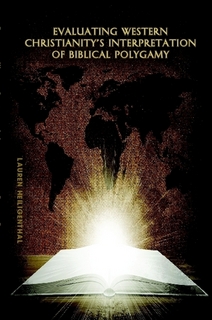
My book, Evaluating Western Christianity’s Interpretation of Biblical Polygamywill be on sale for .99 cents (kindle version) from January 25th-31st. If you have Kindle Unlimited, this book is always free to read!

Why should you consider buying it? The topic of polygamy has become more popular over the last few years, and it’s important to understand what the Bible says versus what the world says. There are different forms of polygamy, but there is only one form that the Bible illustrates and, I believe, is approved by God. This is a controversial subject that the church will no longer be able to push aside.

For more information about this book please visit my blog posts Finally Published! and The Story Behind the Book.

If you have any questions, comments, or simply want to have a discussion about this topic, please leave a comment below or send a message.

God bless!