Testing the Spirits

I wanted to share a post written by Stacey Louiso, a wonderful Christian woman and author. This post is a challenge to the modern body of Christ, and I think it is quite thought-provoking and biblically sound. Too often the church follows popular leaders and teachings instead of digging deep and testing what’s been preached. Here’s a quote from Stacey’s post:

“Often, as I follow and interact with pastors, ministry leaders and the like on social media, I find myself wishing I weren’t so connected. Some of what fellow Believers proclaim makes me wonder which version/translation of the Bible they read! Why? Their theology, hermeneutics and exegesis are often very loose versions of what the very traditional translations of the Bible contain. Loose (modern) translations of the Holy Bible are part of the very problem described herein, not part of any solution. They often mislead people and lighten the truths of the word of God. Softening the message of the Gospel was never part of God’s plan for Jesus’ sacrifice on the cross, or his resurrection.”

Please check out the rest on her blog: http://www.writingdownlife.com/2017/02/05/a-body-called-to-christ-not-to-a-church-part-1/# . I also encourage you to read other posts she’s written.


Do Not Be Double-Minded

“But if any of you lacks wisdom, let him ask of God, who gives to all generously and without reproach, and it will be given to him. But he must ask in faith without any doubting, for the one who doubts is like the surf of the sea, driven and tossed by the wind. For that man ought not to expect that he will receive anything from the Lord, being a double-minded man, unstable in all his ways.” ~ James 1:5-8 (NASB)

The Word of God is an encourager, a teacher, a guide. It is also an admonisher for the body of believers. Sometimes we want to look past words like “judgment,” or in this case, “double-minded” because we think it’s talking about other people in the world, mainly unbelievers. But the Scriptures weren’t written for the world. They were written for the followers of God (e.g., 1 Cor. 10). Each letter written in the NT was for the church. Within those letters are topics that the church no longer wants to tackle because of our culture’s stance on political correctness. We tread lightly when it comes to homosexuality. We dismiss discussions of theistic evolution. We don’t even dare consider that Scripture talks about the father/husband being the head of the household. We reinterpret Scripture to accommodate the world’s understanding of morality. And we have convinced ourselves that these interpretations are true, or even worse, that we cannot know what truth is.

According to the Greek-English Lexicon of the New Testament: Based on Semantic Domains, to be double-minded (δίψυχος) is to be “uncertain of the truth of something.”[1] In the passage above, James is encouraging the scattered Jewish Christians to not doubt when asking the Lord for wisdom. He equates lack of faith with someone who is double-minded. The Dictionary of Bible Themes describes double-mindedness as being “Indicative of insincerity and hypocrisy. God requires wholeheartedness and sincerity from all people, both in their dealings with others and in their worship of him.”[2] James uses this term again in James 4:

“You adulteresses, do you not know that friendship with the world is hostility toward God? Therefore whoever wishes to be a friend of the world makes himself an enemy of God. Or do you think that the Scripture speaks to no purpose: ‘He jealously desires the Spirit which He has made to dwell in us’? But He gives a greater grace. Therefore it says, ‘God is opposed to the proud, but gives grace to the humble.’ Submit therefore to God. Resist the devil and he will flee from you. Draw near to God and He will draw near to you. Cleanse your hands, you sinners; and purify your hearts, you double-minded.” (vv. 4-8, emphasis added)

Even in the book of Revelation, John is asked to write messages to the seven churches, one of them being Laodicea. In Christ’s words to the church, He describes the believers as being lukewarm:

“‘I know your deeds, that you are neither cold nor hot; I wish that you were cold or hot.  So because you are lukewarm, and neither hot nor cold, I will spit you out of My mouth. Because you say, ‘I am rich, and have become wealthy, and have need of nothing,’ and you do not know that you are wretched and miserable and poor and blind and naked, I advise you to buy from Me gold refined by fire so that you may become rich, and white garments so that you may clothe yourself, and that the shame of your nakedness will not be revealed; and eye salve to anoint your eyes so that you may see. Those whom I love, I reprove and discipline; therefore be zealous and repent. Behold, I stand at the door and knock; if anyone hears My voice and opens the door, I will come in to him and will dine with him, and he with Me. He who overcomes, I will grant to him to sit down with Me on My throne, as I also overcame and sat down with My Father on His throne. He who has an ear, let him hear what the Spirit says to the churches.’”  (Revelation 3:15-22, emphasis added)

James and John (or rather Christ in the context) make it clear that there are two choices: to have faith in God and submit to Him or to doubt God and be friends with the world. It seems straightforward with no room for gray areas.

~~~

So why did Peter, Paul, John, and James write some (what we might think are) harsh words to the church? Were they being judgmental? In a way, yes. Why? Because the church is called to righteousness. Because the church needs discipline. Because we wear the name of Christ.

In 1 Corinthians 5, Paul calls out the Corinthian body of believers because they let sin continue among them. Someone had taken his father’s wife, which was something that Paul had not even heard of among the Gentiles, the non-believers. Paul says to the church, “You have become arrogant and have not mourned instead, so that the one who had done this deed would be removed from your midst” (v. 2). But how can Paul be so harsh? Aren’t we supposed to love and accept people even when they sin? Paul makes his point clear in vv. 9-13:

“I wrote you in my letter not to associate with immoral people; I did not at all mean with the immoral people of this world, or with the covetous and swindlers, or with idolaters, for then you would have to go out of the world. But actually, I wrote to you not to associate with any so-called brother if he is an immoral person, or covetous, or an idolater, or a reviler, or a drunkard, or a swindler—not even to eat with such a one. For what have I to do with judging outsiders? Do you not judge those who are within the church? But those who are outside, God judges. Remove the wicked man from among yourselves.” (emphasis added)

We are all guilty of sinning, but should we willfully continue to sin? The Corinthians knew what was going on, but they said or did nothing. They let it continue, which means that the one who was guilty of such an act was unrepentant. Hebrews 10:26-31 also addresses this issue to Jewish Christians:

“For if we go on sinning willfully after receiving the knowledge of the truth, there no longer remains a sacrifice for sins, but a terrifying expectation of judgment and the fury of a fire which will consume the adversaries. Anyone who has set aside the Law of Moses dies without mercy on the testimony of two or three witnesses. How much severer punishment do you think he will deserve who has trampled under foot the Son of God, and has regarded as unclean the blood of the covenant by which he was sanctified, and has insulted the Spirit of grace? For we know Him who said, ‘Vengeance is Mine, I will repay.’ And again, ‘The Lord will judge His people.’ It is a terrifying thing to fall into the hands of the living God.”

Some people argue that this passage is talking about people who haven’t really accepted Christ. However, to reiterate what I said in the beginning, the NT letters were written to believers. Hebrews is written to a Jewish Christian audience. In verses 19-25 the author (I believe to be Paul) addresses his audience with the inclusive pronoun “we” while talking about holding “fast the confession of our hope without wavering, for He who promised is faithful (v. 23).” He continues to use “we” in the beginning of v. 26 which indicates that he is talking about Christians. The author further clarifies the statement about sinning willfully by adding, “…after receiving the knowledge of the truth…” So we know that the author is talking about Christians who have knowledge of the truth, and yet willfully continue to sin. What is the outcome for such a person? A brief scolding? Give him/her a hug because all we should do is demonstrate acceptance? The text is clear that such a person has regarded the blood of Christ’s sacrifice to be unclean. He/she has spit in Christ’s face along with the gifts of salvation and grace. This person faces a great judgment (vv. 30-31).

We as Christians are held responsible for what we know. The Word of God has been preserved for us. Do we have faith that what it says is true? If we do not understand something, are we willing to ask God in faith for wisdom and knowledge of His truth? And when we ask, are we willing to see the truth even if it may go against our culture or current beliefs? Paul (when he was Saul) had to face the truth that his zeal for God was not acted out in the right way. He believed that persecuting Christians was right because he loved God. But when Jesus appeared to him, Paul found out he was really persecuting God. Peter doubted while walking on water. He denied Jesus three times. He even excluded Gentile Christians for a time having been influenced by other Jews, and he had to be rebuked by Paul. These men confessed their sins and turned away from them. They wrote to the church having experienced hardships themselves. They wrote as fathers/leaders who sought to help their spiritual children bear fruit for God’s kingdom. The path to righteousness takes faith and hard work as we war against our flesh daily. We will stumble at times. We will be tempted and even persecuted. But we have each other for encouragement and admonition. We cannot allow the church to become synonymous with the world no matter how much we might be hated. Instead of being unsure about truth like double-minded people, let us ask God in faith for wisdom and understanding. If we seek Him with all of our hearts, He will be faithful to lead us.


©Lauren Heiligenthal


Footnotes:

[1] Johannes P. Louw and Eugene Albert Nida, Greek-English Lexicon of the New Testament: Based on Semantic Domains (New York: United Bible Societies, 1996), 370.

[2] Martin H. Manser, Dictionary of Bible Themes: The Accessible and Comprehensive Tool for Topical Studies (London: Martin Manser, 2009).

Trust and Obey

“Trust and obey, for there’s no other way

To be happy in Jesus, but to trust and obey.”

(From the hymn “Trust and Obey,” written by John H. Sammis, 1887)


These are simple words, but the truth behind them is powerful. As Christians we have made the decision to follow God wherever He may lead. This requires our utmost obedience and trust in the Father who knows the perfect path for us—a path that leads to true joy which the world cannot begin to offer. But sometimes following this path means facing our fears.

~~~

Do you know where God is leading you, but you’re having a hard time trusting Him? Is the path one that scares you? Do you doubt your ability to fulfill the task? If this is you, you are certainly not alone.  Not only are there other brothers and sisters out there who feel the same way (including me), but there are some significant Bible figures who went through the same experience. Let’s take a look at one of them.

In Exodus 3, Moses has quite an unusual encounter with God as he approaches an inconsumable burning bush. The Lord entrusts Moses with the task of freeing his people from their oppression in Egypt, and He reassures him that He will work wonders to make it happen. Even though Moses knows the plan, he has some fears.

“Then Moses said, “What if they will not believe me or listen to what I say? For they may say, ‘The Lord has not appeared to you.’” (Ex. 4:1 NASB)

What if?” I am guilty of starting many excuses with these two little words. This phrase assumes the worst and reveals doubt–doubt in God and doubt in myself. In Moses’ situation, he is worried about what people think. Despite what God has shared with him and the right answers to give, Moses doubts. In truth, I can’t blame him. To walk into another nation and speak to the highest authority there who has continued to enslave his people is not an easy task. But God in His mercy provides a solution. He changes Moses’ ordinary staff into one that demonstrates the miraculous power of God and gives Moses the gift of performing miracles so that His people might see and believe (Ex. 4:2-9, 17).

Yet even with such amazing gifts of power, Moses has another problem. He doesn’t speak very well.

“’Please, Lord, I have never been eloquent, neither recently nor in time past, nor since You have spoken to Your servant; for I am slow of speech and slow of tongue.”’ (Ex. 4:10).

Even after the Lord reassures Moses that He will be his mouthpiece, Moses still wants the Lord to send the message by someone else. At this point the Lord becomes angry (v. 14). And why shouldn’t He be? He’s revealed Himself to Moses, chosen him for this task, told him what’s going to happen, assured him that his people will be set free, and gifted him with miracles. Yet how many times has the Lord worked in our lives and then when a new task comes along, we doubt? We are not so different from Moses. Moses wants to be a perfect messenger, one in whom his people can place their trust, but he feels inadequate. And in the world’s eyes, he is. However, throughout Scripture God repeatedly works through human weakness. In 2 Corinthians 12 God conveys to Paul that power is perfected through weakness. His grace is sufficient (2 Cor. 12:9). The only One we should boast in is the Lord, not ourselves. That’s what the Lord is telling Moses in Exodus 4: “Trust Me.” So Moses decides to take his family to Egypt and meet Aaron who will be his mouthpiece (still with God’s help). Together, they meet with the elders of Israel and share God’s words and miracles. The Lord has heard His people’s cries and is ready to act!

Even with a rocky start, Moses becomes the leader God created him to be. As we know, the rest of the story involves trials and many plagues demonstrating God’s power and glory. Yet Moses’ trust in God brings about a new age for Israel. They are finally free after four hundred years! This is just the beginning of what Moses will do on Israel’s behalf. The Law God gives to Israel through Moses becomes the foundation by which Israel is judged and remains as such until Christ’s death and resurrection.

~~~

I can’t imagine what would’ve happened had Moses turned away from God after “What if?” Perhaps God would’ve chosen someone else. It’s something we can hardly speculate. However, we can look at our own lives. Has God ever asked us to do something, and we didn’t do it? Conversely, have we followed God’s instructions and now can’t imagine what life would be like if we had disobeyed? In my own walk with God I can answer affirmatively to both of these questions.

Sometimes the opportunities that were once presented before us are no longer there. We can’t dwell on them, but what we can do is place our trust in God and ask Him for another chance. Our hearts must be willing and sincere to follow no matter what the task may be. Remember, the Lord works through our weaknesses so that He may be glorified. The Lord will not make Himself look like a fool.

There have been moments in my life when I had no doubt what God was asking me to do. I knew the task would be hard, but I made the choice to trust Him and take those steps. I couldn’t see the outcome, and at times I feared the worst, but God remained faithful. These choices have truly changed my life despite trials and hardships. I wouldn’t change them for anything. Yet even now I face another task, one that for some would be easy: teaching. Like Moses, I feel inadequate, but as we just studied in Scripture, that’s the best time for me to give it all up to God.

I recently heard on the radio that the thing that scares us the most is often what frees us. I think there is truth to that. The enemy would like nothing more for us to be enslaved to fear. He wants to use our weaknesses to destroy us and our faith in God. God wants to use our weaknesses to bring glory to His name. What will we choose today? Who do we want to become? What do we have to lose if we have God and each other (like Moses had Aaron) to lift us up?

Let’s trust and obey.


“But we never can prove the delights of His love

Until all on the altar we lay;

For the favor He shows, for the joy He bestows,

Are for them who will trust and obey.”

(From the hymn “Trust and Obey”, verse 4, written by John H. Sammis)


For more encouraging words about trusting and obeying God, please check out a wonderful post written by Karina from the blog Karina’s Thought: https://karinasussanto.wordpress.com/?s=trust+and+obey.


©Lauren Heiligenthal

The Joy of Sacrifice


“Adversity is unavoidable in life, but it does not necessitate defeat. The Word of God never promises Jesus followers a comfortable and secure life. It promises that, despite the inevitable storms of life, God is bigger than such storms. ‘In the world you will have tribulation. But take heart; I have overcome the world’ (John 16:33).”[1]

Adversity. Sacrifice. Tribulation. From the world’s perspective these words are devoid of hope. However, this is not the case for thousands of Christ followers around the world. They not only view trials as honorable sacrifices, but they embrace them with joy knowing that the Lord is on their side. Whether God leads them to escape or comforts them until the end, their joy is real and encourages others to ask themselves, “Who is this Christ?”

The Voice of the Martyrs recently released a book called I Am N: Inspiring Stories of Christians Facing Islamic Extremism. As I was reading story after story the other day, I knew I had to share and encourage you to read this book. With the way Western culture is right now, political correctness has become more important than truth. People are criticized or even persecuted for saying anything negative about Islam, and the media only reinforces such actions. I Am N cuts through all the facades and focuses on real people with real stories of salvation, grace, persecution, and sacrifice.

We are the body of Christ called to uplift our brothers and sisters around the world. The stories in this book provide insight into what has been escalating over the last decade in the Middle East and Africa. These are people who either grew up Muslim or grew up in a Muslim culture and were without hope. The love of God and His mercy drew them to their knees knowing that trials would be the result. Like the book of Acts, their stories illustrate how God is being glorified even in the midst of some of the most heinous situations. Disowned by their families, beaten, tortured, imprisoned, they have persevered, some even unto death. I am amazed by the strength and courage of these men, women, and children, which they attribute to the Lord. What is even more inspiring is their forgiveness. Forgiveness for those who imprisoned them. Forgiveness for those who tortured them. Forgiveness for those who beheaded children to punish the parents’ decision to follow Christ. They bless when they are cursed. They spread the gospel knowing the cost. As a result, even persecutors (like Paul) have come to know the love of God.

These beautiful Christ followers have accepted that their lives will be hard because that’s exactly what Jesus said it would be. They follow because Christ is their reward. Let us praise God for using them mightily in the darkest places of the world. May we be steadfast and ready to give up everything for our Savior and bring light to those without hope!

Chosen Sacrifice (Inspired by reading these stories)

In the midst of doubt

You have revived me.

In my moment of fear

You have given me peace.

You have shown me the beauty

Of the cost,

The result of wanting more

Of You—

Only You.

I can hear the joy of the persecuted,

Of those ready to meet You.

I stand in awe of their courage,

Their insatiable need to speak the name

Above all names, Jesus.

Hope is only found in Him.

True life is from Him alone.

“To live is Christ;

To die is gain”—

The slogan of the persecuted,

The embraced gift,

The chosen sacrifice.


I am N: Inspiring Stories of Christians Facing Islamic Extremism can be purchased at Amazon.com at: http://www.amazon.com/gp/product/B012Q8TJ1Y?keywords=I%20am%20N&qid=1457728857&ref_=sr_1_1&s=books&sr=1-1

Or at The Voice of the Martyrs website:

https://secure.persecution.com/giftslip/default.aspx?cmp=GS0316&source=WEBC0316E


©Lauren Heiligenthal

[1] The Voice of the Martyrs, I Am N: Inspiring Stories of Christians Facing Islamic Extremists (Colorado Springs, CO: David C. Cook, 2016), Kindle edition Location 1639.

End of January BOOK SALE!

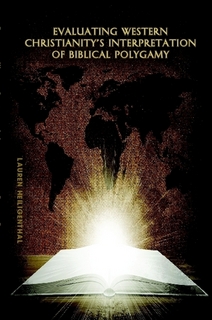
My book, Evaluating Western Christianity’s Interpretation of Biblical Polygamywill be on sale for .99 cents (kindle version) from January 25th-31st. If you have Kindle Unlimited, this book is always free to read!

Why should you consider buying it? The topic of polygamy has become more popular over the last few years, and it’s important to understand what the Bible says versus what the world says. There are different forms of polygamy, but there is only one form that the Bible illustrates and, I believe, is approved by God. This is a controversial subject that the church will no longer be able to push aside.

For more information about this book please visit my blog posts Finally Published! and The Story Behind the Book.

If you have any questions, comments, or simply want to have a discussion about this topic, please leave a comment below or send a message.

God bless!

The Faith of a Shepherd

Have you ever read a Bible story that gave you the chills? Have you ever been moved beyond words? I feel this way every time I read David’s response to Goliath’s defiance (1 Sam. 17). A sense of awe washes over me. Our God is the Almighty God, and David had such faith and reverence for Him that he was willing to take a stand without question. Let’s read what he says:

“David asked the men standing near him, ‘What will be done for the man who kills this Philistine and removes this disgrace from Israel? Who is this uncircumcised Philistine that he should defy the armies of the living God?'” (v. 26; emphasis added)

“David said to Saul, ‘Let no one lose heart on account of this Philistine; your servant will go and fight him.’ Saul replied, ‘You are not able to go out against this Philistine and fight him; you are only a young man, and he has been a warrior from his youth. But David said to Saul, ‘Your servant has been keeping his father’s sheep. When a lion or a bear came and carried off a sheep from the flock, I went after it, struck it and rescued the sheep from its mouth. When it turned on me, I seized it by its hair, struck it and killed it. Your servant has killed both the lion and the bear; this uncircumcised Philistine will be like one of them, because he has defied the armies of the living God. The Lord who rescued me from the paw of the lion and the paw of the bear will rescue me from the hand of this Philistine.’ Saul said to David, ‘Go, and the Lord be with you.'” (vv. 32-37)

Here’s the part that really moves me:

“David said to the Philistine, ‘You come against me with sword and spear and javelin, but I come against you in the name of the Lord Almighty, the God of the armies of Israel, whom you have defied. This day the Lord will deliver you into my hands, and I’ll strike you down and cut off your head. This very day I will give the carcasses of the Philistine army to the birds and the wild animals, and the whole world will know that there is a God in Israel. All those gathered here will know that it is not by sword or spear that the Lord saves; for the battle is the Lord’s, and he will give all of you into our hands.'” (vv. 45-47)

David had no doubt in his mind that God would have the victory. He had no doubt that the Lord God is the true God. He had no doubt that slaying this enemy was necessary because Goliath and the rest of the Philistines were defying God by coming against Israel.

Do we have such faith today? Are we a church that recognizes the holiness of God? The world defies Him. There are enemies coming in from every direction. But how many Davids are there? In 1 Sam. 17 the Israelite army was terrified. For forty days, not one soldier took a step forward. It took a bold shepherd to make a stand. But it only takes one to make a change.

Will we stand for truth and righteousness or shake in fear when the enemy seeks to terrorize us?

All we need is the faith of a shepherd.


©Lauren Heiligenthal

The Path

See, I have set before you today life and prosperity, and death and adversity; in that I command you today to love the Lord your God, to walk in His ways and to keep His commandments and His statutes and His judgments, that you may live and multiply, and that the Lord your God may bless you in the land where you are entering to possess it. But if your heart turns away and you will not obey, but are drawn away and worship other gods and serve them, I declare to you today that you shall surely perish.” ~ Deuteronomy 30:15-18 (NASB) (emphasis added)

Enter through the narrow gate; for the gate is wide and the way is broad that leads to destruction, and there are many who enter through it. For the gate is small and the way is narrow that leads to life, and there are few who find it.” ~ Matthew 7:13-14

Therefore I, the prisoner of the Lord, implore you to walk in a manner worthy of the calling with which you have been called, with all humility and gentleness, with patience, showing tolerance for one another in love, being diligent to preserve the unity of the Spirit in the bond of peace. There is one body and one Spirit, just as also you were called in one hope of your calling; one Lord, one faith, one baptism, one God and Father of all who is over all and through all and in all.” ~ Ephesians 4:1-6

Only conduct yourselves in a manner worthy of the gospel of Christ, so that whether I come and see you or remain absent, I will hear of you that you are standing firm in one spirit, with one mind striving together for the faith of the gospel; in no way alarmed by your opponents—which is a sign of destruction for them, but of salvation for you, and that too, from God.” ~ Philippians 1:27-28

Brethren, I do not regard myself as having laid hold of it yet; but one thing I do: forgetting what lies behind and reaching forward to what lies ahead,  I press on toward the goal for the prize of the upward call of God in Christ Jesus.” ~ Philippians 3:13-14

~~~

There are a number of paths we think about on a daily basis. What do I need to get done for today? Is my family provided for? How can I climb the career ladder? How much money should we save? How much weight do I want to lose?

Goals are not bad in and of themselves, but do they add to our ultimate goal of following Christ or do they become a hindrance? It is much easier to let worry and pain guide us instead of faith. Faith requires that we have hope in what we cannot see, which can be difficult. But that is why we have His Word, a testament to His faithfulness, a guide to life instead of death.

The message of the Scriptures is a simple one: Obey God. Walk in His ways. Conduct ourselves in a way that pleases God and represents Christ in world which has no hope in itself. God is our hope. Christ is our salvation. This is the only path, the narrow one, leading to eternal life. This is our path.


©Lauren Heiligenthal


Battle Ready

Today marks the 14th anniversary of the 9/11 attacks. It’s hard to believe that it’s been so long. What I remember about that day was sitting in my 7th grade science class and hearing about it over the intercom. Later that day we watched the news on a TV wheeled into another class (at least I think this is what happened since I have no journal entry from this time). After school, I went down to the lobby and grabbed a newspaper which displayed the Twin Towers in smoke. Once my family and I returned home, we watched more of what happened on the news.

It was all so shocking. “This happened here, in America?” Such a thought was not intended to be arrogant but just sheer disbelief since I had never witnessed anything like this. Then the nation found out that such acts were intentional. Terrorism. A word that the government no longer desires to mention, but it’s still here and around the world. And it’s growing.

It can be overwhelming to read about all that’s going on in the world. It’s beyond disturbing what humans will do to other humans. So much innocence has been destroyed. Will all of this end? I daresay, no. There may be lulls of peace, but there will be no end until Christ’s return because we live in a fallen world. God does not cause evil things to happen; rather, sin does. We are not born into goodness, but into sin:

“Therefore, just as through one man sin entered into the world, and death through sin, and so death spread to all men, because all sinned— for until the Law sin was in the world, but sin is not imputed when there is no law. Nevertheless death reigned from Adam until Moses, even over those who had not sinned in the likeness of the offense of Adam, who is a type of Him who was to come.~ Romans 5:12-14 (NASB)

Paul continues his discussion by talking about God’s grace, but the key point in the verses above is that sin came into the world through Adam. We are then born inherently evil, not inherently good. We all have to make a conscious effort to act righteously. We can act sinfully without trying. This is the war the enemy wages with us. Our flesh against our spirit. Will we continue to walk with God, or will we be deserters by giving in to the world, and essentially, to the enemy?

I have very little military knowledge, but I know that soldiers train for battle. To be sent out too soon would be a mistake that could cost lives. Military leaders also don’t send their soldiers out into the battlefield without a plan of attack. The only way to make such a plan is to study the enemy, to know how he acts and thinks. But at the same time, the enemy is doing the same thing.

Our enemy is quite clever. He is not to be underestimated especially since he has been with God, and he has also departed from God. We are to constantly be in spiritual training so that we know the truth we hold onto and not fall into temptation. While we train and do our best to act out the knowledge we have, the enemy looks to exploits our weaknesses. And we all have them. But instead of being overcome by the enemy, the Lord has given us a way to be victorious in our weaknesses:

”And He has said to me, ‘My grace is sufficient for you, for power is perfected in weakness.’ Most gladly, therefore, I will rather boast about my weaknesses, so that the power of Christ may dwell in me. Therefore I am well content with weaknesses, with insults, with distresses, with persecutions, with difficulties, for Christ’s sake; for when I am weak, then I am strong.” ~ 2 Corinthians 12:9-10 (NASB)

We can be overcomers in our weaknesses! We cannot work through weakness on our own; rather, we must rely on Jesus. When we can do nothing on our own accord, it is God who is magnified, not us. And when God is magnified, the enemy does not stand a chance. For the enemy’s weakness is arrogance. When we put our complete trust in God and place Him first in our lives, there is nothing for the enemy to exploit. Also, when we encourage one another and build each other up, the enemy is faced with the body of Christ and not just one member. He is thwarted easily when we work as a unit.

He also will not succeed if we know truth. Part of the training process is testing everything we have been taught against the Word of God. If something does not add up, it must be examined further. It is important to distinguish between man’s teaching and God’s teaching because the two are not always the same. In a time when political correctness tries to keep us from challenging anything, this is exactly what we must do. Challenge everything! If we don’t, we can easily fall into the enemy’s snare. This is especially important for leaders in the church because if you send soldiers into battle unprepared and ill-informed, there will be casualties. I’m not talking about a shortage in church attendance, but a shortage in the kingdom of God.

We are in a constant battle, and the world keeps pressing in. Are we prepared? Do we have a solid foundation? Are we ready to have our faith tested with fire?

“Blessed be the God and Father of our Lord Jesus Christ, who according to His great mercy has caused us to be born again to a living hope through the resurrection of Jesus Christ from the dead, to obtain an inheritance which is imperishable and undefiled and will not fade away, reserved in heaven for you, who are protected by the power of God through faith for a salvation ready to be revealed in the last time. In this you greatly rejoice, even though now for a little while, if necessary, you have been distressed by various trials, so that the proof of your faith, being more precious than gold which is perishable, even though tested by fire, may be found to result in praise and glory and honor at the revelation of Jesus Christ; and though you have not seen Him, you love Him, and though you do not see Him now, but believe in Him, you greatly rejoice with joy inexpressible and full of glory, obtaining as the outcome of your faith the salvation of your souls.” ~ 1 Peter 1:3-9 (NASB)

What’s wonderful about having Christ as our Savior is knowing that He has already won this war. If we continue to hold onto this hope of our salvation, we will have no issue thwarting the enemy because our eyes will constantly be on Christ. Is it hard at times? Absolutely! But that’s why we are the body of Christ. When one member starts to fall, the others are there to pick him or her up. The overall victory has already been won, but the smaller victories leading to the end are up to us (with God’s help, of course). Whom will we follow? How will we act? Will we listen to God’s voice? Will we obey His will? Will we be instruments for His glory so that more people may come to Christ?

Soldiers, put on your armor and let’s go!


© Lauren Heiligenthal

Pressing On

“[Sanballat] spoke in the presence of his brothers and the wealthy men of Samaria and said, ‘What are these feeble Jews doing? Are they going to restore [the Jerusalem wall] for themselves? Can they offer sacrifices? Can they finish in a day? Can they revive the stones from the dusty rubble even the burned ones?’ Now Tobiah the Ammonite was near him and he said, ‘Even what they are building – if a fox should jump on it, he would break their stone wall down!’” ~ Nehemiah 4:2-3 (NASB) (Words in brackets added for context)

The exiled Jews have returned to a desolate Jerusalem, a devastating and seemingly hopeless situation. When Nehemiah finds out about it, he seeks the Lord and beseeches King Artaxerxes to let him go back to Jerusalem to help his people rebuild the wall. As soon as Nehemiah arrives, he inspects the city, telling no one of God’s plans. When he reveals what God has instructed them to do, the people get to work. What appeared hopeless at first now seems possible. One step at a time, the wall will be made new again.

But not everyone is pleased. The foreign officials do not support this plan as reflected in their words above. They insult the Jews by calling them feeble. They criticize their ability to build something substantial. They plant seeds of doubt. Sound familiar?

How many times has God directed us to do something but others criticized it? “Did God really tell you that?” “Why would you go there?” “God wouldn’t call someone to do that.” “How will you support your family?” Fill in seeds of doubt here.

In the book of Nehemiah, the Jews have the opportunity to reclaim their land and turn back to the God whom they rebelled against numerous times. Now they are being tested again. Will they trust God to get them through, or will they listen to spiteful men? Nehemiah’s prayer is quite severe towards his enemies, “Hear, O our God, how we are despised! Return their reproach on their own heads and give them up for plunder in a land of captivity. Do not forgive their iniquity and let not their sin be blotted out before You, for they have demoralized the builders” (4:4-5). And they continue to build.

When the Jews’ enemies realize that their criticism isn’t stopping the construction, they devise plans to destroy them. But Nehemiah tells his people, “Do not be afraid of them; remember the Lord who is great and awesome, and fight for your brothers, your sons, your daughters, your wives and your houses” (v. 14). There are two important points here. First, the Jews should not fear men but God alone. Second, they should be prepared for the enemy to attack. If they are prepared they will not be caught off guard, and they will save their families and homes.

We can also learn from this situation. Whenever God calls us to do something, the enemy will do everything in his power to crush it before it even starts, just like Sanballat and Tobiah tried to do. If the work is crushed before any spiritual fruit is produced, the enemy has a lot less work to do. If we decide to press on and trust God, the enemy will continue to push forward as well. Therefore, we must be prepared and not give into fear (I’m preaching to myself as I write this). If God has called us, the task is possible through Him.

The Jerusalem wall could not have been built in a day as Sanballat sarcastically remarked, but the Jews made progress when every person performed his or her designated tasks each day. It took all of them. It took diligence. It took faith. It took constant attacks from the enemy. But they prevailed. “So the wall was completed on the twenty-fifth of the month Elul, in fifty-two days. When all our enemies heard of it, and all the nations surrounding us saw it, they lost their confidence; for they recognized that this work had been accomplished with the help of our God” (6:15-16).

What a great testimony! Even their enemies knew that God made all of this possible. How much more should we understand the same truth?

We are blessed already because God has confidence in us to carry out His tasks. May we have the same confidence in ourselves because He lives in us. We will always be tested in our faith, but we should respond like Nehemiah who brought everything to God first.

May we trust Him, prepare ourselves for battle, and keep pressing on toward the goal.


© Lauren Heiligenthal

Faithfulness

In all out confession I’ve been struggling with my faith and confidence in the Lord. I’ve let worry and stress overtake me, and then I feel awful that my faith wavers so. God has never given me a reason to doubt Him. Rather, when I think about past situations I remember that He’s provided an abundance of reasons to put my hope in Him. More than I deserve, I’m sure. As I’ve been told by the Lord many times through various instances, it’s time for me to grow up. It’s time to be in the world and learn how to function as a Christian among the darkness. It’s time to remember all the words I’ve written on this blog and live and grow in ways I’ve encouraged others to live and grow. As a start to moving forward, I wrote this poem:

Faithful 

I am surrounded by a culture

That loathes my King,

That abhors truth,

That seeks corruption and lawlessness.


Yet I have to be in it

Like all who strive to serve Christ

For it is not the healthy who need healing

But the sick.


To be in the world

I must guard myself

From my sinful nature,

The beast that longs to be set free again.


For Christ has set me free

From sin.

Instead, I have become a slave

To the true Master of all.


Yet the world beckons me to worry,

To fear,

To revert back

To who I once was.


My faith slips,

And I feel ashamed.

How can my confidence in Him be so fragile?

How can I fail my God?


I’ve had faith many times before,

And the Lord never failed me.

Rather, He led me down beautiful paths unknown.

By walking in blind faith I learned to see the truth.


It is time to grow up

And eat spiritual meat,

To be a vessel used

For God’s glory.


I desire to walk in faith again,

To leave the petty worries behind

And remember that the Father has been,

And will always be

Faithful.


Indeed, the Lord is always faithful: It is a trustworthy statement: For if we died with Him, we will also live with Him; If we endure, we will also reign with Him; If we deny Him, He also will deny us; If we are faithless, He remains faithful, for He cannot deny Himself” (2 Timothy 2:11-13 NASB). The Lord is faithful whether I’m faithful or not, but I believe it is a much better journey to have the faith to walk with Him. As another blogger (Unshakable Hope) reminded me today, Therefore we do not lose heart, but though our outer man is decaying, yet our inner man is being renewed day by day. For momentary, light affliction is producing for us an eternal weight of glory far beyond all comparison, while we look not at the things which are seen, but at the things which are not seen; for the things which are seen are temporal, but the things which are not seen are eternal” (2 Corinthians 4:16-18). Sometimes it’s hard to remember that I live for the eternal instead of the temporary, but I must choose this mindset every day. Will it be a struggle? Sure. But I believe it’ll be worth it in the end. 


©Lauren Heiligenthal