When Hurt Feelings Lead To Repentance!

This is an excellent message written by Mary M. Hall-Rayford. Sometimes we shy away from sharing the truth because we’re afraid of hurting people, but if such truth leads people to repentance what is there to fear? Fear God above man.

maryhallrayford's avatarmaryhallrayford

“Even If I caused you sorrow by my letter, I do not regret it. Though I did regret it–I see that my letter hurt you, but only for a little while–yet now I am happy, not because you were made sorry, but because your sorrow led you to repentance. For you became sorrowful as God intended and so were not harmed in any way by us. Godly sorrow brings repentance that leads to salvation and leaves no regret, but worldly sorrow brings death.” (2 Corinthians 7:8-10 NIV)

For all the blog posts, articles, and scripture references that have been used to encourage obedience, ignite repentance, and inspire desire to please God–we should all be thankful.

Why should we be thankful when people hurt our feelings–according to The Word? Because sometimes, we are so caught up in doing what we want to do–those things that please flesh–we forget that the desire…

View original post 563 more words

835. There’s a place in you where you have never been wounded, where there’s a seamlessness in you, and where there is confidence and tranquility in you. ~John O’Donohue

These quotes posted by Sacred Touches (Natalie Scarberry) are simply beautiful and encouraging. How I long to discover this place within myself where I’m no longer held back by fear. It starts with trusting in God in all things…

nataliescarberry's avatarSacred Touches

In out-of-the-way places in your heart,
Where your thoughts never think to wander,
A beginning has been quietly forming,
Waiting until you were ready to emerge.
Though your destination is not yet clear
You can trust the promise of this opening…

Screen shot 2015-08-08 at 3.16.48 PM

May your heart never be haunted by ghost-structures of old damage.
May you come to accept your longing as divine urgency.
And waste your heart on fear no more.
~Both passages are excerpts
from John O’Donohue

For the Lord takes delight in His people; He crowns the humble with victory. ~Psalm 149:4  ✝

**Edited image via Pinterest

View original post

Pressing On

“[Sanballat] spoke in the presence of his brothers and the wealthy men of Samaria and said, ‘What are these feeble Jews doing? Are they going to restore [the Jerusalem wall] for themselves? Can they offer sacrifices? Can they finish in a day? Can they revive the stones from the dusty rubble even the burned ones?’ Now Tobiah the Ammonite was near him and he said, ‘Even what they are building – if a fox should jump on it, he would break their stone wall down!’” ~ Nehemiah 4:2-3 (NASB) (Words in brackets added for context)

The exiled Jews have returned to a desolate Jerusalem, a devastating and seemingly hopeless situation. When Nehemiah finds out about it, he seeks the Lord and beseeches King Artaxerxes to let him go back to Jerusalem to help his people rebuild the wall. As soon as Nehemiah arrives, he inspects the city, telling no one of God’s plans. When he reveals what God has instructed them to do, the people get to work. What appeared hopeless at first now seems possible. One step at a time, the wall will be made new again.

But not everyone is pleased. The foreign officials do not support this plan as reflected in their words above. They insult the Jews by calling them feeble. They criticize their ability to build something substantial. They plant seeds of doubt. Sound familiar?

How many times has God directed us to do something but others criticized it? “Did God really tell you that?” “Why would you go there?” “God wouldn’t call someone to do that.” “How will you support your family?” Fill in seeds of doubt here.

In the book of Nehemiah, the Jews have the opportunity to reclaim their land and turn back to the God whom they rebelled against numerous times. Now they are being tested again. Will they trust God to get them through, or will they listen to spiteful men? Nehemiah’s prayer is quite severe towards his enemies, “Hear, O our God, how we are despised! Return their reproach on their own heads and give them up for plunder in a land of captivity. Do not forgive their iniquity and let not their sin be blotted out before You, for they have demoralized the builders” (4:4-5). And they continue to build.

When the Jews’ enemies realize that their criticism isn’t stopping the construction, they devise plans to destroy them. But Nehemiah tells his people, “Do not be afraid of them; remember the Lord who is great and awesome, and fight for your brothers, your sons, your daughters, your wives and your houses” (v. 14). There are two important points here. First, the Jews should not fear men but God alone. Second, they should be prepared for the enemy to attack. If they are prepared they will not be caught off guard, and they will save their families and homes.

We can also learn from this situation. Whenever God calls us to do something, the enemy will do everything in his power to crush it before it even starts, just like Sanballat and Tobiah tried to do. If the work is crushed before any spiritual fruit is produced, the enemy has a lot less work to do. If we decide to press on and trust God, the enemy will continue to push forward as well. Therefore, we must be prepared and not give into fear (I’m preaching to myself as I write this). If God has called us, the task is possible through Him.

The Jerusalem wall could not have been built in a day as Sanballat sarcastically remarked, but the Jews made progress when every person performed his or her designated tasks each day. It took all of them. It took diligence. It took faith. It took constant attacks from the enemy. But they prevailed. “So the wall was completed on the twenty-fifth of the month Elul, in fifty-two days. When all our enemies heard of it, and all the nations surrounding us saw it, they lost their confidence; for they recognized that this work had been accomplished with the help of our God” (6:15-16).

What a great testimony! Even their enemies knew that God made all of this possible. How much more should we understand the same truth?

We are blessed already because God has confidence in us to carry out His tasks. May we have the same confidence in ourselves because He lives in us. We will always be tested in our faith, but we should respond like Nehemiah who brought everything to God first.

May we trust Him, prepare ourselves for battle, and keep pressing on toward the goal.


© Lauren Heiligenthal

Would We Stand?

American Christians have experienced a number of cultural shifts over the past few years, but I think it’s safe to say that most of us have not had to endure religious persecution. We are relatively safe, for now. Our brothers and sisters around the world have not been as fortunate, although some say that they are thankful for what they have experienced. Their faith has remained firm, and their relationships with God have flourished. Without the details of their suffering I could smile and rejoice at their perseverance, and indeed, I do rejoice! They have stood up for Christ and are not ashamed of their scars! However, I’ve read what some have endured, and I couldn’t help but cry and pray. To go through even a fraction of what they’ve gone through would cause many to shatter and remain broken.

I think it’s important to know what’s been happening to our fellow believers in Christ. They deserve our love, encouragement, and prayers. In honor of their boldness in the faith, I would like to share a couple of testimonies from the recent Voice of the Martyrs newsletter:

“Danjuma Shakaru’s grave is still empty. Villagers had dug the 13-year-old boy’s final resting place after he was critically wounded during a Jan. 28 attack on their village. When they saw his mangled, lifeless body covered in blood, they fully expected him to die. But God had other plans.

Three months after the attack, Danjuma’s face is marked by horrendous scars where his right eye was carved out … and by a beaming smile.

Danjuma’s memories of the attack begin with the gunshots he heard at about 6 a.m. on a Wednesday morning. He remembers running for his life and then being confronted by some of the more than 1,000 Islamic insurgents who attacked his Christian village, burning homes and killing villagers who didn’t manage to escape. Although his memories of the attack are incomplete, one thing he’ll never forget is the pain caused by a machete slicing through the left side of his head.

The rest of the attack, by God’s grace, he doesn’t recall. ‘Then I found myself in this situation,’ he said. ‘I can’t remember how the story continues again.’

Danjuma can’t recall the attackers hacking at his left arm with a machete. He has no memory of them cutting out his right eye. And he doesn’t remember them cutting off his genitals.

Danjuma is among the thousands of Nigerians who have been brutalized in violent riots, bombings and village raids since 1999, when Islamists began their campaign to establish Islamic law and an Islamic territory in the north. The insurgency escalated in 2009 with the rise of the extremist group Boko Haram.

According to the research group Joshua Project, Christians make up nearly 51 percent of Nigeria’s 177 million people. More than 43 percent of the population is Muslim, while others practice one of several ethnic religions.

In spite of what he has suffered, Danjuma is certain that God is still in control. He has no anger toward his attackers. ‘There is no problem,’ he said. ‘I have allowed God to handle everything.’

Danjuma not only forgives his attackers but almost pities them for the condition of their hearts. ‘I forgive them because they don’t know what they are doing,’ he said, echoing the words of Christ. ‘If they had love, they wouldn’t behave that way.’

Following the attack, which left 23 villagers dead and 38 injured, survivors began to dig graves for those killed. Villagers had walked past Danjuma’s body and assumed he was dead, but later they heard him crying and shouting. He had somehow regained consciousness. They transported him and others with serious wounds to the nearest city, about 15 miles away.

‘They couldn’t believe that the boy would come back alive after all of this,’ said Hadila Adamu, a manager at the hospital where he was treated. ‘He bled so much. It is a miracle. That’s why he calls himself ‘Miracle.’’

Prior to the raid, Danjuma was a typical Nigerian boy. He lived with his mother, a widow, and enjoyed playing with friends. He often went on fishing trips with fishermen from the village. It was after one of these trips that the attack occurred.

While the attackers stole so much from Danjuma, they couldn’t take his joy. It is still evident on his face and in his voice. ‘The joy comes from the Lord,’ he said.

Danjuma said his relationship with God has only grown stronger since the attack. He continues to pray regularly and seek God’s guidance. ‘God continues to guide and protect,’ he said.

Danjuma’s life is much different now. A catheter extends from his lower abdomen, draining urine into a bag that he must carry as he walks. He is fully dependent on God, on his mother and on the care of others around him.

VOM is helping to ensure that Danjuma’s life is as whole as it can be, helping with medical costs and assisting his mother with this care. Danjuma asks VOM supporters to pray that his faith will continue to grow.

‘If they hear the story, they should pray for me – for my [broken heart] and that I have strength to serve the Lord,’ he said.

Danjuma hopes that any children who read his story will remember that Christ can get them through any trial.

‘If they find themselves in such a situation, they should embrace God,’ he said, still smiling. ‘They should believe that God who created us knows everything about us, so let’s be faithful and let’s be kind. The way I find myself today … God knows the reason I am supposed to be, so you should embrace God and accept Jesus Christ as your personal Lord and Savior.’” (The Voice of the Martyrs, August 2015, p. 5)

~

“Sept. 11, 2014, began as a happy day for Mary Patrick. She and her older sister were walking to a wedding in a nearby village with the bride-to-be and the bride’s younger sister. But their lives, like those of many other young women in Nigeria, changed forever with the terrifying sound of yelling and gunfire.

Mary, who is 24 years old, quickly hid in a nearby house with the others when the Boko Haram attack began in Adamawa state, in northeastern Nigeria. They hid in the house for four days before being captured while trying to escape.

‘The only thing I was thinking when they took me is that I will die,’ Mary said. ‘I know they will kill me. I’m just praying to God everything that I do that is wrong, that the good Lord will forgive me.’

The horror that Mary faced during four months of captivity with Boko Haram became clear to VOM’s medical coordinator in Nigeria recently when he tried to buy her a meal.

‘I wanted to buy food for her and bought some meat,’ the VOM worker said. ‘She told me she couldn’t eat the meat. She said, ‘In the camp they used to eat human flesh, so every meat looks like human flesh.’’

Boko Haram’s nearly 6-year-old campaign to establish an Islamic territory in northern Nigeria has resulted in the slaughter of thousands of Christians, including a reported 10,000 people in 2014, and has forced more than 1.5 million people from their homes. The insurgent group also has kidnapped hundreds of young women like Mary, brainwashing them and using them for whatever purposes they desire.

Mary’s brainwashing began as soon as she arrived at the Boko Haram camp, in another part of Adamawa state. She quickly found herself behaving like the dozens of other young women in camp, some of whom were ‘Chibok girls.’ The April 2014 abductions of 276 girls from a school in Chibok, Borno state, brought international attention to Boko Haram’s practice of kidnapping and abusing young girls. Although some of the Chibok girls have managed to escape, 219 remain in captivity.

Mary said the more than 50 Chibok girls she met were among the most vicious prisoners she encountered. ‘The [Boko Haram] train women how to shoot, how to bomb,’ she said. ‘They even taught how to shot a gun, how to kill somebody, bomb places like churches, wood houses and schools.’

The women were told these attacks were the work of God. Mary even carried out an attack on her own church, but she said she tried to shoot away from people.

Boko Haram’s brutality scarred Mary deeply. She watched as they killed her older sister for disobeying orders to murder a man who had refused to renounce his Christian faith. She watched as her friend, abducted on her wedding day, and her friend’s younger sister were married off to Boko Haram commanders. And Mary was repeatedly raped during her time in captivity. ‘Sometimes five men at the same time,’ she said. ‘After this one, this one.’

As Mary was forced to recite verses from the Quran week after week and even was given a Muslim name, her Christian identity began to slip away.

‘I just forgot how to pray, how to read the Bible,’ she said. ‘When I was Boko Haram, the only thing is Muslim prayer.’

After four months, Mary saw an opportunity to escape. One night when the Boko Haram terrorists were drunk, she and an older woman fled into the bush.

The escape came just in time. Mary was days away from being forced to marry a man who had raped her several times and had killed her sister.

When Mary made it home, she learned that her father had died of a heart attack following the abduction of his daughters. She is now the only living member of her family.

The VOM medical coordinator’s family has welcomed Mary into their home to help her work through the trauma she suffered in captivity. After several months of freedom, Mary is still recovering small pieces of her identity each day.

‘She is a bit bold now and she is outspoken,’ the VOM worker said. ‘It is like she is trying to manage her situation, finally.’

Despite Mary’s unimaginable suffering, she said that her captivity, escape and time living with the VOM worker’s family have ultimately deepened her faith. ‘Before, I didn’t go to church, I didn’t read Bible, I didn’t pray,’ she said. ‘But now, I go to church every day; I pray so that God will forgive me all my sins because I don’t want to go back to my life in the past. I am now a born-again Christian. I am thankful for my life.’

As her faith matures, Mary is learning how to forgive. It’s something she struggles with as her emotional wounds are still healing. When asked how she would respond to members of Boko Haram today, she pauses to consider. ‘I forgive them, but … if I catch a Boko Haram I will not leave him,’ she said. ‘I will kill him.’

VOM has provided Mary with a scholarship so she can attend a university in June, and she will continue to live with the VOM worker’s family. As she heals and rebuilds her life, Mary asks for prayer – but not just for herself.

‘I would be grateful to have other people pray for Christians in northeastern Nigeria because they are suffering the most,’ she said. ‘I am thankful to God for what happened to me, but I would ask for prayers for strength for all Christians in northeastern Nigeria.” (The Voice of the Martyrs, August 2015, pp. 6-7)

~~~

These are just two testimonies out of thousands who have endured and survived persecution for the sake of Christ. It seems like we are worlds apart, but in fact, we are all part of the same body. “And if one member suffers, all the members suffer with it; if one member is honored, all the members rejoice with it” (1 Cor. 12:26 NASB). It’s time to put petty differences and theological ramblings aside and focus on the gospel message, the hope and life that only Christ can give.

I’ve been worrying about too much lately, about things so temporary that it’s shameful. After taking a few moments to read these testimonies I was reminded again that life is surely a fleeting vapor (James 4:14). Everything could change in a moment, and when everything else is gone, Christ is the only One who remains if I choose to be faithful.

If we lost everything and were asked to recant our faith, would we stand?


A Tribute to the Persecuted and Slain

“Jesus said…”

The Supreme Court’s decision regarding gay marriage shouldn’t have been as shocking for Christians as it seems to have been. Why should we be surprised when the world acts like the world? What has bothered me this week is not so much the gay marriage ruling but the number of various biblical interpretations thrown out there with the postmodern attitude: “All interpretations are right and justified.” It’s the mindset that interpretation is in the eye of the beholder, and that’s OK. I’m not talking about unbelievers who use Scripture against Christians. I don’t put any stock into what they say because a person cannot understand the Scriptures without the Spirit. How can I say that, you may ask? Let’s take a look at 1 Corinthians 2 (NASB):

“And when I came to you, brethren, I did not come with superiority of speech or of wisdom, proclaiming to you the testimony of God. For I determined to know nothing among you except Jesus Christ, and Him crucified. I was with you in weakness and in fear and in much trembling, and my message and my preaching were not in persuasive words of wisdom, but in demonstration of the Spirit and of power, so that your faith would not rest on the wisdom of men, but on the power of God.

Yet we do speak wisdom among those who are mature; a wisdom, however, not of this age nor of the rulers of this age, who are passing away; but we speak God’s wisdom in a mystery, the hidden wisdom which God predestined before the ages to our glory; the wisdom which none of the rulers of this age has understood; for if they had understood it they would not have crucified the Lord of glory; but just as it is written,

‘Things which eye has not seen and ear has not heard,

And which have not entered the heart of man,

All that God has prepared for those who love Him.’

For to us God revealed them through the Spirit; for the Spirit searches all things, even the depths of God. For who among men knows the thoughts of a man except the spirit of the man which is in him? Even so the thoughts of God no one knows except the Spirit of God. Now we have received, not the spirit of the world, but the Spirit who is from God, so that we may know the things freely given to us by God, which things we also speak, not in words taught by human wisdom, but in those taught by the Spirit, combining spiritual thoughts with spiritual words.

But a natural man does not accept the things of the Spirit of God, for they are foolishness to him; and he cannot understand them, because they are spiritually appraised. But he who is spiritual appraises all things, yet he himself is appraised by no one. For who has known the mind of the Lord, that he will instruct Him? But we have the mind of Christ.” (Bold print added for emphasis)

An unbeliever may seem knowledgeable about spiritual matters and talk about Scripture all day long, but unless he or she has the Spirit, his or her words are meaningless.

Back to my original point, what has bothered me are various interpretations given by people who claim to be Christians. How can people who claim to have the same Spirit (which people are indeed doing if they call themselves Christians) proclaim opposing biblical interpretations and divide the church even further? Is the Spirit of God divided or confused? Of course not! So the only answer is that there’s something wrong with the church.

I read an article the other day called “I’m gay, liberal, open-minded–and a convert to Christianity.” I read the article not because I thought I’d agree with the author, but I was more curious about how he was going to justify his choices. The content made my blood boil. Here’s a few excerpts from Jonathan Elliott (author) with bold print for emphasis:

“But last October, I – a 33-year-old, progressive, openly gay man who spent much of my twenties as a crusading atheist and curious agnostic – was baptized and confirmed in the church. I’m unafraid to proclaim myself a disciple of Jesus Christ.” – He is open about his homosexuality and his proclaimed Christianity. The church has placed its stamp of approval upon him.

I’m still the person I was before I became a Christian, and a baptism isn’t a brainwashing. This change in my life didn’t turn me into a raging nutball – at least, I’m no more of one than I ever was.” – So are other Christians transformed into raging nutballs? Supposedly accepting Christ and being baptized didn’t change him. There’s apparently no need for change. How many of you Christians would say that you are the same person before coming to Christ and have had no conviction to change or repent?

He was diagnosed with diabetes in 2010: “I joined a support group for other newly diagnosed folks, and the therapy involved with this was rooted in a belief in a higher power. Initially, I resisted wholeheartedly. I’d been raised without any faith experience, and to even open up to the possibilities of God was a frightening and conflict-ridden concept. But ongoing discussions with this group made me realize that I was angry at what had happened to me – specifically, angry at God. And that meant I believed.” – It’s not until he feels angry towards God that he believes. OK, so even if this is how someone starts believing in God, you would think that there would be some sort of interest in learning more about Him, right?

“I spent the next two years bouncing back and forth between nearly 20 congregations of different denominations, serial first dates with church communities. And while I often found comfort and positivity, none felt like home. Sometimes I’d engage a pastor during the post-service coffee hour and find a bit of theology I couldn’t agree with; other times, I didn’t feel wholly welcomed.” – Searching for the right theology, which is…?

“Then, in 2013, I took a job as communications director for the Episcopal Diocese of New Jersey.” [Elliott] “found that the church had the openness, diversity and the clear sense of tradition I sought. It was also strongly inclusive of the LGBTQ community, and welcomed both women and men as clergy members.” – Not sure what the “tradition” part means for him, but it seems that he found a place which supported his lifestyle. He didn’t have to change.

“Our priest preaches sermons that incorporate everything from transgender rights to the theological leanings of Dr. Who.” – What? And how is this preaching exactly?

And though the fundamentalists scream loudest, there are progressive and inclusive new forms of church springing up around the country, like Capital City Church in DC. Christian businesses like Elevation Burger use faith as part of their culture to inform great products and practices, without aspersions or judgment (take that, Hobby Lobby and Chik-Fil-A).” – Again, welcoming division within the so-called church.

“I acknowledge that Christianity is often countermanded and corrupted for heinous and spiteful things. But I refuse to accept that as the status quo. At the end of the day, I’m a Christian because faith, and our openness to God and to one another, make us stronger and more willing to engage the world as it unfolds and changes around us.”

Not once is Christ mentioned. There is no talk of salvation or Scripture. But the concepts of openness and finding the right fit rise to the surface. There’s no need to change; just be open to God and one another. How is this Scriptural? Does this not bother anyone else? Either the world hears (supposed) condemnation from the church or full acceptance of behavior, which is more politically correct. How has the church arrived to this point? I believe the issue tends to derive from biblical interpretation and the church’s unwillingness to distinguish good from bad fruit.

When discussing biblical interpretation for modern issues, a number of arguments start with “Jesus is in the New Testament, and He says…” Somehow the Old Testament gets tossed aside or is spoken of as barbaric. What most people forget or have not realized is that Jesus is still under the old covenant before His death and resurrection. Sure, someone wrote up a page that said “New Testament” and placed it before the Gospels, but it’s not until after Jesus dies and resurrects that the new covenant begins. A covenant cannot be established unless blood is spilled, and in this case, Christ’s blood (Heb. 9:13-18). So when people try to argue that Jesus is changing the Law with His teachings, they argue in ignorance. How can He uphold the Law and change it at the same time? What is more, why would He violate His own character since God does not change? There is either a lack of understanding or the unbelief that Jesus is God. John testifies to Jesus’ beginning with God (John 1). Jesus Himself testifies that He was before Abraham (John 8:58), and declares in John 17:5, “Now, Father, glorify Me together with Yourself, with the glory which I had with You before the world was.Since Jesus is God, why would He oppose His own instructions?

As I’ve argued before, would not Christ, who has always been with and part of the Father, understand the Law perfectly? Would not, then, His teachings reflect the intended motivations behind the Law rather than change the Law itself? It is true that we (Christians) are no longer bound by the Law since Christ is the fulfillment of the Law, yet Jesus makes it clear that the Law is not abolished even now: “Do not think I came to abolish the Law or the Prophets; I did not come to abolish but to fulfill. For truly I say to you, until heaven and earth pass away, not the smallest letter or stroke shall pass from the Law until all is accomplished. Whoever then annuls one of the least of these commandments, and teaches others to do the same, shall be called least in the kingdom of heaven; but whoever keeps and teaches them, he shall be called great in the kingdom of heaven. If the Law is the tutor which leads us to Christ (Gal. 5:23); if the Law and the Prophets are witnesses to the righteousness of God through faith in Jesus Christ (Rom. 3:21-22); if Jesus is One with the Lawgiver; and if He is under the Law while He teaches, how is it Christians argue that Jesus opposes the Law?

Many people want to see Jesus as a social justice campaigner, reaching out to the lowest of the low because they’re oppressed. They declare that He changed the role of women. That He simply loved people for who they were no matter what. That He condemned the rich men. Well, if that’s the case I must be reading a different gospel. Because I see Jesus as the holy Son of God who spoke to the self-righteous, rich, and lowly alike. He ate with and taught all of them. Many of the self-righteous, like the Pharisees, ridiculed Him and sought His death. They should have known the truth and taught the sheep, but instead they acted like wolves. Their own arrogance and desire for power and riches from the world drove them away from the Messiah they were supposedly waiting for. Some rich people, Jew and Gentile alike, sought Jesus for wisdom, truth, and healing, and those who had faith received what they asked for. For others, the cost of following Jesus was too high. Jesus interacted with the lowly and outcasts because they didn’t know the truth. They were sheep without a shepherd, the lost and spiritually sick. Those who were supposed to teach them had no understanding even with all of their knowledge, who burdened them with their own additions to the Law and man-made traditions. So Jesus taught them, and many came to believe in Him. And despite what many people are spouting nowadays, they changed because of the truth they came to know.

Zaccheus (a rich, tax collector) no longer stole from people, but gave half of his possessions to the poor and vowed to return four-fold to those he defrauded (all of this given from his heart, not compulsion). Mary Magdalene was no longer possessed by demons but served the Lord (some scholars propose that she is also the sinful woman who wiped Jesus’ feet with her hair in Luke 7:36-50; John 11:2 seems to support this). Jesus told the woman who was caught in adultery to “Go and sin no more.” He also told that to others whom He healed. The power of God was manifested so that they would believe, but they were instructed to no longer live in sin. Many of Jesus’ disciples who heard the teaching, “He who eats My flesh and drinks My blood abides in Me, and I in him (John 6:56),” decided to turn away from following Jesus. Scripture explains they left because of their unbelief (John 6:53-66). Jesus came to bring life to anyone who would heed His words of truth and follow the Father’s will. Salvation is a gift for all, poor and rich, Jew and Gentile alike. This is what Paul means when he writes, “For all of you who were baptized into Christ have clothed yourselves with Christ. There is neither Jew nor Greek, there is neither slave nor free man, there is neither male nor female, for you are all one in Christ Jesus. And if you belong to Christ, then you are Abraham’s descendants, heirs according to promise” (Gal. 3:27-29). Anyone who claims this to be about social justice or equality is a fool. Such a person takes this teaching out of context which is talking about faith. Any of us who have made the commitment to follow Christ and carry out this commitment are one in Him. We are the body of Christ with each member serving its own God-given purpose so that the body may function properly.

Anyone who says that no change is necessary as a Christian is a liar and not a believer. This goes beyond the discussion of homosexuality. It’s about all sin. If I’m aware of sin in my life, and I do not repent and change, I remain in sin before God. If Israel received wrath from God while He continued to fulfill His promises to them (Psalm 78; 1 Cor. 10), do we think that we would not incur similar judgment if we remain in sin? Paul writes in Romans 6:1-7,

“What shall we say then? Are we to continue in sin so that grace may increase? May it never be! How shall we who died to sin still live in it? Or do you not know that all of us who have been baptized into Christ Jesus have been baptized into His death? Therefore we have been buried with Him through baptism into death, so that as Christ was raised from the dead through the glory of the Father, so we too might walk in newness of life. For if we have become united with Him in the likeness of His death, certainly we shall also be in the likeness of His resurrection, knowing this, that our old self was crucified with Him, in order that our body of sin might be done away with, so that we would no longer be slaves to sin; for he who has died is freed from sin.”

He continues in vv. 11-18,

“Even so consider yourselves to be dead to sin, but alive to God in Christ Jesus. Therefore do not let sin reign in your mortal body so that you obey its lusts, and do not go on presenting the members of your body to sin as instruments of unrighteousness; but present yourselves to God as those alive from the dead, and your members as instruments of righteousness to God. For sin shall not be master over you, for you are not under law but under grace. What then? Shall we sin because we are not under law but under grace? May it never be! Do you not know that when you present yourselves to someone as slaves for obedience, you are slaves of the one whom you obey, either of sin resulting in death, or of obedience resulting in righteousness? But thanks be to God that though you were slaves of sin, you became obedient from the heart to that form of teaching to which you were committed, and having been freed from sin, you became slaves of righteousness.”

If there are people who claim Christ but don’t acknowledge sin, they do not speak the truth. For what is the purpose of coming to Christ if we don’t believe we need to be saved from our sinful ways? If we believe we live rightly before God, why (as in Jonathan Elliott’s case) would we seek God since there should be no fear of eternal judgment?

Here’s another word from Paul regarding so-called believers who choose to continue in their sin: “But actually, I wrote to you not to associate with any so-called brother if he is an immoral person, or covetous, or an idolater, or a reviler, or a drunkard, or a swindler–not even to eat with such a one. For what have I to do with judging outsiders? Do you not judge those who are within the church? But those who are outside, God judges. Remove the wicked man from among yourselves” (1 Cor. 5:11-13). Paul’s not talking about unbelievers who are coming to the church to learn about God. He’s talking about people proclaiming to be Christians but continuing in sin without repentance. It is the church’s job to rid itself of people who profane Christ’s name by choosing to live wickedly (knowingly).

Jesus says to His disciples,

“If the world hates you, you know that it has hated Me before it hated you. If you were of the world, the world would love its own; but because you are not of the world, but I chose you out of the world, because of this the world hates you. Remember the world that I said to you, ‘A slave is not greater than his master.’ If they persecuted Me, they will also persecute you; if they kept My word, they will keep yours also. But all these things they will do to you for My name’s sake, because they do not know the One who sent Me. If I had not come and spoken to them, they would not have sin, but now they have no excuse for their sin. He who hates Me hates My Father also. If I had not done among them the works which no one else did, they would not have sin; but now they have both seen and hated Me and My Father as well.” John 15:18-24

He continues His teaching by talking about the Spirit to come (Whom we now have as believers):

“But I tell you the truth, it is to your advantage that I go away; for if I do not go away, the Helper will not come to you; but if I go, I will send Him to you. And He, when He comes, will convict the world concerning sin and righteousness and judgment; concerning sin, because they do not believe in Me; and concerning righteousness, because I go to the Father and you no longer see Me; and concerning judgment, because the ruler of this world has been judged. I have many more things to say to you, but you cannot bear them now. But when He, the Spirit of truth, comes, He will guide you into all the truth; for He will not speak on His own initiative, but whatever He hears, He will speak; and He will disclose to you what is to come. He will glorify Me, for He will take of Mine and will disclose it to you. All things that the Father has are Mine; therefore I said that He takes of Mine and will disclose it to you.” John 16:7-15

We either follow the teaching of the world or the teaching from the Spirit. If we proclaim to be Christ followers we should no longer live according to the world’s sense of morality (if it has one). If we are one body in Christ our understanding of truth must be the same. We may disagree on music styles or small church vs. big church (the petty things we fight over; read Romans 14), but the essentials should be the same. How we understand sin should be the same. Do we want Christ to see us as a bride defiled by the world, or a pure, spotless bride?

When we encounter the lost our hope should be that they want to change to be more like Christ. How can we remain the same when we’ve been given so great a salvation? Is not His abundant mercy and grace reason enough for us to fall on our faces and repent because of our own wickedness? “For while we were still helpless, at the right time Christ died for the ungodly. For one will hardly die for a righteous man; though perhaps for the good man someone would dare even to die. But God demonstrated His own love toward us, in that while we were yet sinners, Christ died for us. Much more then, having now been justified by His blood, we shall be saved from the wrath of God through Him (Romans 5:6-9).” If we know that there is wrath to come for those who do not believe (who are slaves to sin), why do we think that this wrath will not come upon us if we ignore sin, whether our own or that within the church? Is this not taking advantage of God’s grace, thereby slapping Him in the face?

The gospel of Christ will offend those who desire to be part of the world, but for those who seek new life, it is freedom from sin. It is eternal life. It is hope. We should not be ashamed of the gospel and fall in line with the world. If we follow the world then we are worse than unbelievers because we know the truth and turn away from it. Instead, may we serve God with the same Spirit, with the same understanding of truth.

Jesus said,

“I am the way, the truth, and the life; no one comes to the Father but through Me” ~ John 14:6

 © Lauren Demuth

My Book Turned E-book…

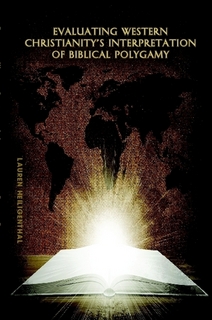
Well I have finally converted my book, Evaluating Western Christianity’s Interpretation of Biblical Polygamy, into an e-book! I’ve talked about the topic of biblical polygamy a little bit on this blog, namely in the post The Story Behind the Book. If you’re interested in this topic or intrigued by the controversy check out http://www.amazon.com/Evaluating-Christianitys-Interpretation-Biblical-Polygamy-ebook/dp/B0106RVRZS/ref=sr_1_fkmr0_1?s=books&ie=UTF8&qid=1435100840&sr=1-1-fkmr0&keywords=evaluating+western+christianity%27s+interpretation+of+biblical+polygamy. If you have any questions or thoughts about biblical polygamy or my book, please feel free to write a message.

E-book cost: Free with Kindle Unlimited! ($3.99 for those without Kindle Unlimited). You can also read a free sample of the book through Amazon.

Print cost: $9.95 (plus shipping)- find on Amazon or at www.patriarchpublishinghouse.com

Serial Polygamy

Thought this was insightful for people of Western culture. Divorce and remarriage have become normalized, but how do they affect families who have to experience them versus households that may have multiple spouses and children and they’re all taken care of? It’s important to analyze our own cultural decisions and observe other cultural practices in light of Scripture. In judging too quickly, we might miss something.

SandreS's avatarThe Patriarchs' Journal

In some societies a man may marry several wives. Western society allows this in a different way, in what is sometimes called “serial polygamy” – a man may marry several wives so long as he legally divorces the current one before marrying the next.

Arguably, the “Christian” form of polygamy is a more primitive and callous arrangement for the man’s existing family than ordinary polygamy. In polygamous societies, the first wife and their children remain viable parts of a viable social entity… In serial polygamy the children are brought up in a broken home, the wife is discarded in a difficult social position.

Understanding Human Behavior
Human Relationships: Man & His Women, Vol. 4, p. 438

View original post

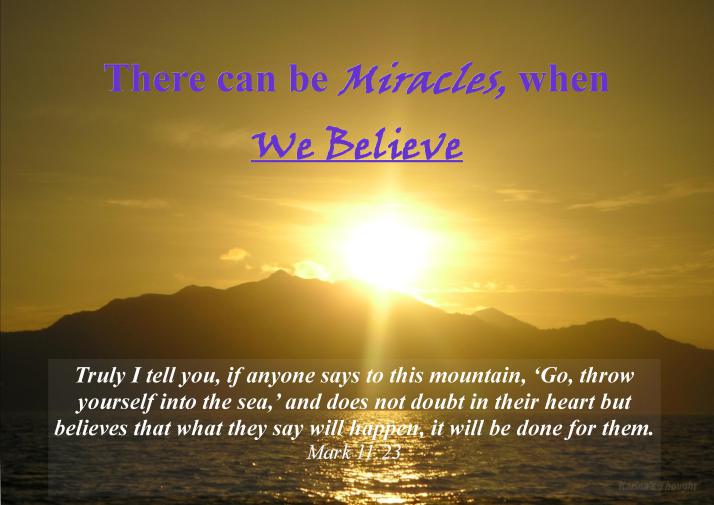
There can be Miracles, When We Believe

Why are there supposedly less miracles today? Karina from Karina’s Thought provides the answer straight from Jesus’ mouth: unbelief. This is an excellent post that all Christians should read followed by the internal question, “Do I truly believe?”

Karina Lam's avatarKarina's Thought

THERE CAN BE MIRACLES WHEN WE BELIEVE - Karina'sThought

Hello my dear readers! My post this evening inspired by a song that I heard unintentionally when I was in CD music store this afternoon. The song was a movie soundtrack of Prince of Egypt titled “when you believe” There is a part of the song lyric that makes me thinking and ponders something. There is a lyric in the chorus says, “There can be miracles, when you believe”

I am thinking about our life, especially in our Christian life. Belief oftentimes becomes a serious problem. We are really hard to believe when we are talking about God’s miracles. Without we realize God’s miracle often fails to happen not just because God doesn’t care or doesn’t hear our cries, but in fact caused by our doubt or disbelief. There are so many wonderful and amazing God’s promises that are able to provide the salvation assurance and the life full of…

View original post 1,606 more words

Faithfulness

In all out confession I’ve been struggling with my faith and confidence in the Lord. I’ve let worry and stress overtake me, and then I feel awful that my faith wavers so. God has never given me a reason to doubt Him. Rather, when I think about past situations I remember that He’s provided an abundance of reasons to put my hope in Him. More than I deserve, I’m sure. As I’ve been told by the Lord many times through various instances, it’s time for me to grow up. It’s time to be in the world and learn how to function as a Christian among the darkness. It’s time to remember all the words I’ve written on this blog and live and grow in ways I’ve encouraged others to live and grow. As a start to moving forward, I wrote this poem:

Faithful 

I am surrounded by a culture

That loathes my King,

That abhors truth,

That seeks corruption and lawlessness.


Yet I have to be in it

Like all who strive to serve Christ

For it is not the healthy who need healing

But the sick.


To be in the world

I must guard myself

From my sinful nature,

The beast that longs to be set free again.


For Christ has set me free

From sin.

Instead, I have become a slave

To the true Master of all.


Yet the world beckons me to worry,

To fear,

To revert back

To who I once was.


My faith slips,

And I feel ashamed.

How can my confidence in Him be so fragile?

How can I fail my God?


I’ve had faith many times before,

And the Lord never failed me.

Rather, He led me down beautiful paths unknown.

By walking in blind faith I learned to see the truth.


It is time to grow up

And eat spiritual meat,

To be a vessel used

For God’s glory.


I desire to walk in faith again,

To leave the petty worries behind

And remember that the Father has been,

And will always be

Faithful.


Indeed, the Lord is always faithful: It is a trustworthy statement: For if we died with Him, we will also live with Him; If we endure, we will also reign with Him; If we deny Him, He also will deny us; If we are faithless, He remains faithful, for He cannot deny Himself” (2 Timothy 2:11-13 NASB). The Lord is faithful whether I’m faithful or not, but I believe it is a much better journey to have the faith to walk with Him. As another blogger (Unshakable Hope) reminded me today, Therefore we do not lose heart, but though our outer man is decaying, yet our inner man is being renewed day by day. For momentary, light affliction is producing for us an eternal weight of glory far beyond all comparison, while we look not at the things which are seen, but at the things which are not seen; for the things which are seen are temporal, but the things which are not seen are eternal” (2 Corinthians 4:16-18). Sometimes it’s hard to remember that I live for the eternal instead of the temporary, but I must choose this mindset every day. Will it be a struggle? Sure. But I believe it’ll be worth it in the end. 


©Lauren Heiligenthal

What Kind of Tree Are You?

This is a story that has inspired me as I struggle with having faith and confidence in the Lord. I hope it encourages you too. For more encouraging and challenging lessons, check out other posts by Unshakable Hope.

Bill Sweeney's avatarUnshakable Hope

Some might be disappointed, but this is not one of those quizzes like I see posted on Facebook. (There actually is one of those quizzes with this same title, but I didn’t take it because I was afraid that the results would show that I was Charlie Brown’s Christmas Tree).
tree-onlyTen or twelve years ago, let’s just say eleven, Mary and I were shopping at Home Depot. After finishing our shopping in the store, we wandered out to the garden department to look for some small trees. It was November, and most of the plants were marked down because they were making room for Christmas trees.

Mary got hung up looking at wreathes and other boring items, so I cruised my wheelchair over to go look at trees. As it turned out, there were not many trees left, and I didn’t see anything I was interested in. Just when I was…

View original post 542 more words