Restoring the Garden

Weeding. For those of us who have done gardening or any kind of landscaping, we know it is not a pleasurable task. Rather, it can be downright frustrating. We try our best to get plants to grow that we actually planted, but it always seems the weeds grow better, faster, and stronger. It can be hard to keep up, especially after a good rain. Sometimes we just let them grow and get used to them to the point where they don’t bother us anymore. They become part of the garden, and we give ourselves excuses for their existence. “I just don’t have time.” “They’re not really that big.” “I’ll get them in the fall or winter when everything else dies.” But do you ever notice how a lot of weeds tend to persist even when most of our desirable plants have died off? I believe everything about creation shows us who God is, and He even shared truths through parables, using aspects of creation, like planting seed and farming, to help us better understand Him and the choices we make. Paul captures this clearly in Romans 1:20:

“For since the creation of the world [God’s] attributes, His eternal power and divine nature, have been clearly seen, being understood through what has been made, so that they are without excuse.” (NASB)

The “they” in this verse is referring back to verse 18 where Paul talks about “men who suppress the truth in unrighteousness.” Such people, and really all of us, are without excuse just by the evidence of God in creation. This is even more true since we also have His very Word. He is gracious to remind us of Himself even in tasks like gardening.

While there are noticeable weeds in the garden, there are also those that aren’t so obvious, specifically the ones that are embedded in the good plants. These ones take more time to spot and are more delicate to remove because there’s a chance the removal can damage what is good. But if they aren’t removed, more harm can come to the good plant. The nutrients meant for the good plant also get used by the weed. And any gardener–whether new or experienced–knows, if you don’t get the root, it will come right back. Some roots go straight down and are easy to pull whereas others spread and can harm multiple plants.

Our spiritual life is also a garden. The good plants are from seeds that get planted by the Word of God and His truth, and the weeds are the different parts of our lives that try to choke out the truth. In the Parable of the Sower, Jesus explains to His disciples that the seeds sown among the thorns “are the ones who have heard the word, but the worries of the world, and the deceitfulness of riches, and the desires for other things enter in and choke the word, and it becomes unfruitful” (Mark 4:18-19). I must confess, it has been a difficult past few days because the Lord revealed to me that I have many weeds in my garden that I didn’t realize existed. I’ve been busy trying to help others with their spiritual gardens while mine was filled with weeds. Even worse, the plants I thought were producing fruit were unfertilized flowers just wilting away. The Lord has brought this to my attention before, and I would clean things up for awhile, but the worries of the world and other people’s approval and my pride became my focus rather on tending the garden. In our spiritual life, tending the garden is year-round, 24/7 work. While the process isn’t pleasurable, and maybe sometimes it hurts to get rid of weeds that look beautiful (not all are thorny), the reward is eternity with God which outweighs all the work. As the church, we have the opportunity to help each other pull up weeds with words of truth, but we also can’t neglect our own spiritual garden. In the end, each of us is accountable for its condition. Will it be full of fruitful and beautiful good plants, or will it be full of weeds with mere remnants of what is good? 

© Lauren Demuth
Tending the Garden (Re-Post)

I read an article recently titled “The Bond Servant” written by Jack Kelley.  Its contents basically drive at the “once saved, always saved” teaching, which is nothing new but has seemed to grow. I’ve made it clear in previous posts that I disagree with this viewpoint. In fact, I believe it to be heretical. The plan for my next post is to tackle the article point by point. In order to do so properly, I will be taking more time to write my rebuttal. In the meantime, feel free to read Kelley’s article, comment on it on my blog, and/or ask questions that you would like answered. Below is a quote from the article that really provoked me to respond:

“Those who say that since we chose to become saved we can choose to walk away. They are applying human thinking to the equation, thinking it makes sense that it should work that way. But there is no Biblical support for that opinion. In fact, as we’ve seen, it’s not the case at all. As bond servants of the Lord we gave up our right to self determination when we surrendered our life to Him.”

There’s a lot to tackle in that one statement, but more will be coming. For this week’s post, I have re-posted “Tending the Garden,” written a year ago. It is especially fitting since I spent 6 hours pulling weeds today. As awful as that may sound, it was surprisingly refreshing. Not only did I get some quiet time in the spacious outdoors, but it was satisfying to make things beautiful again. Are our lives not also refreshed when we get rid of the ugly and choking things that seek to destroy us?

I hope you enjoy!

~~~~~~~~~~~~~~~~~~~~~~~~~~~~~~~~~

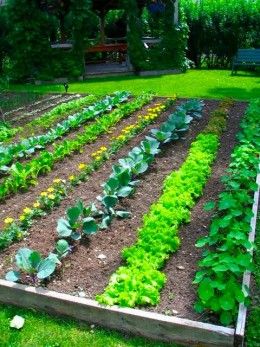
Growing up, I helped my mom with her yard work. She has always had a knack for implementing different landscaping ideas, planting beautiful gardens, and maintaining it all to perfection. Unfortunately, I still don’t have a green thumb. I suppose I didn’t pay attention as well as I should have while she worked. However, one thing I did learn well was pulling weeds and other encroaching, undesirable plants. The most important part about pulling weeds is that you never just remove what you can see; rather, it must be fully uprooted. Some weeds are easy to pull up. Just a slight pull and up it comes. Others need a little more attention with a shovel and some digging—and much-needed gloves for the prickly ones. If a person constantly checks his or her garden, the weeds don’t have much chance to grow, and there’s less effort involved. If the garden goes unchecked, the process can be overwhelming, and there’s more of a risk of missing or breaking off substantial roots. These roots can then wrap around the good plants, causing them to wither and die.

As Christians, we can look at our spiritual life as a garden. When we are just starting out, our garden is made up of little seedlings with the goal of bearing fruit for the kingdom of God. But it’s not a matter of if weeds will sprout, but when. Alongside our little saplings, we might notice a little weed here and there—little thoughts from the enemy that start to grow—“Don’t forget about that mistake you made yesterday”; “Do you really think you can change?”; “You’re worthless and will never make it as a Christian.” As Christians, we may still struggle with some sins and face new temptations. With some quick attention to these issues and asking God for forgiveness and help, those weeds—temptations/sins—can be uprooted and no more.

But what happens when we only check on the garden once in a while? We go out and discover larger weeds, maybe some prickly ones that make the task difficult. It’s tempting to just cut the tops off so we don’t have to see the ugliness. No harm, right? Now we can see our beautiful flowers again. But the danger still lies beneath: Roots. Roots can be parts of the past that linger and start to kill our spiritual fruit. To dig deeper means having to deal with the real issues, the underlying weaknesses that we are afraid to see. Maybe they are sins that we are too ashamed of: anger, sexual promiscuity, jealousy, self-harm, stealing, lying, homosexuality, etc. Maybe they are lies that have taken a hold of us, making it difficult to see any truth: unworthy, ugly, useless, could never be forgiven, [insert thought here]. The stronger the weed roots become, the weaker the good plant becomes, hindering it from bearing fruit.

What happens if we neglect our garden altogether? It will never grow to its potential. It will be overcome by the enemy. And eventually, it will die. What if it gets to the point that every good thing dies? Scripture refers to two options. First, if the person doesn’t desire to change or pursue God, the garden remains dead. That person has made the decision to walk away from God (Hebrews 6:4-6). However, with the second option, there is hope for the one who has lost his or her way but still desires to follow the Lord (Luke 15:11-32). What must be done? Repentance. Everything of the enemy must be uprooted and exposed, and the seeds of truth and righteousness must be replanted. Without a doubt, it will be painful, but God’s forgiveness, grace, and strength make it possible. Once it has been restored, the responsibility for maintaining the garden remains.

Being a Christian takes hard work. Sometimes it’s easy to forget that we must examine our spiritual lives and be honest with ourselves. Are we being attentive to the little weeds/thoughts/sins that are starting to take root? Do we have deep roots that need to be dug out and exposed to the light? Is our garden overrun by all sorts of dangers that seek to choke out anything good? We have been blessed with having the Holy Spirit within us if we have made that decision to follow Christ, but we still have to listen. We are responsible for what’s growing in our spiritual gardens, but the Lord is there if we call upon Him for help.

Consider Paul’s instructions to the Ephesians regarding their Christian walk:

So this I say, and affirm together with the Lord, that you walk no longer just as the Gentiles also walk, in the futility of their mind, being darkened in their understanding, excluded from the life of God because of the ignorance that is in them, because of the hardness of their heart; and they, having become callous, have given themselves over to sensuality for the practice of every kind of impurity with greediness. But you did not learn Christ in this way, if indeed you have heard Him and have been taught in Him, just as truth is in Jesus, that, in reference to your former manner of life, you lay aside the old self, which is being corrupted in accordance with the lusts of deceit, and that you be renewed in the spirit of your mind, and put on the new self, which in the likeness of God has been created in righteousness and holiness of the truth.” ~ Ephesians 3:17-24 NASB

Let’s gather our gloves and shovels and get to work!


©Lauren Heiligenthal

**Photo from https://www.pinterest.com/explore/garden-ideas/?lp=true


Tending the Garden

Growing up, I helped my mom with her yard work. She has always had a knack for implementing different landscaping ideas, planting beautiful gardens, and maintaining it all to perfection. Unfortunately, I still don’t have a green thumb. I suppose I didn’t pay attention as well as I should have while she worked. However, one thing I did learn well was pulling weeds and other encroaching, undesirable plants. The most important part about pulling weeds is that you never just remove what you can see; rather, it must be fully uprooted. Some weeds are easy to pull up. Just a slight pull and up it comes. Others need a little more attention with a shovel and some digging—and much-needed gloves for the prickly ones. If a person constantly checks his or her garden, the weeds don’t have much chance to grow, and there’s less effort involved. If the garden goes unchecked, the process can be overwhelming, and there’s more of a risk of missing or breaking off substantial roots. These roots can then wrap around the good plants, causing them to wither and die.

As Christians, we can look at our spiritual life as a garden. When we are just starting out, our garden is made up of little seedlings with the goal of bearing fruit for the kingdom of God. But it’s not a matter of if weeds will sprout, but when. Alongside our little saplings, we might notice a little weed here and there—little thoughts from the enemy that start to grow—“Don’t forget about that mistake you made yesterday”; “Do you really think you can change?”; “You’re worthless and will never make it as a Christian.” As Christians, we may still struggle with some sins and face new temptations. With some quick attention to these issues and asking God for forgiveness and help, those weeds—temptations/sins—can be uprooted and no more.

But what happens when we only check on the garden once in a while? We go out and discover larger weeds, maybe some prickly ones that make the task difficult. It’s tempting to just cut the tops off so we don’t have to see the ugliness. No harm, right? Now we can see our beautiful flowers again. But the danger still lies beneath: Roots. Roots can be parts of the past that linger and start to kill our spiritual fruit. To dig deeper means having to deal with the real issues, the underlying weaknesses that we are afraid to see. Maybe they are sins that we are too ashamed of: anger, sexual promiscuity, jealousy, self-harm, stealing, lying, homosexuality, etc. Maybe they are lies that have taken a hold of us, making it unable to see any truth: unworthy, ugly, useless, could never be forgiven, [insert thought here]. The stronger the weed roots become, the weaker the good plant becomes, hindering it from bearing fruit.

What happens if we neglect our garden altogether? It will never grow to its potential. It will be overcome by the enemy. And eventually, it will die. What if it gets to the point that every good thing dies? Scripture refers to two options. First, if the person doesn’t desire to change or pursue God, the garden remains dead. That person has made the decision to walk away from God (Hebrews 6:4-6). However, with the second option, there is hope for the one who has lost his or her way but still desires to follow the Lord (Luke 15:11-32). What must be done? Repentance. Everything of the enemy must be uprooted and exposed, and the seeds of truth and righteousness must be replanted. Without a doubt, it will be painful, but God’s forgiveness, grace, and strength make it possible. Once it has been restored, the responsibility for maintaining the garden remains.

Being a Christian takes hard work. Sometimes it’s easy to forget that we must examine our spiritual lives and be honest with ourselves. Are we being attentive to the little weeds/thoughts/sins that are starting to take root? Do we have deep roots that need to be dug out and exposed to the light? Is our garden overrun by all sorts of dangers that seek to choke out anything good? We have been blessed with having the Holy Spirit within us if we have made that decision to follow Christ, but we still have to listen. We are responsible for what’s growing in our spiritual gardens, but the Lord is there if we call upon Him for help.

Consider Paul’s instructions to the Ephesians regarding their Christian walk:

So this I say, and affirm together with the Lord, that you walk no longer just as the Gentiles also walk, in the futility of their mind, being darkened in their understanding, excluded from the life of God because of the ignorance that is in them, because of the hardness of their heart; and they, having become callous, have given themselves over to sensuality for the practice of every kind of impurity with greediness. But you did not learn Christ in this way, if indeed you have heard Him and have been taught in Him, just as truth is in Jesus, that, in reference to your former manner of life, you lay aside the old self, which is being corrupted in accordance with the lusts of deceit, and that you be renewed in the spirit of your mind, and put on the new self, which in the likeness of God has been created in righteousness and holiness of the truth.” ~ Ephesians 3:17-24 NASB

Let’s gather our gloves and shovels and get to work!


©Lauren Heiligenthal

**Photo from https://www.pinterest.com/explore/garden-ideas/?lp=true