To See or Not to See?

I love reading the Book of John. When I was in school, it was kind of a dismissed gospel because it’s not like the other three; however, it is arguably my favorite. From the very beginning it focuses on Jesus’ divinity, His ministry, and His sacrifice. In John 1:17, John writes, “For the Law was given through Moses; grace and truth were realized through Jesus Christ.” How wonderful is that! One of the passages I love the most in John is in chapter 9 where Jesus heals the man who was born blind.

There was a belief that sicknesses, deformities, etc. were a sign of sin. Even Jesus’ disciples ask Him who sinned, the blind man or his parents? Jesus responds by saying that neither had sinned, but the man was born blind so that the works of God might be displayed in him (v. 3). This sets the stage for the rest of passage. The miracle itself is awe-inspiring and demonstrates God’s power, but it’s the interaction between the man and the Pharisees that illustrates the difference between knowledge and wisdom.

The Pharisees are the teachers of the Law. They are the experts who are to lead by spiritual example. Yet with this healed man before them, they cannot reach a consensus on who Jesus is. Many say that Jesus couldn’t be from God because He healed on the Sabbath (v. 16)—something they always like to bring up. When asked about Jesus’ identity, the healed man believes Him to be a prophet (v. 17). Well, the Jews don’t like that so they turn their attention to his parents to find out if their son really was blind. Out of fear of being turned away from the synagogue, his parents throw the attention back to their son—surely he can speak for himself. Repeatedly they ask the healed man how Jesus did it, but he is finished with their interrogation. Instead, he asks, “You do not want to become His disciples too, do you?” (v. 27). Of course not! Instead, they claim to be Moses’ disciples, not followers of this man whose origin remains a mystery to them. Even though they have all the knowledge of the Scriptures, they remain ignorant. On the other hand, the healed man—uneducated and a beggar—understands more of the Scriptures than these experts:

“‘Well here is an amazing thing, that you do not know where He is from, and yet He opened my eyes. We know that God does not hear sinners, but if anyone is God-fearing and does His will, He hears him. Since the beginning of time it has never been heard that anyone opened the eyes of a person born blind. If this man were not from God, He could do nothing.’” (vv. 30-33 NASB)

What a testimony of the greatness of God and the wisdom He gives to those who are willing to receive it! After the man is cast out from the synagogue, Jesus finds him and reveals Himself as the Son of Man. He then uses the healing of the blind man to teach an even greater spiritual message: “’For judgment I came into this world, so that those who do not see may see, and that those who see may become blind’” (v. 39). Of course the Pharisees say, “We are not blind too, are we?” And Jesus replies, “‘If you were blind, you would have no sin, but since you say, ‘We see,’ your sin remains’” (vv. 40-41).

The Pharisees had the truth at their fingertips. Of all the people, they should have known from the beginning who Jesus was. But they got caught up in the letter of the Law instead of its principles. They followed their own understanding and interpretations, and they enjoyed their lofty positions and relationships with the powerful. They neglected the wonderful blessing of truth they were given. They were spiritually blind and remained in sin.

In contrast, the man was a beggar who was born blind with no hope of change until he listened to a man who told him to simply “Go to Siloam and wash” (v. 7). One simple step of obedience changed his life and his testimony. Having heard the truth of the Scriptures, he knew that Jesus could only be from God. He then gained physical and spiritual sight and his sins were forgiven. Simple obedience, simple wisdom, simple truth.

Who are we? Are we like the Pharisees or the healed man? We have heard the truth of the gospel numerous times, yet do we have understanding? We can take theology courses, read a handful of Bible translations and paraphrases, go to church every week, but do we see? Are we aware of our spiritual condition? Do we follow the Lord in simple obedience?

Do not complicate the gospel message. Examine your heart. Talk to the Lord about it. Listen to what He says (for the Lord hears the prayers of God-fearing people who do His will- John 9:31). And do what He says.

May our eyes be opened to His truth.


©Lauren Heiligenthal

The Simple Reason Why I Am Not a Premillennialist

But of that day and hour no one knows, not even the angels of heaven, nor the Son, but the Father alone.  For the coming of the Son of Man will be just like the days of Noah. For as in those days before the flood they were eating and drinking, marrying and giving in marriage, until the day that Noah entered the ark, and they did not understand until the flood came and took them all away; so will the coming of the Son of Man be. Then there will be two men in the field; one will be taken and one will be left. Two women will be grinding at the mill; one will be taken and one will be left.

“Therefore be on the alert, for you do not know which day your Lord is coming. But be sure of this, that if the head of the house had known at what time of the night the thief was coming, he would have been on the alert and would not have allowed his house to be broken into. For this reason you also must be ready; for the Son of Man is coming at an hour when you do not think He will.

“Who then is the faithful and sensible slave whom his master put in charge of his household to give them their food at the proper time? Blessed is that slave whom his master finds so doing when he comes. Truly I say to you that he will put him in charge of all his possessions. But if that evil slave says in his heart, ‘My master is not coming for a long time,’ and begins to beat his fellow slaves and eat and drink with drunkards; the master of that slave will come on a day when he does not expect him and at an hour which he does not know, and will cut him in pieces and assign him a place with the hypocrites; in that place there will be weeping and gnashing of teeth.

~ Matthew 24:36-51 NASB

What is the main point of what Jesus is saying to His disciples? Be ready! No one knows when the Father will have Jesus return. There was a sense of urgency to be on the alert when Jesus was still on the earth, which continued to permeate throughout New Testament teaching and even to this day. My goal with this post is not to pick apart premillennialism, but to simply point out that the teaching regarding seven years of tribulation, where people can have a “second chance” to come to Christ, violates Scripture. Why does it violate Scripture? Because even though people may have missed the first rapture, they will then know that Jesus will return again within seven years. They will have exactly that time to “make things right.” If that’s the case, then why not live like the world now if we are going to get another chance later? Is there really a sense of urgency? Better yet, have we forgotten that we’re living our second chance right now?

Before the Law there was no prescriptive way to be made right before God. This is why Abraham, Isaac, and Jacob are held in high esteem. They had no Law, yet they acted in faith and did instinctively the things that would become Law. God gave Moses and His people the Law in order to set themselves apart and be right with Him. It was rigid and full of regulations. We read it now and wonder how it was even possible to fulfill. That’s the point; it couldn’t be fulfilled. This was the first chance—until Jesus.

Jesus’ sacrifice became the second and ultimate chance. Through His sacrifice we are no longer bound by the rigidity of the Law. We no longer have to offer sacrifices or perform cleansing rituals. We have been baptized with Him and will be resurrected to eternal life because of His grace and mercy. These things cannot be taken lightly, which is why Jesus spends much time talking about being ready and on the alert. Do we want to be like the slave who is found doing what his master desires, or do we want to be like the evil slave who thinks he can do whatever he wants because his master won’t be back for awhile?

A little over seven years ago, I was admonished by close Christian friends (now family) that my spiritual house was not in order. I was encouraged to make myself ready. I have been a Christian since I was seven years old, yet I still needed to be shown that my spiritual life needed a change. Even though we accept Christ and claim to be Christians, we still need to do spiritual cleaning. Just like our actual homes, dust gathers and things that seem gross and terrible at first become part of the norm. There may be an eyesore in our living room, but we wouldn’t notice it because it has become part of our lives. This can also be applied to our spiritual houses. In truth, we can become complacent with behaviors and thoughts that used to convict us, and we may not even realize it until someone else has the right kind of love to point it out. As Paul clearly shares with the Corinthians, we are the temple of the Holy Spirit and should act accordingly:

“Flee immorality. Every other sin that a man commits is outside the body, but the immoral man sins against his own body. Or do you not know that your body is a temple of the Holy Spirit who is in you, whom you have from God, and that you are not your own? For you have been bought with a price: therefore glorify God in your body.” ~ 1 Corinthians 6:18-20 NASB

We have been given a gracious, wonderful second chance at eternal life. Let us do our best to live according to God’s will for our lives and in such a way that others will want to follow God now.


©Lauren Heiligenthal

Trust and Obey

“Trust and obey, for there’s no other way

To be happy in Jesus, but to trust and obey.”

(From the hymn “Trust and Obey,” written by John H. Sammis, 1887)


These are simple words, but the truth behind them is powerful. As Christians we have made the decision to follow God wherever He may lead. This requires our utmost obedience and trust in the Father who knows the perfect path for us—a path that leads to true joy which the world cannot begin to offer. But sometimes following this path means facing our fears.

~~~

Do you know where God is leading you, but you’re having a hard time trusting Him? Is the path one that scares you? Do you doubt your ability to fulfill the task? If this is you, you are certainly not alone.  Not only are there other brothers and sisters out there who feel the same way (including me), but there are some significant Bible figures who went through the same experience. Let’s take a look at one of them.

In Exodus 3, Moses has quite an unusual encounter with God as he approaches an inconsumable burning bush. The Lord entrusts Moses with the task of freeing his people from their oppression in Egypt, and He reassures him that He will work wonders to make it happen. Even though Moses knows the plan, he has some fears.

“Then Moses said, “What if they will not believe me or listen to what I say? For they may say, ‘The Lord has not appeared to you.’” (Ex. 4:1 NASB)

What if?” I am guilty of starting many excuses with these two little words. This phrase assumes the worst and reveals doubt–doubt in God and doubt in myself. In Moses’ situation, he is worried about what people think. Despite what God has shared with him and the right answers to give, Moses doubts. In truth, I can’t blame him. To walk into another nation and speak to the highest authority there who has continued to enslave his people is not an easy task. But God in His mercy provides a solution. He changes Moses’ ordinary staff into one that demonstrates the miraculous power of God and gives Moses the gift of performing miracles so that His people might see and believe (Ex. 4:2-9, 17).

Yet even with such amazing gifts of power, Moses has another problem. He doesn’t speak very well.

“’Please, Lord, I have never been eloquent, neither recently nor in time past, nor since You have spoken to Your servant; for I am slow of speech and slow of tongue.”’ (Ex. 4:10).

Even after the Lord reassures Moses that He will be his mouthpiece, Moses still wants the Lord to send the message by someone else. At this point the Lord becomes angry (v. 14). And why shouldn’t He be? He’s revealed Himself to Moses, chosen him for this task, told him what’s going to happen, assured him that his people will be set free, and gifted him with miracles. Yet how many times has the Lord worked in our lives and then when a new task comes along, we doubt? We are not so different from Moses. Moses wants to be a perfect messenger, one in whom his people can place their trust, but he feels inadequate. And in the world’s eyes, he is. However, throughout Scripture God repeatedly works through human weakness. In 2 Corinthians 12 God conveys to Paul that power is perfected through weakness. His grace is sufficient (2 Cor. 12:9). The only One we should boast in is the Lord, not ourselves. That’s what the Lord is telling Moses in Exodus 4: “Trust Me.” So Moses decides to take his family to Egypt and meet Aaron who will be his mouthpiece (still with God’s help). Together, they meet with the elders of Israel and share God’s words and miracles. The Lord has heard His people’s cries and is ready to act!

Even with a rocky start, Moses becomes the leader God created him to be. As we know, the rest of the story involves trials and many plagues demonstrating God’s power and glory. Yet Moses’ trust in God brings about a new age for Israel. They are finally free after four hundred years! This is just the beginning of what Moses will do on Israel’s behalf. The Law God gives to Israel through Moses becomes the foundation by which Israel is judged and remains as such until Christ’s death and resurrection.

~~~

I can’t imagine what would’ve happened had Moses turned away from God after “What if?” Perhaps God would’ve chosen someone else. It’s something we can hardly speculate. However, we can look at our own lives. Has God ever asked us to do something, and we didn’t do it? Conversely, have we followed God’s instructions and now can’t imagine what life would be like if we had disobeyed? In my own walk with God I can answer affirmatively to both of these questions.

Sometimes the opportunities that were once presented before us are no longer there. We can’t dwell on them, but what we can do is place our trust in God and ask Him for another chance. Our hearts must be willing and sincere to follow no matter what the task may be. Remember, the Lord works through our weaknesses so that He may be glorified. The Lord will not make Himself look like a fool.

There have been moments in my life when I had no doubt what God was asking me to do. I knew the task would be hard, but I made the choice to trust Him and take those steps. I couldn’t see the outcome, and at times I feared the worst, but God remained faithful. These choices have truly changed my life despite trials and hardships. I wouldn’t change them for anything. Yet even now I face another task, one that for some would be easy: teaching. Like Moses, I feel inadequate, but as we just studied in Scripture, that’s the best time for me to give it all up to God.

I recently heard on the radio that the thing that scares us the most is often what frees us. I think there is truth to that. The enemy would like nothing more for us to be enslaved to fear. He wants to use our weaknesses to destroy us and our faith in God. God wants to use our weaknesses to bring glory to His name. What will we choose today? Who do we want to become? What do we have to lose if we have God and each other (like Moses had Aaron) to lift us up?

Let’s trust and obey.


“But we never can prove the delights of His love

Until all on the altar we lay;

For the favor He shows, for the joy He bestows,

Are for them who will trust and obey.”

(From the hymn “Trust and Obey”, verse 4, written by John H. Sammis)


For more encouraging words about trusting and obeying God, please check out a wonderful post written by Karina from the blog Karina’s Thought: https://karinasussanto.wordpress.com/?s=trust+and+obey.


©Lauren Heiligenthal

End of January BOOK SALE!

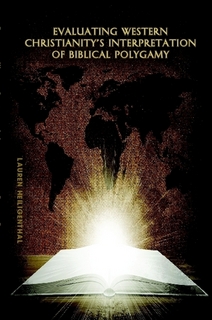
My book, Evaluating Western Christianity’s Interpretation of Biblical Polygamywill be on sale for .99 cents (kindle version) from January 25th-31st. If you have Kindle Unlimited, this book is always free to read!

Why should you consider buying it? The topic of polygamy has become more popular over the last few years, and it’s important to understand what the Bible says versus what the world says. There are different forms of polygamy, but there is only one form that the Bible illustrates and, I believe, is approved by God. This is a controversial subject that the church will no longer be able to push aside.

For more information about this book please visit my blog posts Finally Published! and The Story Behind the Book.

If you have any questions, comments, or simply want to have a discussion about this topic, please leave a comment below or send a message.

God bless!

The Faith of a Shepherd

Have you ever read a Bible story that gave you the chills? Have you ever been moved beyond words? I feel this way every time I read David’s response to Goliath’s defiance (1 Sam. 17). A sense of awe washes over me. Our God is the Almighty God, and David had such faith and reverence for Him that he was willing to take a stand without question. Let’s read what he says:

“David asked the men standing near him, ‘What will be done for the man who kills this Philistine and removes this disgrace from Israel? Who is this uncircumcised Philistine that he should defy the armies of the living God?'” (v. 26; emphasis added)

“David said to Saul, ‘Let no one lose heart on account of this Philistine; your servant will go and fight him.’ Saul replied, ‘You are not able to go out against this Philistine and fight him; you are only a young man, and he has been a warrior from his youth. But David said to Saul, ‘Your servant has been keeping his father’s sheep. When a lion or a bear came and carried off a sheep from the flock, I went after it, struck it and rescued the sheep from its mouth. When it turned on me, I seized it by its hair, struck it and killed it. Your servant has killed both the lion and the bear; this uncircumcised Philistine will be like one of them, because he has defied the armies of the living God. The Lord who rescued me from the paw of the lion and the paw of the bear will rescue me from the hand of this Philistine.’ Saul said to David, ‘Go, and the Lord be with you.'” (vv. 32-37)

Here’s the part that really moves me:

“David said to the Philistine, ‘You come against me with sword and spear and javelin, but I come against you in the name of the Lord Almighty, the God of the armies of Israel, whom you have defied. This day the Lord will deliver you into my hands, and I’ll strike you down and cut off your head. This very day I will give the carcasses of the Philistine army to the birds and the wild animals, and the whole world will know that there is a God in Israel. All those gathered here will know that it is not by sword or spear that the Lord saves; for the battle is the Lord’s, and he will give all of you into our hands.'” (vv. 45-47)

David had no doubt in his mind that God would have the victory. He had no doubt that the Lord God is the true God. He had no doubt that slaying this enemy was necessary because Goliath and the rest of the Philistines were defying God by coming against Israel.

Do we have such faith today? Are we a church that recognizes the holiness of God? The world defies Him. There are enemies coming in from every direction. But how many Davids are there? In 1 Sam. 17 the Israelite army was terrified. For forty days, not one soldier took a step forward. It took a bold shepherd to make a stand. But it only takes one to make a change.

Will we stand for truth and righteousness or shake in fear when the enemy seeks to terrorize us?

All we need is the faith of a shepherd.


©Lauren Heiligenthal

Spiritual Before Physical Well-Being

With a brand new year ahead, many of us will begin disciplining our bodies (again). We are going to eat better and exercise more. There’s nothing wrong with that. However, along with our physical discipline, we should be even more eager to be spiritually disciplined. Paul’s words to Timothy in 1 Timothy 4:6-10 reveal what our number one goal should be: godliness.

In pointing out these things to the brethren, you will be a good servant of Christ Jesus, constantly nourished on the words of the faith and of the sound doctrine which you have been following. But have nothing to do with worldly fables fit only for old women. On the other hand, discipline yourself for the purpose of godliness; for bodily discipline is only of little profit, but godliness is profitable for all things, since it holds promise for the present life and also for the life to come. It is a trustworthy statement deserving full acceptance. For it is for this we labor and strive, because we have fixed our hope on the living God, who is the Savior of all men, especially of believers.” (NASB)

Godliness isn’t arrogant or boastful. Rather, people who are truly godly recognize the need to be humbled because they are sinners saved only by grace. They strive to defy their flesh and be like Christ in order to please God and to be lights in this depraved world. Increased godliness leads to increased faith which leads to more suitable workers for the harvest, thereby resulting in a growing kingdom of God.

It all begins with us. The harvest is ready. Are we?


©Lauren Heiligenthal

Interpreting Scripture Through a Tainted Lens

No one is without bias when reading and interpreting Scripture. We all come from different cultures, backgrounds, and denominations. Some of us have learned certain biblical teachings since childhood and have held onto them with deep conviction. But what if some of these teachings are wrong? Have we dared to ask this question? Conversely, what if some of these teachings are right, and they have now been compromised? As an American, I have seen my culture drastically change over the last two decades, and the Western church has often sailed along with it. It is possible that we do not even realize it, but that is the ultimate problem. In many ways, it has become more important to be politically correct than to uphold truth. Social justice has taken the place of meeting the needs within the church. Feminism has caused dissension within the home and the church. Homosexuality has become acceptable within certain denominations, and even practiced by some leaders. Why are these changes occurring? Is it because we are reading Scripture through the tainted lens of our culture, seeing what we want to see? Do we place the constant change of culture above the Word of God? It is necessary to consider that what may seem controversial to us may be clear in Scripture, and what may seem foreign and supposedly sinful may be acceptable in Scripture.

While many controversial topics have been heavily studied in light of Scripture, polygamy has received little scholarly attention. If you read a commentary on passages involving polygamy, you will often discover that the verdict is clear from the start: polygamy was never God’s intention. It’s stated as a fact and rarely debated. But what about polygamous men and women in the Bible who are described as being righteous? It’s as if their spiritual quality is overlooked or written off as less important compared to their foreign (or barbaric) marriage practice. However, I ask you to consider if God calls just anyone righteous? In reading the Old Testament it is obvious that God’s chosen people did not act righteously most of the time, and they were judged and punished many times over. There’s no gray area for God when it comes to sin. He is merciful and gracious, yes, but when people live a lifestyle of disobedience they are severely disciplined and eventually cut off if no change occurs. So why not David? He had many wives but was blessed and protected by God. He is not judged harshly by God until he decides to commit adultery with Bathsheba and murder her husband to keep it quiet. (Adultery and murder, not polygamy.) As a result of his sin, his first child with Bathsheba dies and his household is filled with strife from that day forward. But David repents as soon as he is confronted with his sin and is described as a man after God’s own heart. He is a man concerned about his spiritual condition and that of his household. Is that not something worth considering when searching for biblical truth?

Consider a different cultural example. According to the law of Moses, Jews were not supposed to eat certain kinds of meat because of the impurity of the animal:

“Nevertheless, you are not to eat of these, among those which chew the cud, or among those which divide the hoof: the camel, for though it chews cud, it does not divide the hoof, it is unclean to you. Likewise, the shaphan, for though it chews cud, it does not divide the hoof, it is unclean to you; the rabbit also, for though it chews cud, it does not divide the hoof, it is unclean to you; and the pig, for though it divides the hoof, thus making a split hoof, it does not chew cud, it is unclean to you. You shall not eat of their flesh nor touch their carcasses; they are unclean to you.” ~ Leviticus 11:4-8 NASB

This may seem preposterous to us because, really, what would we do without bacon? But the Jews were to follow these instructions to the letter. These animals (plus many more, keep reading in Lev. 11) must not be eaten. These instructions became so ingrained in Jewish culture that God uses them to teach Peter a life-changing lesson in Acts 10:

“On the next day, as they (people from Cornelius’ household) were on their way and approaching the city, Peter went up on the housetop about the sixth hour to pray. But he became hungry and was desiring to eat; but while they were making preparations, he fell into a trance; and he saw the sky opened up, and an object like a great sheet coming down, lowered by four corners to the ground, and there were in it all kinds of four-footed animals and crawling creatures of the earth and birds of the air. A voice came to him, ‘Get up, Peter, kill and eat!’ But Peter said, ‘By no means, Lord, for I have never eaten anything unholy and unclean.’ Again a voice came to him a second time, ‘What God has cleansed, no longer consider unholy.’ This happened three times, and immediately the object was taken up into the sky.” ~ Acts 10:9-16 NASB

The Lord knew what Peter considered to be unclean because He Himself gave the Jews their law. But not only is the Lord declaring food to no longer be unclean, but more importantly, He’s declaring that the Gentiles are no longer to be considered unclean because He has cleansed them. At the moment Peter receives his revelation, members of Cornelius’ household (who is a centurion) are on their way to speak with him. They had received a message from the Lord, and Peter was the one that God called to teach them. Peter even says to Cornelius and his household, “You yourselves know how unlawful it is for a man who is a Jew to associate with a foreigner or to visit him; and yet God has shown me that I should not call any man unholy or unclean. That is why I came without even raising any objection when I was sent for. So I ask for what reason you have sent for me” (Acts 10:28-29). God had provided guidelines and cleansing rituals in the law to prevent the Jews from getting sick and spreading disease. However, such guidelines became a point of contention with Gentiles who practiced and ate “unclean” things, and in truth, the Gentiles were viewed the same way as unclean food. But God declared otherwise. Were the Jews wrong for following lawful instructions? No. But it became so ingrained in their culture that even when God told Peter to do something different, his first instinct was to say “no.” Peter was appalled by God’s command to kill and eat what he saw in his vision. Yet, does God ever command people to sin? Surely not! Peter witnessed firsthand that what he thought was unclean (the Gentiles) could also receive the Holy Spirit, the seal of God.

In Mark 7 Jesus was also confronted with this same issue by the Pharisees. Jesus’ disciples were supposedly eating food with unclean (or unwashed) hands, and the Pharisees took the opportunity to question Jesus about it. Rather, they wanted to discredit their ministry because they weren’t following the teachings of the elders. But Jesus, knowing their intentions, declared that they have neglected the command of God in order to follow teachings of men (vv. 8-13). He further explained to the crowd that “there is nothing outside the man which can defile him if it goes into him; but the things which proceed out of the man are what defile the man” (v. 15). Of course, Jesus’ disciples had a difficult time understanding this teaching so He graciously provided an explanation:

“‘Are you so lacking in understanding also? Do you not understand that whatever goes into the man from outside cannot defile him, because it does not go into his heart, but into his stomach, and is eliminated?’ (Thus He declared all foods clean.) And He was saying, ‘That which proceeds out of the man, that is what defiles the man. For from within, out of the heart of men, proceed the evil thoughts, fornications, thefts, murders, adulteries, deeds of coveting and wickedness, as well as deceit, sensuality, envy, slander, pride and foolishness. All these evil things proceed from within and defile the man.'” ~ Mark 7:18-23

Jesus’ words were quite controversial. Why? Because they were all still under the law. The law says “unclean” but Jesus says “clean.” How can this be? Is Jesus violating the law? As Paul would say, may it never be! Rather, the Jews became so obsessed with following the outward instructions that they neglected their inward spiritual condition. They appeared holy on the outside but inside they were unclean. And what’s worse is that they didn’t even recognize it.

So what does a discussion about unclean food have to do with biblical polygamy? More than polygamy, it’s about seeking biblical truth. Cultural teachings have become so embedded in the church that we have called rotten fruit good and good fruit rotten. Why? Because we have lost the ability to tell the difference. We are no different than the Pharisees who pointed out unclean hands and couldn’t see that they neglected the command of God for teachings of men. The church cries out for God’s justice to be done in the world without realizing that we have sealed our own judgment because of our own lack of understanding. Why was David a man after God’s own heart? Because he obeyed when God commanded. He yielded his spirit to follow God’s will. He did what most of us would not be willing to do. And when he failed he poured out his soul to God in anguish and grief and did not shake his fist at God when he experienced judgment. He understood that God was just in giving him what he deserved.

So what about the church? At this moment are we worthy to be called the body of Christ? To be an extension of our Savior who gave up everything for us? How can His body stay intact when its members fight each other and run in opposite directions following their own understanding of truth? The church is full of gaping wounds but we fail to see it. We claim to follow Christ but serve our culture, and we interpret God’s Word accordingly. What’s more is we teach newcomers who seek truth to do the same thing.

Each one of us is accountable because we have access to the Word of God, and we have the ability to understand it if we have His Spirit and ask for the Lord’s guidance and wisdom. Don’t rely on other people’s interpretations. Ask God yourself. He is ready to share it with those who have ears to hear. But what will we do when we are given instructions like He gave Peter? What if He asks us to do something so countercultural that it seems wrong? How many of us have dismissed instructions because they were exactly that: countercultural? The church cannot be effective in the world if the body is dying from the inside out. Why is it dying? Because the cancer of the world has metastasized throughout its members except the head which is Christ. The head is sending messages to the members of the body but very few receive them.

How will we respond? We still have the opportunity to act like David and pour out our souls in anguish for our own failure. We have ignored our spiritual condition for the sake of cultural relativism, and we will destroy ourselves if the church does not repent. This is the moment where the church determines if she will face a spiritual exile. God has been patient, but He is also just. His interaction with ancient Israel is a testament to these things.

The world is rapidly changing, but truth remains the same. Which one will we choose?

© Lauren Heiligenthal

Battle Ready

Today marks the 14th anniversary of the 9/11 attacks. It’s hard to believe that it’s been so long. What I remember about that day was sitting in my 7th grade science class and hearing about it over the intercom. Later that day we watched the news on a TV wheeled into another class (at least I think this is what happened since I have no journal entry from this time). After school, I went down to the lobby and grabbed a newspaper which displayed the Twin Towers in smoke. Once my family and I returned home, we watched more of what happened on the news.

It was all so shocking. “This happened here, in America?” Such a thought was not intended to be arrogant but just sheer disbelief since I had never witnessed anything like this. Then the nation found out that such acts were intentional. Terrorism. A word that the government no longer desires to mention, but it’s still here and around the world. And it’s growing.

It can be overwhelming to read about all that’s going on in the world. It’s beyond disturbing what humans will do to other humans. So much innocence has been destroyed. Will all of this end? I daresay, no. There may be lulls of peace, but there will be no end until Christ’s return because we live in a fallen world. God does not cause evil things to happen; rather, sin does. We are not born into goodness, but into sin:

“Therefore, just as through one man sin entered into the world, and death through sin, and so death spread to all men, because all sinned— for until the Law sin was in the world, but sin is not imputed when there is no law. Nevertheless death reigned from Adam until Moses, even over those who had not sinned in the likeness of the offense of Adam, who is a type of Him who was to come.~ Romans 5:12-14 (NASB)

Paul continues his discussion by talking about God’s grace, but the key point in the verses above is that sin came into the world through Adam. We are then born inherently evil, not inherently good. We all have to make a conscious effort to act righteously. We can act sinfully without trying. This is the war the enemy wages with us. Our flesh against our spirit. Will we continue to walk with God, or will we be deserters by giving in to the world, and essentially, to the enemy?

I have very little military knowledge, but I know that soldiers train for battle. To be sent out too soon would be a mistake that could cost lives. Military leaders also don’t send their soldiers out into the battlefield without a plan of attack. The only way to make such a plan is to study the enemy, to know how he acts and thinks. But at the same time, the enemy is doing the same thing.

Our enemy is quite clever. He is not to be underestimated especially since he has been with God, and he has also departed from God. We are to constantly be in spiritual training so that we know the truth we hold onto and not fall into temptation. While we train and do our best to act out the knowledge we have, the enemy looks to exploits our weaknesses. And we all have them. But instead of being overcome by the enemy, the Lord has given us a way to be victorious in our weaknesses:

”And He has said to me, ‘My grace is sufficient for you, for power is perfected in weakness.’ Most gladly, therefore, I will rather boast about my weaknesses, so that the power of Christ may dwell in me. Therefore I am well content with weaknesses, with insults, with distresses, with persecutions, with difficulties, for Christ’s sake; for when I am weak, then I am strong.” ~ 2 Corinthians 12:9-10 (NASB)

We can be overcomers in our weaknesses! We cannot work through weakness on our own; rather, we must rely on Jesus. When we can do nothing on our own accord, it is God who is magnified, not us. And when God is magnified, the enemy does not stand a chance. For the enemy’s weakness is arrogance. When we put our complete trust in God and place Him first in our lives, there is nothing for the enemy to exploit. Also, when we encourage one another and build each other up, the enemy is faced with the body of Christ and not just one member. He is thwarted easily when we work as a unit.

He also will not succeed if we know truth. Part of the training process is testing everything we have been taught against the Word of God. If something does not add up, it must be examined further. It is important to distinguish between man’s teaching and God’s teaching because the two are not always the same. In a time when political correctness tries to keep us from challenging anything, this is exactly what we must do. Challenge everything! If we don’t, we can easily fall into the enemy’s snare. This is especially important for leaders in the church because if you send soldiers into battle unprepared and ill-informed, there will be casualties. I’m not talking about a shortage in church attendance, but a shortage in the kingdom of God.

We are in a constant battle, and the world keeps pressing in. Are we prepared? Do we have a solid foundation? Are we ready to have our faith tested with fire?

“Blessed be the God and Father of our Lord Jesus Christ, who according to His great mercy has caused us to be born again to a living hope through the resurrection of Jesus Christ from the dead, to obtain an inheritance which is imperishable and undefiled and will not fade away, reserved in heaven for you, who are protected by the power of God through faith for a salvation ready to be revealed in the last time. In this you greatly rejoice, even though now for a little while, if necessary, you have been distressed by various trials, so that the proof of your faith, being more precious than gold which is perishable, even though tested by fire, may be found to result in praise and glory and honor at the revelation of Jesus Christ; and though you have not seen Him, you love Him, and though you do not see Him now, but believe in Him, you greatly rejoice with joy inexpressible and full of glory, obtaining as the outcome of your faith the salvation of your souls.” ~ 1 Peter 1:3-9 (NASB)

What’s wonderful about having Christ as our Savior is knowing that He has already won this war. If we continue to hold onto this hope of our salvation, we will have no issue thwarting the enemy because our eyes will constantly be on Christ. Is it hard at times? Absolutely! But that’s why we are the body of Christ. When one member starts to fall, the others are there to pick him or her up. The overall victory has already been won, but the smaller victories leading to the end are up to us (with God’s help, of course). Whom will we follow? How will we act? Will we listen to God’s voice? Will we obey His will? Will we be instruments for His glory so that more people may come to Christ?

Soldiers, put on your armor and let’s go!


© Lauren Heiligenthal