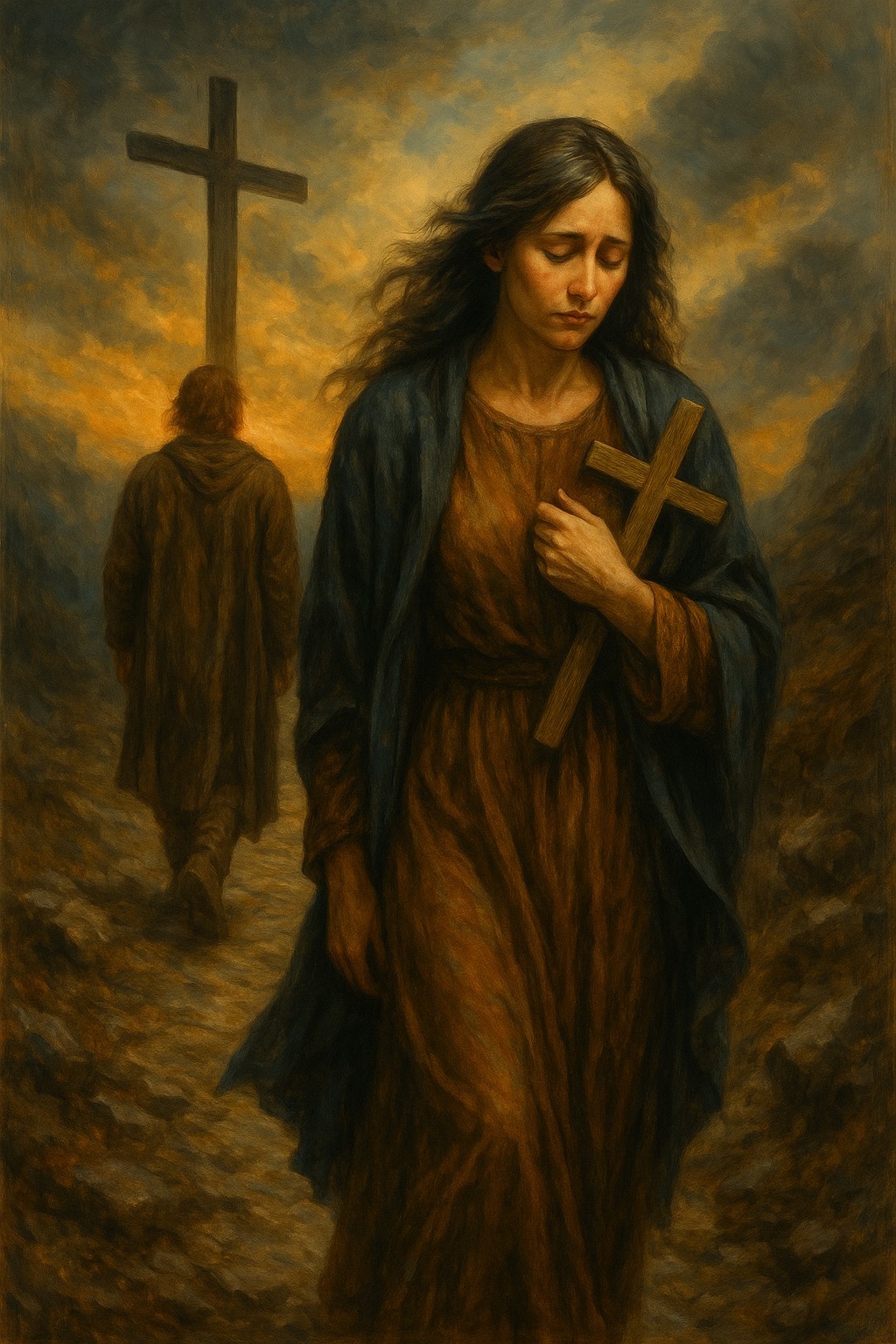
Discipleship: A Call to Serve

If you’ve been a Christian for any length of time, no doubt you’ve learned about discipleship or at least have heard the term. We read about the disciples of Jesus– both the chosen Twelve and other faithful followers– in the Gospels, and learn from their examples, and yes, mistakes. As I’ve been reading through the Gospels again, the Lord brought to my attention what Jesus said to His disciples before the feeding of the five thousand. In the context, Jesus had just learned of John the Baptist’s death and went in a boat to a secluded place, but the people followed Him on foot (Matthew 14:13). When He arrived at the shore, Jesus had compassion on the people and healed them (v. 14). In Mark’s Gospel, he writes that Jesus “felt compassion for them because they were like a sheep without a shepherd; and He began to teach them many things” (Mark 6:34). Let’s look at what happened in Matthew 14:15-20:

“When it was evening, the disciples came to Him and said, ‘This place is desolate and the hour is already late; so send the crowds away, that they may go into the villages and buy food for themselves.’ But Jesus said to them, ‘They do not need to go away; you give them something to eat!’ They said to Him, ‘We have here only five loaves and two fish.’ And He said, ‘Bring them here to Me.’ Ordering the people to sit down on the grass, He took the five loaves and the two fish, and looking up toward heaven, He blessed the food, and breaking the loaves He gave them to the disciples, and the disciples gave them to the crowds, and they all ate and were satisfied. They picked up what was left over of the broken pieces, twelve full baskets.”

You give them something to eat!” In Mark’s Gospel, the disciples ask, “Shall we go and spend two hundred denarii on bread and give them something to eat?” (Mark 6:37). A denarius was about a day’s wages so that would be at least 200 day’s worth of food! How often do we think of worldly issues over what God tells us? At this time, Jesus’ chosen Twelve had been with Him and witnessed many miracles, yet instead of thinking about the people’s needs first, they wanted them to go and take care of themselves. Now, this doesn’t sound unreasonable. A crowd full of 5,000 men (not including woman and children- see v. 21) would be quite overwhelming. But Jesus doesn’t say, “I’ll give them something to eat.” Rather, He presents it to the disciples as their responsibility. Jesus is teaching them what it means to be a disciple of Christ. It is not meant to be a lofty position but one of service.

 “He blessed the food, and breaking the loaves He gave them to the disciples, and the disciples gave them to the crowds.” After Jesus prays over the meager amount of food, He doesn’t hand out the food but gives it to His disciples to share it with the people. They not only physically served, but they had to have faith that the food would continue to multiply. The amazing miracle is that they had even more leftover than when they started! As disciples, we are called to be servants to those God calls us to and trust that if God asks us to do it (this is important to note), He will meet us there and provide. Jesus didn’t always feed every crowd, but in this case, He not only taught His disciples that the Lord can supply physical needs but spiritual ones as well. 

In John’s Gospel, the people who were fed followed Jesus and His disciples the following day to where they were ministering (John 6:22-25). Jesus used this opportunity to teach the people about Him being the bread of life. While food is important, it is only temporary; however, the Bread of Life provides salvation leading to eternal life. He later makes this incredible statement in vv. 53-55, “Truly, truly, I say to you, unless you eat the flesh of the Son of Man and drink His blood, you have no life in yourselves. He who eats My flesh and drinks My blood has eternal life, and I will raise him up on the last day. For My flesh is true food, and My blood is true drink.” Just as Jesus was teaching the crowd, He was also teaching His disciples, separating the true followers from those who would go astray for they sought the temporary rather than yearning for spiritual truth and understanding. John writes in vv. 66-69:

“As a result of this many of His disciples withdrew and were not walking with Him anymore. So Jesus said to the twelve, ‘You do not want to go away also, do you?’ Simon Peter answered Him, ‘Lord, to whom shall we go? You have words of eternal life. We have believed and have come to know that You are the Holy One of God.’”

Being a true disciple is focusing on the eternal. If people are given food, but their soul is going to hell, what benefit is it? If we are worried about the temporary issues of life, how do we expect God to do miracles? The people that were fed didn’t just eat a little. They ate and were satisfied! How much more will we be satisfied if we eat and drink the truth of His Word and understand who the LORD- Father, Son, and Spirit- truly is? What if we were dialed in to what the will of the Lord is that we were able to use the spiritual gifts God has blessed us with? 

When Jesus sent out His disciples to the cities to preach and perform miracles, He didn’t sugarcoat the trials that would come. He said things like, “I send you out as sheep in the midst of wolves; so be shrewd as serpents and innocent as doves” (Matt. 10:16). He continues in vv. 21-23:

“‘Brother will betray brother to death, and a father his child; and children will rise up against parents and cause them to be put to death. You will be hated by all because of My name, but it is the one who has endured to the end who will be saved. But whenever they persecute you in one city, flee to the next; for truly I say to you, you will not finish going through the cities of Israel until the Son of Man comes.’”

If we think that this was only for the Twelve, we are mistaken. Jesus prays in the Garden of Gethsemane right before death about His current disciples and the disciples who had yet to come: 

“‘I have given them Your word; and the world has hated them, because they are not of the world, even as I am not of the world. I do not ask You to take them out of the world, but to keep them from the evil one. They are not of the world, even as I am not of the world. Sanctify them in the truth; Your word is truth. As You sent Me into the world, I also have sent them into the world. For their sakes I sanctify Myself, that they themselves also may be sanctified in truth. I do not ask on behalf of these alone, but for those also who believe in Me through their word; that they may all be one; even as You, Father, are in Me and I in You, that they also may be in Us, so that the world may believe that You sent Me.’” John 17:14-21

Being a disciple is accepting that the world hates you. It’s a matter of light versus darkness, flesh versus Spirit. As a person who has sought man’s approval my whole life, this is an area of struggle for me. I don’t like to be disliked or hated. But if I am doing everything that a disciple ought to be doing (and this is an ongoing process of growth), then that hatred is cause to rejoice because I am following the Lord. 

As stated earlier, being a disciple is not one who holds himself or herself in high esteem but rather is humble. Jesus’ disciples had to understand this as well. Luke writes in Luke 9:46-48:

“‘An argument started among them as to which of them might be the greatest. But Jesus, knowing what they were thinking in their heart, took a child and stood him by His side, and said to them, ‘Whoever receives this child in My name receives Me, and whoever receives Me receives Him who sent Me; for the one who is least among all of you, this is the one who is great.’”

Discipleship is the opposite from what the world teaches: wealth, fame, superiority. Is it wrong to be wealthy? Contrary to what some may teach and preach, the answer is no. Wealth becomes an issue when it comes before God and is sought after like an idol. The question is, if God asked us to give it up, would we? In Jesus’ response to His disciples, He uses a child to demonstrate who the greatest is. A child is the very image of humility and dependence on those in authority over them. Therefore, as disciples, we also are supposed to be humble and rely on our Heavenly Father.

Jesus also set the example of staying in communication with the Father. Throughout the Gospels, the writers convey that Jesus would often find a secluded place after being with crowds in order to pray. Sometimes He would take His disciples, but other times He went alone. Even though Jesus is God, He demonstrated the importance of talking with the Heavenly Father. In the Garden of Gethsemane, He asked the Lord to remove the cup of suffering from Him, “‘Abba! Father! All things are possible for You; remove this cup from Me; yet not what I will, but what You will’” (Mark 14:36). He prayed this three times demonstrating to His disciples (including us) that we can ask the Father for anything, but it must be in line with His will. The Father didn’t take the cup from Jesus, and He suffered as no one ever has. Yet, it was for His glory and for our salvation. As disciples, we have the blessing to approach the Lord before His throne and ask anything, but we always need to have a heart that desires His will. 

Scripture is full of examples of what discipleship should look like, but the main criteria from the passages discussed are: servanthood, faith, focus on eternal and spiritual truth, humility, and a lifestyle of prayer. There are more qualities to add to this list, but this is a challenging start. As we are about to enter into a new year full of possibilities, let us pray for our lives to become more like the disciples of Christ He desires for us to be. May we set ourselves apart for His service and glory so that those who are lost may be found in Him. 

~~~

Father, we thank You for another new year and all the blessings You’ve given us. We also thank You for being with us through the hardships. Help us to keep our focus ahead to eternity and live humble lives in service to You. Let us have ears to hear Your voice and minds to understand Your will and truth. May we live to gain Your approval alone. Thank You for your patience and grace You give us each day, even when we fail You. Thank You that You are a Father who never fails. We love You and pray for a wonderful year ahead. May Your will be done. Amen.

Being Content with Our Daily Bread

The Lord’s Prayer is one of the most memorized passages of Scripture. I can’t even count how many times I’ve read it in devotions or prayed it out loud in gatherings. I recently decided to start reading through the New Testament again from the beginning and in the gospels of Matthew and Luke, the authors share this prayer. In Matthew 6, the prayer is part of the beatitudes and is preceded by Jesus’ teaching to pray in secret rather than be like the hypocrites who pray loudly and openly to be praised by men. In verses 7-8 Jesus also teaches not to use repetitious words thinking that more words will make God hear us, but He explains that the Father already knows what we need before we ask. Rather He presents this simple prayer, which we know of as the Lord’s Prayer (Matthew 6:9-13):

“Pray, then, in this way:

Our Father who is in heaven,

Hallowed be Your name.

Your kingdom come.

Your will be done,

On earth as it is in heaven.

Give us this day our daily bread.

And forgive us our debts, as we also have forgiven our debtors.

And do not lead us into temptation, but deliver us from evil.

[For Yours is the kingdom and the power and the glory forever. Amen.]”

Luke’s account of the Lord’s Prayer in Luke 11:2-4 is more concise, but the essence is still the same. When we pray it is to the Father who is holy and in heaven. Our desire should be for His kingdom to come and for His will, not ours, to be done. We also ought to pray for our DAILY bread (to this point I will come back to). Then we are instructed to ask for forgiveness, and notice the passage says “as we also have forgiven our debtors.” We ask for forgiveness once we’ve already forgiven others. Matthew 6:14-15 expounds on this point: “For if you forgive others for their transgressions, your heavenly Father will also forgive you. But if you do not forgive others, then your Father will not forgive your transgressions.” That part of the passage is a blog post topic for another time, but it’s important to remember. Then lastly we ought to pray to be kept from temptation and delivered from evil because we all fall into sin and the enemy would like nothing more than to draw us away from the Lord.

Back in April, I wrote a blog post called “The Measure of Contentment” where I shared about my sin of pride and how I was placing my contentment in the wrong things. I was called by the Lord to follow a path, but I made the task my focus rather than the Lord. It led me on a journey (which I’m still on) of what it means to be content in the Lord. I know the Lord promised success if I followed Him, but I began to realize that His timing and mine weren’t the same. The worldly idea of success would creep in, and I would wonder when I could start providing again. I would compare myself to others and wonder why I couldn’t be more like them. But when I recently read the Lord’s Prayer again, it clicked: “Give us this day our DAILY bread.” The world says to make as much money as possible and save it, invest it, etc. We tend to get to know people by what they do and judge (whether we consciously realize it or not) by what others earn for a living. But the prayer that Jesus shared as the way to pray didn’t say, “Pray for loads of wealth for the future.” Rather He said to pray “Give us this day our daily bread.” Is it wrong to be wealthy? No! The Lord can and has used wealthy people to further His kingdom. But the reality is we aren’t guaranteed tomorrow. James 4:13-15 says,

“Come now, you who say, ‘Today or tomorrow we will go to such and such a city, and spend a year there and engage in business and make a profit.’ Yet you do not know what your life will be like tomorrow. You are just a vapor that appears for a little while and then vanishes away. Instead you ought to say, ‘If the Lord wills, we will live and also do this or that.’”

Only the Lord knows what will happen in our lives, and Jesus is teaching His disciples, who will become the leaders of the church, to pray for the Father to give them what they need for each day. Not for the next week or next year or next ten years. Today. And that’s enough. When I let this sink in, my prayer started to change from “Lord, help me to provide for my family” to “Lord, I pray that you will provide for what we need today.” And He has! I don’t have to worry about the future because the Lord already knows. I just have to be faithful to do what He’s called me to do and not compare what He’s given me to the tasks He’s given to someone else. We are a BODY of believers who all have been called to do different things for the Lord, as Paul talks about 1 Corinthians 12. The body is not made up of the same part (which would look monstrous) but multiple, unique parts with different functions. The beauty is that when we are obedient and content in Him, all the parts of the body function properly, and we become the church– the bride –that He has called us to be.

The world is going to call us foolish for not saving up as much money as possible or for not diving into every social media outlet to gain followers, customers, or people to approve of us and what we do. And to the world we are foolish—and we should be honored by that:

“For the word of the cross is foolishness to those who are perishing, but to us who are being saved it is the power of God. For it is written,

‘I will destroy the wisdom of the wise,
And the cleverness of the clever I will set aside.’

Where is the wise man? Where is the scribe? Where is the debater of this age? Has not God made foolish the wisdom of the world? For since in the wisdom of God the world through its wisdom did not come to know God, God was well-pleased through the foolishness of the message preached to save those who believe. For indeed Jews ask for signs and Greeks search for wisdom; but we preach Christ crucified, to Jews a stumbling block and to Gentiles foolishness,but to those who are the called, both Jews and Greeks, Christ the power of God and the wisdom of God. Because the foolishness of God is wiser than men, and the weakness of God is stronger than men.

For consider your calling, brethren, that there were not many wise according to the flesh, not many mighty, not many noble; but God has chosen the foolish things of the world to shame the wise, and God has chosen the weak things of the world to shame the things which are strong, and the base things of the world and the despised God has chosen, the things that are not, so that He may nullify the things that are, so that no man may boast before God. But by His doing you are in Christ Jesus, who became to us wisdom from God, and righteousness and sanctification, and redemption, so that, just as it is written, ‘Let him who boasts, boast in the Lord.” 1 Corinthians 1:18-31

When Jesus tells His disciples to pray “Give us this day our daily bread,” He is telling them to live in faith day-by-day, confident that the Father already knows what we need. And the “daily bread” is not going to look the same for everyone, and that’s alright. Our eyes shouldn’t be roaming around (or scrolling through people’s pages) to see what others’ “daily bread” looks like. We are accountable for our own faith and for our own fruit before the Lord God, and in truth, praying for our “daily bread” is freeing because that means we know that the Lord will take care of us each day until He calls us home to be with Him. Each day may look different from the last, but He already knows what we need. And that is enough.

©Lauren Demuth

Why Would God Tell You That?

Is that a question you’ve heard before? Or maybe it was implied by someone’s response to you sharing what’s been on your heart. You felt confident God was calling you in one direction, but those around you couldn’t understand it or thought you’re behavior was irrational. “Certainly God wouldn’t call you to leave what you know and go somewhere foreign.” Or “God wouldn’t call you to quit your job and start something new”. Or “God wouldn’t ask you to go into debt by going back to school”. Or [insert your situation here]. Seeds of doubt get planted, and you begin to wonder if you really heard God.

I think all of us have had at least one moment like that in our lives, and most likely more than one. It’s what we do in that moment that counts, and prayer is the best way to start. How many times in the Bible was God patient enough to encourage those who doubted what He asked or who felt inadequate to complete the task. Moses is the first person who comes to mind, and he helped to free the Israelites from slavery, gave them the Law from God and wrote the Pentateuch. There are numerous examples of God telling people to do things that we might call crazy, like Hosea being commanded to take a harlot as a wife to demonstrate Israel’s unfaithfulness to the Lord, or Noah building the ark, or Abraham leaving his country (especially at an older age) to wander in the wilderness where God led him. But one person stands out especially in this season of Christmas, and that person is Mary.

Many of us have grown up hearing the story of the nativity, and Mary being chosen by God to give birth to the Messiah. What is less taught is how all of this was counter-cultural in their day. According to scholars, Mary would have been a teenager, and Scripture tells us she was betrothed to Joseph. While in our culture, we would view this as an engagement but not an official marriage, in ancient Israel, they were viewed as husband and wife already. In the famously deemed Ten Commandments of the Law, the seventh commandment is “You shall not commit adultery” (Exodus 20:14). But there was much more detail to the Law than the Ten Commandments, especially regarding unfaithfulness. Leviticus 20 is just one chapter devoted to the consequences of the sins of sexual immorality. Usually the result was death. John 8 demonstrates that the practice of stoning an adulterous woman to death still occurred in the first century AD. This practice from the Law is written in Deuteronomy 22:23-24, “If there is a girl who is a virgin engaged to a man, and another man finds her in the city and lies with her, then you shall bring them both out to the gate of that city and you shall stone them to death; the girl because she did not cry out in the city, and the man, because he has violated his neighbor’s wife. Thus you shall purge the evil from among you.”

With this in mind, imagine Mary, a young virgin who is betrothed, winds up pregnant. A virgin getting pregnant would be seemingly impossible, so what would be the alternative thought? Adultery, most likely. Matthew’s account makes it clear that even though Mary and Joseph were betrothed, they had not consummated their marriage yet. Therefore, a pregnancy would’ve been viewed as unfaithfulness. Mary knew the Law, but when she was told by the angel Gabriel that she was chosen by God and that she would become pregnant through His power, she responds, “Behold, the bondslave of the Lord; may it be done to me according to your word” (Luke 1:38). How incredible is that! Knowing that this choice could result in death according to the Law, she trusts in the Lord. Even more, she praises the Lord for regarding a humble person as herself and exalts the Lord for His magnificence (Luke 1:46-55-The Magnificat).

Joseph’s response also demonstrates his exemplary character, and no doubt why God chose him (as well as being of the lineage of David). Matthew describes Joseph as a “righteous man” (Matt. 1:19) and says that “not wanting to disgrace her (Mary), planned to send her away secretly.” While some may find it harsh that Joseph would essentially divorce her, he was actually giving up his right to bring her before the court and have her stoned as the Law states should happen for an adulterous woman. Rather, he was willing to protect her and put the shame on himself. But thankfully, the Lord sent an angel to deter him from this decision and explained to him what happened. Just like Mary, Joseph didn’t question what was told him, but Matthew 1:24-25 says, “Joseph awoke from his sleep and did as the angel of the Lord commanded him, and took Mary as his wife, but kept her a virgin until she gave birth to a Son; and he called His name Jesus.”

If there was any time to doubt that you heard from God, the situation these two faced would be at the top of the list. Everyone knows that they haven’t officially consummated their marriage. Everyone knows that the Law says an adulteress would be stoned to death. But the Lord orchestrated everything perfectly. Since Mary was betrothed, the decision was up to Joseph, who God knew to be a righteous man who wouldn’t harm Mary. He knew Mary would fulfill the task because she was a faithful woman of God and considered God’s choice to be a blessing to her. The story of the birth of Christ is one of hope and amazing love, and it all began with faith that what God said was true and would be fulfilled.

God knew what the Law said—He wrote it! He knew what He asked of Mary and Joseph would not line up culturally. But God is above culture! God is above all things! God speaks to us if we’re willing to have ears to hear and understand. If you know that God has called you to do something, and you’ve gone before Him in prayer (this is important!), have the faith of Mary and Joseph who said, “May Your will be done, Lord.” Their faith resulted in the birth of our Savior who has redeemed us and saved us from our sin.

Even if you feel alone in your decision, the Lord will be there to guide you and provide for you along your journey. Let’s pray together:

Father, we thank you for the truth of Your Word, that it is a lamp to guide us when we falter or doubt. You’ve chosen many people before us to fulfill Your will, and we thank you that we can learn and be encouraged by their faithfulness. We have the blessing to see promises fulfilled that not many of them saw. Help us to hear your voice and drown out the world that seeks to discourage and destroy us. We desire to be a light instead, walking where you tell us to go even when we can’t see the end. Thank you for the gift of Jesus Christ, and the salvation and forgiveness You’ve given us so that we may lead others to Your kingdom. May we not fear the unknown but rejoice that You have chosen to regard the humble to exalt Your name. Give us Your strength and peace even when we feel alone, and remind us that You are always there. We pray this in Jesus’ name. Amen.