“Jesus said…” (Repost)

I originally wrote this post 10 years ago, and as I read it again it became obvious that the message is even more pertinent for today’s church. In Luke 18:1-8, Jesus tells a parable about a widow beseeching an unrighteous judge for legal protection from her opponent. She persisted in her petition, and the unrighteous finally granted her request. Jesus says to His disciples in v. 8, “Hear what the unrighteous judge said; now, will not God bring about justice for His elect who cry to Him day and night, and will He delay long over them? I tell you that He will bring about justice for them quickly. However, when the Son of Man comes, will He find faith on the earth?” That question is often overlooked, but it’s meant to be taken seriously. Will Jesus find His bride faithful when He returns, or will we be reminiscent of the world? It’s time for repentance and change in the body of Christ.

~~~

The Supreme Court’s decision regarding gay marriage shouldn’t have been as shocking for Christians as it seems to have been. Why should we be surprised when the world acts like the world? What has bothered me this week is not so much the gay marriage ruling but the number of various biblical interpretations thrown out there with the postmodern attitude: “All interpretations are right and justified.” It’s the mindset that interpretation is in the eye of the beholder, and that’s OK. I’m not talking about unbelievers who use Scripture against Christians. I don’t put any stock into what they say because a person cannot understand the Scriptures without the Spirit. How can I say that, you may ask? Let’s take a look at 1 Corinthians 2 (NASB):

“And when I came to you, brethren, I did not come with superiority of speech or of wisdom, proclaiming to you the testimony of God. For I determined to know nothing among you except Jesus Christ, and Him crucified. I was with you in weakness and in fear and in much trembling, and my message and my preaching were not in persuasive words of wisdom, but in demonstration of the Spirit and of power, so that your faith would not rest on the wisdom of men, but on the power of God.

Yet we do speak wisdom among those who are mature; a wisdom, however, not of this age nor of the rulers of this age, who are passing away; but we speak God’s wisdom in a mystery, the hidden wisdom which God predestined before the ages to our glory; the wisdom which none of the rulers of this age has understood; for if they had understood it they would not have crucified the Lord of glory; but just as it is written,

‘Things which eye has not seen and ear has not heard,

And which have not entered the heart of man,

All that God has prepared for those who love Him.’

For to us God revealed them through the Spirit; for the Spirit searches all things, even the depths of God. For who among men knows the thoughts of a man except the spirit of the man which is in him? Even so the thoughts of God no one knows except the Spirit of God. Now we have received, not the spirit of the world, but the Spirit who is from God, so that we may know the things freely given to us by God, which things we also speak, not in words taught by human wisdom, but in those taught by the Spirit, combining spiritual thoughts with spiritual words.

But a natural man does not accept the things of the Spirit of God, for they are foolishness to him; and he cannot understand them, because they are spiritually appraised. But he who is spiritual appraises all things, yet he himself is appraised by no one. For who has known the mind of the Lord, that he will instruct Him? But we have the mind of Christ.” (Bold print added for emphasis)

An unbeliever may seem knowledgeable about spiritual matters and talk about Scripture all day long, but unless he or she has the Spirit, his or her words are meaningless.

Back to my original point, what has bothered me are various interpretations given by people who claim to be Christians. How can people who claim to have the same Spirit (which people are indeed doing if they call themselves Christians) proclaim opposing biblical interpretations and divide the church even further? Is the Spirit of God divided or confused? Of course not! So the only answer is that there’s something wrong with the church.

I read an article the other day called “I’m gay, liberal, open-minded–and a convert to Christianity.” I read the article not because I thought I’d agree with the author, but I was more curious about how he was going to justify his choices. The content made my blood boil. Here’s a few excerpts from Jonathan Elliott (author) with bold print for emphasis:

“But last October, I – a 33-year-old, progressive, openly gay man who spent much of my twenties as a crusading atheist and curious agnostic – was baptized and confirmed in the church. I’m unafraid to proclaim myself a disciple of Jesus Christ.” – He is open about his homosexuality and his proclaimed Christianity. The church has placed its stamp of approval upon him.

I’m still the person I was before I became a Christian, and a baptism isn’t a brainwashing. This change in my life didn’t turn me into a raging nutball – at least, I’m no more of one than I ever was.” – So are other Christians transformed into raging nutballs? Supposedly accepting Christ and being baptized didn’t change him. There’s apparently no need for change. How many of you Christians would say that you are the same person before coming to Christ and have had no conviction to change or repent?

He was diagnosed with diabetes in 2010: “I joined a support group for other newly diagnosed folks, and the therapy involved with this was rooted in a belief in a higher power. Initially, I resisted wholeheartedly. I’d been raised without any faith experience, and to even open up to the possibilities of God was a frightening and conflict-ridden concept. But ongoing discussions with this group made me realize that I was angry at what had happened to me – specifically, angry at God. And that meant I believed.” – It’s not until he feels angry towards God that he believes. OK, so even if this is how someone starts believing in God, you would think that there would be some sort of interest in learning more about Him, right?

“I spent the next two years bouncing back and forth between nearly 20 congregations of different denominations, serial first dates with church communities. And while I often found comfort and positivity, none felt like home. Sometimes I’d engage a pastor during the post-service coffee hour and find a bit of theology I couldn’t agree with; other times, I didn’t feel wholly welcomed.” – Searching for the right theology, which is…?

“Then, in 2013, I took a job as communications director for the Episcopal Diocese of New Jersey.” [Elliott] “found that the church had the openness, diversity and the clear sense of tradition I sought. It was also strongly inclusive of the LGBTQ community, and welcomed both women and men as clergy members.” – Not sure what the “tradition” part means for him, but it seems that he found a place which supported his lifestyle. He didn’t have to change.

“Our priest preaches sermons that incorporate everything from transgender rights to the theological leanings of Dr. Who.” – What? And how is this preaching exactly?

And though the fundamentalists scream loudest, there are progressive and inclusive new forms of church springing up around the country, like Capital City Church in DC. Christian businesses like Elevation Burger use faith as part of their culture to inform great products and practices, without aspersions or judgment (take that, Hobby Lobby and Chik-Fil-A).” – Again, welcoming division within the so-called church.

“I acknowledge that Christianity is often countermanded and corrupted for heinous and spiteful things. But I refuse to accept that as the status quo. At the end of the day, I’m a Christian because faith, and our openness to God and to one another, make us stronger and more willing to engage the world as it unfolds and changes around us.”

Not once is Christ mentioned. There is no talk of salvation or Scripture. But the concepts of openness and finding the right fit rise to the surface. There’s no need to change; just be open to God and one another. How is this Scriptural? Does this not bother anyone else? Either the world hears (supposed) condemnation from the church or full acceptance of behavior, which is more politically correct. How has the church arrived to this point? I believe the issue tends to derive from biblical interpretation and the church’s unwillingness to distinguish good from bad fruit.

When discussing biblical interpretation for modern issues, a number of arguments start with “Jesus is in the New Testament, and He says…” Somehow the Old Testament gets tossed aside or is spoken of as barbaric. What most people forget or have not realized is that Jesus is still under the old covenant before His death and resurrection. Sure, someone wrote up a page that said “New Testament” and placed it before the Gospels, but it’s not until after Jesus dies and resurrects that the new covenant begins. A covenant cannot be established unless blood is spilled, and in this case, Christ’s blood (Heb. 9:13-18). So when people try to argue that Jesus is changing the Law with His teachings, they argue in ignorance. How can He uphold the Law and change it at the same time? What is more, why would He violate His own character since God does not change? There is either a lack of understanding or the unbelief that Jesus is God. John testifies to Jesus’ beginning with God (John 1). Jesus Himself testifies that He was before Abraham (John 8:58), and declares in John 17:5, “Now, Father, glorify Me together with Yourself, with the glory which I had with You before the world was.Since Jesus is God, why would He oppose His own instructions?

As I’ve argued before, would not Christ, who has always been with and part of the Father, understand the Law perfectly? Would not, then, His teachings reflect the intended motivations behind the Law rather than change the Law itself? It is true that we (Christians) are no longer bound by the Law since Christ is the fulfillment of the Law, yet Jesus makes it clear that the Law is not abolished even now: “Do not think I came to abolish the Law or the Prophets; I did not come to abolish but to fulfill. For truly I say to you, until heaven and earth pass away, not the smallest letter or stroke shall pass from the Law until all is accomplished. Whoever then annuls one of the least of these commandments, and teaches others to do the same, shall be called least in the kingdom of heaven; but whoever keeps and teaches them, he shall be called great in the kingdom of heaven. If the Law is the tutor which leads us to Christ (Gal. 5:23); if the Law and the Prophets are witnesses to the righteousness of God through faith in Jesus Christ (Rom. 3:21-22); if Jesus is One with the Lawgiver; and if He is under the Law while He teaches, how is it Christians argue that Jesus opposes the Law?

Many people want to see Jesus as a social justice campaigner, reaching out to the lowest of the low because they’re oppressed. They declare that He changed the role of women. That He simply loved people for who they were no matter what. That He condemned the rich men. Well, if that’s the case I must be reading a different gospel. Because I see Jesus as the holy Son of God who spoke to the self-righteous, rich, and lowly alike. He ate with and taught all of them. Many of the self-righteous, like the Pharisees, ridiculed Him and sought His death. They should have known the truth and taught the sheep, but instead they acted like wolves. Their own arrogance and desire for power and riches from the world drove them away from the Messiah they were supposedly waiting for. Some rich people, Jew and Gentile alike, sought Jesus for wisdom, truth, and healing, and those who had faith received what they asked for. For others, the cost of following Jesus was too high. Jesus interacted with the lowly and outcasts because they didn’t know the truth. They were sheep without a shepherd, the lost and spiritually sick. Those who were supposed to teach them had no understanding even with all of their knowledge, who burdened them with their own additions to the Law and man-made traditions. So Jesus taught them, and many came to believe in Him. And despite what many people are spouting nowadays, they changed because of the truth they came to know.

Zaccheus (a rich, tax collector) no longer stole from people, but gave half of his possessions to the poor and vowed to return four-fold to those he defrauded (all of this given from his heart, not compulsion). Mary Magdalene was no longer possessed by demons but served the Lord (some scholars propose that she is also the sinful woman who wiped Jesus’ feet with her hair in Luke 7:36-50; John 11:2 seems to support this). Jesus told the woman who was caught in adultery to “Go and sin no more.” He also told that to others whom He healed. The power of God was manifested so that they would believe, but they were instructed to no longer live in sin. Many of Jesus’ disciples who heard the teaching, “He who eats My flesh and drinks My blood abides in Me, and I in him (John 6:56),” decided to turn away from following Jesus. Scripture explains they left because of their unbelief (John 6:53-66). Jesus came to bring life to anyone who would heed His words of truth and follow the Father’s will. Salvation is a gift for all, poor and rich, Jew and Gentile alike. This is what Paul means when he writes, “For all of you who were baptized into Christ have clothed yourselves with Christ. There is neither Jew nor Greek, there is neither slave nor free man, there is neither male nor female, for you are all one in Christ Jesus. And if you belong to Christ, then you are Abraham’s descendants, heirs according to promise” (Gal. 3:27-29). Anyone who claims this to be about social justice or equality is a fool. Such a person takes this teaching out of context which is talking about faith. Any of us who have made the commitment to follow Christ and carry out this commitment are one in Him. We are the body of Christ with each member serving its own God-given purpose so that the body may function properly.

Anyone who says that no change is necessary as a Christian is a liar and not a believer. This goes beyond the discussion of homosexuality. It’s about all sin. If I’m aware of sin in my life, and I do not repent and change, I remain in sin before God. If Israel received wrath from God while He continued to fulfill His promises to them (Psalm 78; 1 Cor. 10), do we think that we would not incur similar judgment if we remain in sin? Paul writes in Romans 6:1-7,

“What shall we say then? Are we to continue in sin so that grace may increase? May it never be! How shall we who died to sin still live in it? Or do you not know that all of us who have been baptized into Christ Jesus have been baptized into His death? Therefore we have been buried with Him through baptism into death, so that as Christ was raised from the dead through the glory of the Father, so we too might walk in newness of life. For if we have become united with Him in the likeness of His death, certainly we shall also be in the likeness of His resurrection, knowing this, that our old self was crucified with Him, in order that our body of sin might be done away with, so that we would no longer be slaves to sin; for he who has died is freed from sin.”

He continues in vv. 11-18,

“Even so consider yourselves to be dead to sin, but alive to God in Christ Jesus. Therefore do not let sin reign in your mortal body so that you obey its lusts, and do not go on presenting the members of your body to sin as instruments of unrighteousness; but present yourselves to God as those alive from the dead, and your members as instruments of righteousness to God. For sin shall not be master over you, for you are not under law but under grace. What then? Shall we sin because we are not under law but under grace? May it never be! Do you not know that when you present yourselves to someone as slaves for obedience, you are slaves of the one whom you obey, either of sin resulting in death, or of obedience resulting in righteousness? But thanks be to God that though you were slaves of sin, you became obedient from the heart to that form of teaching to which you were committed, and having been freed from sin, you became slaves of righteousness.”

If there are people who claim Christ but don’t acknowledge sin, they do not speak the truth. For what is the purpose of coming to Christ if we don’t believe we need to be saved from our sinful ways? If we believe we live rightly before God, why (as in Jonathan Elliott’s case) would we seek God since there should be no fear of eternal judgment?

Here’s another word from Paul regarding so-called believers who choose to continue in their sin: “But actually, I wrote to you not to associate with any so-called brother if he is an immoral person, or covetous, or an idolater, or a reviler, or a drunkard, or a swindler–not even to eat with such a one. For what have I to do with judging outsiders? Do you not judge those who are within the church? But those who are outside, God judges. Remove the wicked man from among yourselves” (1 Cor. 5:11-13). Paul’s not talking about unbelievers who are coming to the church to learn about God. He’s talking about people proclaiming to be Christians but continuing in sin without repentance. It is the church’s job to rid itself of people who profane Christ’s name by choosing to live wickedly (knowingly).

Jesus says to His disciples,

“If the world hates you, you know that it has hated Me before it hated you. If you were of the world, the world would love its own; but because you are not of the world, but I chose you out of the world, because of this the world hates you. Remember the world that I said to you, ‘A slave is not greater than his master.’ If they persecuted Me, they will also persecute you; if they kept My word, they will keep yours also. But all these things they will do to you for My name’s sake, because they do not know the One who sent Me. If I had not come and spoken to them, they would not have sin, but now they have no excuse for their sin. He who hates Me hates My Father also. If I had not done among them the works which no one else did, they would not have sin; but now they have both seen and hated Me and My Father as well.” John 15:18-24

He continues His teaching by talking about the Spirit to come (Whom we now have as believers):

“But I tell you the truth, it is to your advantage that I go away; for if I do not go away, the Helper will not come to you; but if I go, I will send Him to you. And He, when He comes, will convict the world concerning sin and righteousness and judgment; concerning sin, because they do not believe in Me; and concerning righteousness, because I go to the Father and you no longer see Me; and concerning judgment, because the ruler of this world has been judged. I have many more things to say to you, but you cannot bear them now. But when He, the Spirit of truth, comes, He will guide you into all the truth; for He will not speak on His own initiative, but whatever He hears, He will speak; and He will disclose to you what is to come. He will glorify Me, for He will take of Mine and will disclose it to you. All things that the Father has are Mine; therefore I said that He takes of Mine and will disclose it to you.” John 16:7-15

We either follow the teaching of the world or the teaching from the Spirit. If we proclaim to be Christ followers we should no longer live according to the world’s sense of morality (if it has one). If we are one body in Christ our understanding of truth must be the same. We may disagree on music styles or small church vs. big church (the petty things we fight over; read Romans 14), but the essentials should be the same. How we understand sin should be the same. Do we want Christ to see us as a bride defiled by the world, or a pure, spotless bride?

When we encounter the lost our hope should be that they want to change to be more like Christ. How can we remain the same when we’ve been given so great a salvation? Is not His abundant mercy and grace reason enough for us to fall on our faces and repent because of our own wickedness? “For while we were still helpless, at the right time Christ died for the ungodly. For one will hardly die for a righteous man; though perhaps for the good man someone would dare even to die. But God demonstrated His own love toward us, in that while we were yet sinners, Christ died for us. Much more then, having now been justified by His blood, we shall be saved from the wrath of God through Him (Romans 5:6-9).” If we know that there is wrath to come for those who do not believe (who are slaves to sin), why do we think that this wrath will not come upon us if we ignore sin, whether our own or that within the church? Is this not taking advantage of God’s grace, thereby slapping Him in the face?

The gospel of Christ will offend those who desire to be part of the world, but for those who seek new life, it is freedom from sin. It is eternal life. It is hope. We should not be ashamed of the gospel and fall in line with the world. If we follow the world then we are worse than unbelievers because we know the truth and turn away from it. Instead, may we serve God with the same Spirit, with the same understanding of truth.

Jesus said,

“I am the way, the truth, and the life; no one comes to the Father but through Me” ~ John 14:6

 © Lauren Demuth
Interpreting Scripture Through a Tainted Lens

No one is without bias when reading and interpreting Scripture. We all come from different cultures, backgrounds, and denominations. Some of us have learned certain biblical teachings since childhood and have held onto them with deep conviction. But what if some of these teachings are wrong? Have we dared to ask this question? Conversely, what if some of these teachings are right, and they have now been compromised? As an American, I have seen my culture drastically change over the last two decades, and the Western church has often sailed along with it. It is possible that we do not even realize it, but that is the ultimate problem. In many ways, it has become more important to be politically correct than to uphold truth. Social justice has taken the place of meeting the needs within the church. Feminism has caused dissension within the home and the church. Homosexuality has become acceptable within certain denominations, and even practiced by some leaders. Why are these changes occurring? Is it because we are reading Scripture through the tainted lens of our culture, seeing what we want to see? Do we place the constant change of culture above the Word of God? It is necessary to consider that what may seem controversial to us may be clear in Scripture, and what may seem foreign and supposedly sinful may be acceptable in Scripture.

While many controversial topics have been heavily studied in light of Scripture, polygamy has received little scholarly attention. If you read a commentary on passages involving polygamy, you will often discover that the verdict is clear from the start: polygamy was never God’s intention. It’s stated as a fact and rarely debated. But what about polygamous men and women in the Bible who are described as being righteous? It’s as if their spiritual quality is overlooked or written off as less important compared to their foreign (or barbaric) marriage practice. However, I ask you to consider if God calls just anyone righteous? In reading the Old Testament it is obvious that God’s chosen people did not act righteously most of the time, and they were judged and punished many times over. There’s no gray area for God when it comes to sin. He is merciful and gracious, yes, but when people live a lifestyle of disobedience they are severely disciplined and eventually cut off if no change occurs. So why not David? He had many wives but was blessed and protected by God. He is not judged harshly by God until he decides to commit adultery with Bathsheba and murder her husband to keep it quiet. (Adultery and murder, not polygamy.) As a result of his sin, his first child with Bathsheba dies and his household is filled with strife from that day forward. But David repents as soon as he is confronted with his sin and is described as a man after God’s own heart. He is a man concerned about his spiritual condition and that of his household. Is that not something worth considering when searching for biblical truth?

Consider a different cultural example. According to the law of Moses, Jews were not supposed to eat certain kinds of meat because of the impurity of the animal:

“Nevertheless, you are not to eat of these, among those which chew the cud, or among those which divide the hoof: the camel, for though it chews cud, it does not divide the hoof, it is unclean to you. Likewise, the shaphan, for though it chews cud, it does not divide the hoof, it is unclean to you; the rabbit also, for though it chews cud, it does not divide the hoof, it is unclean to you; and the pig, for though it divides the hoof, thus making a split hoof, it does not chew cud, it is unclean to you. You shall not eat of their flesh nor touch their carcasses; they are unclean to you.” ~ Leviticus 11:4-8 NASB

This may seem preposterous to us because, really, what would we do without bacon? But the Jews were to follow these instructions to the letter. These animals (plus many more, keep reading in Lev. 11) must not be eaten. These instructions became so ingrained in Jewish culture that God uses them to teach Peter a life-changing lesson in Acts 10:

“On the next day, as they (people from Cornelius’ household) were on their way and approaching the city, Peter went up on the housetop about the sixth hour to pray. But he became hungry and was desiring to eat; but while they were making preparations, he fell into a trance; and he saw the sky opened up, and an object like a great sheet coming down, lowered by four corners to the ground, and there were in it all kinds of four-footed animals and crawling creatures of the earth and birds of the air. A voice came to him, ‘Get up, Peter, kill and eat!’ But Peter said, ‘By no means, Lord, for I have never eaten anything unholy and unclean.’ Again a voice came to him a second time, ‘What God has cleansed, no longer consider unholy.’ This happened three times, and immediately the object was taken up into the sky.” ~ Acts 10:9-16 NASB

The Lord knew what Peter considered to be unclean because He Himself gave the Jews their law. But not only is the Lord declaring food to no longer be unclean, but more importantly, He’s declaring that the Gentiles are no longer to be considered unclean because He has cleansed them. At the moment Peter receives his revelation, members of Cornelius’ household (who is a centurion) are on their way to speak with him. They had received a message from the Lord, and Peter was the one that God called to teach them. Peter even says to Cornelius and his household, “You yourselves know how unlawful it is for a man who is a Jew to associate with a foreigner or to visit him; and yet God has shown me that I should not call any man unholy or unclean. That is why I came without even raising any objection when I was sent for. So I ask for what reason you have sent for me” (Acts 10:28-29). God had provided guidelines and cleansing rituals in the law to prevent the Jews from getting sick and spreading disease. However, such guidelines became a point of contention with Gentiles who practiced and ate “unclean” things, and in truth, the Gentiles were viewed the same way as unclean food. But God declared otherwise. Were the Jews wrong for following lawful instructions? No. But it became so ingrained in their culture that even when God told Peter to do something different, his first instinct was to say “no.” Peter was appalled by God’s command to kill and eat what he saw in his vision. Yet, does God ever command people to sin? Surely not! Peter witnessed firsthand that what he thought was unclean (the Gentiles) could also receive the Holy Spirit, the seal of God.

In Mark 7 Jesus was also confronted with this same issue by the Pharisees. Jesus’ disciples were supposedly eating food with unclean (or unwashed) hands, and the Pharisees took the opportunity to question Jesus about it. Rather, they wanted to discredit their ministry because they weren’t following the teachings of the elders. But Jesus, knowing their intentions, declared that they have neglected the command of God in order to follow teachings of men (vv. 8-13). He further explained to the crowd that “there is nothing outside the man which can defile him if it goes into him; but the things which proceed out of the man are what defile the man” (v. 15). Of course, Jesus’ disciples had a difficult time understanding this teaching so He graciously provided an explanation:

“‘Are you so lacking in understanding also? Do you not understand that whatever goes into the man from outside cannot defile him, because it does not go into his heart, but into his stomach, and is eliminated?’ (Thus He declared all foods clean.) And He was saying, ‘That which proceeds out of the man, that is what defiles the man. For from within, out of the heart of men, proceed the evil thoughts, fornications, thefts, murders, adulteries, deeds of coveting and wickedness, as well as deceit, sensuality, envy, slander, pride and foolishness. All these evil things proceed from within and defile the man.'” ~ Mark 7:18-23

Jesus’ words were quite controversial. Why? Because they were all still under the law. The law says “unclean” but Jesus says “clean.” How can this be? Is Jesus violating the law? As Paul would say, may it never be! Rather, the Jews became so obsessed with following the outward instructions that they neglected their inward spiritual condition. They appeared holy on the outside but inside they were unclean. And what’s worse is that they didn’t even recognize it.

So what does a discussion about unclean food have to do with biblical polygamy? More than polygamy, it’s about seeking biblical truth. Cultural teachings have become so embedded in the church that we have called rotten fruit good and good fruit rotten. Why? Because we have lost the ability to tell the difference. We are no different than the Pharisees who pointed out unclean hands and couldn’t see that they neglected the command of God for teachings of men. The church cries out for God’s justice to be done in the world without realizing that we have sealed our own judgment because of our own lack of understanding. Why was David a man after God’s own heart? Because he obeyed when God commanded. He yielded his spirit to follow God’s will. He did what most of us would not be willing to do. And when he failed he poured out his soul to God in anguish and grief and did not shake his fist at God when he experienced judgment. He understood that God was just in giving him what he deserved.

So what about the church? At this moment are we worthy to be called the body of Christ? To be an extension of our Savior who gave up everything for us? How can His body stay intact when its members fight each other and run in opposite directions following their own understanding of truth? The church is full of gaping wounds but we fail to see it. We claim to follow Christ but serve our culture, and we interpret God’s Word accordingly. What’s more is we teach newcomers who seek truth to do the same thing.

Each one of us is accountable because we have access to the Word of God, and we have the ability to understand it if we have His Spirit and ask for the Lord’s guidance and wisdom. Don’t rely on other people’s interpretations. Ask God yourself. He is ready to share it with those who have ears to hear. But what will we do when we are given instructions like He gave Peter? What if He asks us to do something so countercultural that it seems wrong? How many of us have dismissed instructions because they were exactly that: countercultural? The church cannot be effective in the world if the body is dying from the inside out. Why is it dying? Because the cancer of the world has metastasized throughout its members except the head which is Christ. The head is sending messages to the members of the body but very few receive them.

How will we respond? We still have the opportunity to act like David and pour out our souls in anguish for our own failure. We have ignored our spiritual condition for the sake of cultural relativism, and we will destroy ourselves if the church does not repent. This is the moment where the church determines if she will face a spiritual exile. God has been patient, but He is also just. His interaction with ancient Israel is a testament to these things.

The world is rapidly changing, but truth remains the same. Which one will we choose?

© Lauren Heiligenthal

E-book Sale!

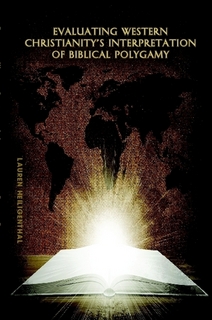
From October 10th through the 17th the Kindle version of Evaluating Western Christianity’s Interpretation of Biblical Polygamy will be available for just .99 cents! It’s also available for free with Kindle Unlimited.

I would love to receive your thoughts, questions and comments on this controversial topic, or if you feel so inclined, to leave a review on Amazon.

Thank you for your support!

“Jesus said…”

The Supreme Court’s decision regarding gay marriage shouldn’t have been as shocking for Christians as it seems to have been. Why should we be surprised when the world acts like the world? What has bothered me this week is not so much the gay marriage ruling but the number of various biblical interpretations thrown out there with the postmodern attitude: “All interpretations are right and justified.” It’s the mindset that interpretation is in the eye of the beholder, and that’s OK. I’m not talking about unbelievers who use Scripture against Christians. I don’t put any stock into what they say because a person cannot understand the Scriptures without the Spirit. How can I say that, you may ask? Let’s take a look at 1 Corinthians 2 (NASB):

“And when I came to you, brethren, I did not come with superiority of speech or of wisdom, proclaiming to you the testimony of God. For I determined to know nothing among you except Jesus Christ, and Him crucified. I was with you in weakness and in fear and in much trembling, and my message and my preaching were not in persuasive words of wisdom, but in demonstration of the Spirit and of power, so that your faith would not rest on the wisdom of men, but on the power of God.

Yet we do speak wisdom among those who are mature; a wisdom, however, not of this age nor of the rulers of this age, who are passing away; but we speak God’s wisdom in a mystery, the hidden wisdom which God predestined before the ages to our glory; the wisdom which none of the rulers of this age has understood; for if they had understood it they would not have crucified the Lord of glory; but just as it is written,

‘Things which eye has not seen and ear has not heard,

And which have not entered the heart of man,

All that God has prepared for those who love Him.’

For to us God revealed them through the Spirit; for the Spirit searches all things, even the depths of God. For who among men knows the thoughts of a man except the spirit of the man which is in him? Even so the thoughts of God no one knows except the Spirit of God. Now we have received, not the spirit of the world, but the Spirit who is from God, so that we may know the things freely given to us by God, which things we also speak, not in words taught by human wisdom, but in those taught by the Spirit, combining spiritual thoughts with spiritual words.

But a natural man does not accept the things of the Spirit of God, for they are foolishness to him; and he cannot understand them, because they are spiritually appraised. But he who is spiritual appraises all things, yet he himself is appraised by no one. For who has known the mind of the Lord, that he will instruct Him? But we have the mind of Christ.” (Bold print added for emphasis)

An unbeliever may seem knowledgeable about spiritual matters and talk about Scripture all day long, but unless he or she has the Spirit, his or her words are meaningless.

Back to my original point, what has bothered me are various interpretations given by people who claim to be Christians. How can people who claim to have the same Spirit (which people are indeed doing if they call themselves Christians) proclaim opposing biblical interpretations and divide the church even further? Is the Spirit of God divided or confused? Of course not! So the only answer is that there’s something wrong with the church.

I read an article the other day called “I’m gay, liberal, open-minded–and a convert to Christianity.” I read the article not because I thought I’d agree with the author, but I was more curious about how he was going to justify his choices. The content made my blood boil. Here’s a few excerpts from Jonathan Elliott (author) with bold print for emphasis:

“But last October, I – a 33-year-old, progressive, openly gay man who spent much of my twenties as a crusading atheist and curious agnostic – was baptized and confirmed in the church. I’m unafraid to proclaim myself a disciple of Jesus Christ.” – He is open about his homosexuality and his proclaimed Christianity. The church has placed its stamp of approval upon him.

I’m still the person I was before I became a Christian, and a baptism isn’t a brainwashing. This change in my life didn’t turn me into a raging nutball – at least, I’m no more of one than I ever was.” – So are other Christians transformed into raging nutballs? Supposedly accepting Christ and being baptized didn’t change him. There’s apparently no need for change. How many of you Christians would say that you are the same person before coming to Christ and have had no conviction to change or repent?

He was diagnosed with diabetes in 2010: “I joined a support group for other newly diagnosed folks, and the therapy involved with this was rooted in a belief in a higher power. Initially, I resisted wholeheartedly. I’d been raised without any faith experience, and to even open up to the possibilities of God was a frightening and conflict-ridden concept. But ongoing discussions with this group made me realize that I was angry at what had happened to me – specifically, angry at God. And that meant I believed.” – It’s not until he feels angry towards God that he believes. OK, so even if this is how someone starts believing in God, you would think that there would be some sort of interest in learning more about Him, right?

“I spent the next two years bouncing back and forth between nearly 20 congregations of different denominations, serial first dates with church communities. And while I often found comfort and positivity, none felt like home. Sometimes I’d engage a pastor during the post-service coffee hour and find a bit of theology I couldn’t agree with; other times, I didn’t feel wholly welcomed.” – Searching for the right theology, which is…?

“Then, in 2013, I took a job as communications director for the Episcopal Diocese of New Jersey.” [Elliott] “found that the church had the openness, diversity and the clear sense of tradition I sought. It was also strongly inclusive of the LGBTQ community, and welcomed both women and men as clergy members.” – Not sure what the “tradition” part means for him, but it seems that he found a place which supported his lifestyle. He didn’t have to change.

“Our priest preaches sermons that incorporate everything from transgender rights to the theological leanings of Dr. Who.” – What? And how is this preaching exactly?

And though the fundamentalists scream loudest, there are progressive and inclusive new forms of church springing up around the country, like Capital City Church in DC. Christian businesses like Elevation Burger use faith as part of their culture to inform great products and practices, without aspersions or judgment (take that, Hobby Lobby and Chik-Fil-A).” – Again, welcoming division within the so-called church.

“I acknowledge that Christianity is often countermanded and corrupted for heinous and spiteful things. But I refuse to accept that as the status quo. At the end of the day, I’m a Christian because faith, and our openness to God and to one another, make us stronger and more willing to engage the world as it unfolds and changes around us.”

Not once is Christ mentioned. There is no talk of salvation or Scripture. But the concepts of openness and finding the right fit rise to the surface. There’s no need to change; just be open to God and one another. How is this Scriptural? Does this not bother anyone else? Either the world hears (supposed) condemnation from the church or full acceptance of behavior, which is more politically correct. How has the church arrived to this point? I believe the issue tends to derive from biblical interpretation and the church’s unwillingness to distinguish good from bad fruit.

When discussing biblical interpretation for modern issues, a number of arguments start with “Jesus is in the New Testament, and He says…” Somehow the Old Testament gets tossed aside or is spoken of as barbaric. What most people forget or have not realized is that Jesus is still under the old covenant before His death and resurrection. Sure, someone wrote up a page that said “New Testament” and placed it before the Gospels, but it’s not until after Jesus dies and resurrects that the new covenant begins. A covenant cannot be established unless blood is spilled, and in this case, Christ’s blood (Heb. 9:13-18). So when people try to argue that Jesus is changing the Law with His teachings, they argue in ignorance. How can He uphold the Law and change it at the same time? What is more, why would He violate His own character since God does not change? There is either a lack of understanding or the unbelief that Jesus is God. John testifies to Jesus’ beginning with God (John 1). Jesus Himself testifies that He was before Abraham (John 8:58), and declares in John 17:5, “Now, Father, glorify Me together with Yourself, with the glory which I had with You before the world was.Since Jesus is God, why would He oppose His own instructions?

As I’ve argued before, would not Christ, who has always been with and part of the Father, understand the Law perfectly? Would not, then, His teachings reflect the intended motivations behind the Law rather than change the Law itself? It is true that we (Christians) are no longer bound by the Law since Christ is the fulfillment of the Law, yet Jesus makes it clear that the Law is not abolished even now: “Do not think I came to abolish the Law or the Prophets; I did not come to abolish but to fulfill. For truly I say to you, until heaven and earth pass away, not the smallest letter or stroke shall pass from the Law until all is accomplished. Whoever then annuls one of the least of these commandments, and teaches others to do the same, shall be called least in the kingdom of heaven; but whoever keeps and teaches them, he shall be called great in the kingdom of heaven. If the Law is the tutor which leads us to Christ (Gal. 5:23); if the Law and the Prophets are witnesses to the righteousness of God through faith in Jesus Christ (Rom. 3:21-22); if Jesus is One with the Lawgiver; and if He is under the Law while He teaches, how is it Christians argue that Jesus opposes the Law?

Many people want to see Jesus as a social justice campaigner, reaching out to the lowest of the low because they’re oppressed. They declare that He changed the role of women. That He simply loved people for who they were no matter what. That He condemned the rich men. Well, if that’s the case I must be reading a different gospel. Because I see Jesus as the holy Son of God who spoke to the self-righteous, rich, and lowly alike. He ate with and taught all of them. Many of the self-righteous, like the Pharisees, ridiculed Him and sought His death. They should have known the truth and taught the sheep, but instead they acted like wolves. Their own arrogance and desire for power and riches from the world drove them away from the Messiah they were supposedly waiting for. Some rich people, Jew and Gentile alike, sought Jesus for wisdom, truth, and healing, and those who had faith received what they asked for. For others, the cost of following Jesus was too high. Jesus interacted with the lowly and outcasts because they didn’t know the truth. They were sheep without a shepherd, the lost and spiritually sick. Those who were supposed to teach them had no understanding even with all of their knowledge, who burdened them with their own additions to the Law and man-made traditions. So Jesus taught them, and many came to believe in Him. And despite what many people are spouting nowadays, they changed because of the truth they came to know.

Zaccheus (a rich, tax collector) no longer stole from people, but gave half of his possessions to the poor and vowed to return four-fold to those he defrauded (all of this given from his heart, not compulsion). Mary Magdalene was no longer possessed by demons but served the Lord (some scholars propose that she is also the sinful woman who wiped Jesus’ feet with her hair in Luke 7:36-50; John 11:2 seems to support this). Jesus told the woman who was caught in adultery to “Go and sin no more.” He also told that to others whom He healed. The power of God was manifested so that they would believe, but they were instructed to no longer live in sin. Many of Jesus’ disciples who heard the teaching, “He who eats My flesh and drinks My blood abides in Me, and I in him (John 6:56),” decided to turn away from following Jesus. Scripture explains they left because of their unbelief (John 6:53-66). Jesus came to bring life to anyone who would heed His words of truth and follow the Father’s will. Salvation is a gift for all, poor and rich, Jew and Gentile alike. This is what Paul means when he writes, “For all of you who were baptized into Christ have clothed yourselves with Christ. There is neither Jew nor Greek, there is neither slave nor free man, there is neither male nor female, for you are all one in Christ Jesus. And if you belong to Christ, then you are Abraham’s descendants, heirs according to promise” (Gal. 3:27-29). Anyone who claims this to be about social justice or equality is a fool. Such a person takes this teaching out of context which is talking about faith. Any of us who have made the commitment to follow Christ and carry out this commitment are one in Him. We are the body of Christ with each member serving its own God-given purpose so that the body may function properly.

Anyone who says that no change is necessary as a Christian is a liar and not a believer. This goes beyond the discussion of homosexuality. It’s about all sin. If I’m aware of sin in my life, and I do not repent and change, I remain in sin before God. If Israel received wrath from God while He continued to fulfill His promises to them (Psalm 78; 1 Cor. 10), do we think that we would not incur similar judgment if we remain in sin? Paul writes in Romans 6:1-7,

“What shall we say then? Are we to continue in sin so that grace may increase? May it never be! How shall we who died to sin still live in it? Or do you not know that all of us who have been baptized into Christ Jesus have been baptized into His death? Therefore we have been buried with Him through baptism into death, so that as Christ was raised from the dead through the glory of the Father, so we too might walk in newness of life. For if we have become united with Him in the likeness of His death, certainly we shall also be in the likeness of His resurrection, knowing this, that our old self was crucified with Him, in order that our body of sin might be done away with, so that we would no longer be slaves to sin; for he who has died is freed from sin.”

He continues in vv. 11-18,

“Even so consider yourselves to be dead to sin, but alive to God in Christ Jesus. Therefore do not let sin reign in your mortal body so that you obey its lusts, and do not go on presenting the members of your body to sin as instruments of unrighteousness; but present yourselves to God as those alive from the dead, and your members as instruments of righteousness to God. For sin shall not be master over you, for you are not under law but under grace. What then? Shall we sin because we are not under law but under grace? May it never be! Do you not know that when you present yourselves to someone as slaves for obedience, you are slaves of the one whom you obey, either of sin resulting in death, or of obedience resulting in righteousness? But thanks be to God that though you were slaves of sin, you became obedient from the heart to that form of teaching to which you were committed, and having been freed from sin, you became slaves of righteousness.”

If there are people who claim Christ but don’t acknowledge sin, they do not speak the truth. For what is the purpose of coming to Christ if we don’t believe we need to be saved from our sinful ways? If we believe we live rightly before God, why (as in Jonathan Elliott’s case) would we seek God since there should be no fear of eternal judgment?

Here’s another word from Paul regarding so-called believers who choose to continue in their sin: “But actually, I wrote to you not to associate with any so-called brother if he is an immoral person, or covetous, or an idolater, or a reviler, or a drunkard, or a swindler–not even to eat with such a one. For what have I to do with judging outsiders? Do you not judge those who are within the church? But those who are outside, God judges. Remove the wicked man from among yourselves” (1 Cor. 5:11-13). Paul’s not talking about unbelievers who are coming to the church to learn about God. He’s talking about people proclaiming to be Christians but continuing in sin without repentance. It is the church’s job to rid itself of people who profane Christ’s name by choosing to live wickedly (knowingly).

Jesus says to His disciples,

“If the world hates you, you know that it has hated Me before it hated you. If you were of the world, the world would love its own; but because you are not of the world, but I chose you out of the world, because of this the world hates you. Remember the world that I said to you, ‘A slave is not greater than his master.’ If they persecuted Me, they will also persecute you; if they kept My word, they will keep yours also. But all these things they will do to you for My name’s sake, because they do not know the One who sent Me. If I had not come and spoken to them, they would not have sin, but now they have no excuse for their sin. He who hates Me hates My Father also. If I had not done among them the works which no one else did, they would not have sin; but now they have both seen and hated Me and My Father as well.” John 15:18-24

He continues His teaching by talking about the Spirit to come (Whom we now have as believers):

“But I tell you the truth, it is to your advantage that I go away; for if I do not go away, the Helper will not come to you; but if I go, I will send Him to you. And He, when He comes, will convict the world concerning sin and righteousness and judgment; concerning sin, because they do not believe in Me; and concerning righteousness, because I go to the Father and you no longer see Me; and concerning judgment, because the ruler of this world has been judged. I have many more things to say to you, but you cannot bear them now. But when He, the Spirit of truth, comes, He will guide you into all the truth; for He will not speak on His own initiative, but whatever He hears, He will speak; and He will disclose to you what is to come. He will glorify Me, for He will take of Mine and will disclose it to you. All things that the Father has are Mine; therefore I said that He takes of Mine and will disclose it to you.” John 16:7-15

We either follow the teaching of the world or the teaching from the Spirit. If we proclaim to be Christ followers we should no longer live according to the world’s sense of morality (if it has one). If we are one body in Christ our understanding of truth must be the same. We may disagree on music styles or small church vs. big church (the petty things we fight over; read Romans 14), but the essentials should be the same. How we understand sin should be the same. Do we want Christ to see us as a bride defiled by the world, or a pure, spotless bride?

When we encounter the lost our hope should be that they want to change to be more like Christ. How can we remain the same when we’ve been given so great a salvation? Is not His abundant mercy and grace reason enough for us to fall on our faces and repent because of our own wickedness? “For while we were still helpless, at the right time Christ died for the ungodly. For one will hardly die for a righteous man; though perhaps for the good man someone would dare even to die. But God demonstrated His own love toward us, in that while we were yet sinners, Christ died for us. Much more then, having now been justified by His blood, we shall be saved from the wrath of God through Him (Romans 5:6-9).” If we know that there is wrath to come for those who do not believe (who are slaves to sin), why do we think that this wrath will not come upon us if we ignore sin, whether our own or that within the church? Is this not taking advantage of God’s grace, thereby slapping Him in the face?

The gospel of Christ will offend those who desire to be part of the world, but for those who seek new life, it is freedom from sin. It is eternal life. It is hope. We should not be ashamed of the gospel and fall in line with the world. If we follow the world then we are worse than unbelievers because we know the truth and turn away from it. Instead, may we serve God with the same Spirit, with the same understanding of truth.

Jesus said,

“I am the way, the truth, and the life; no one comes to the Father but through Me” ~ John 14:6

 © Lauren Demuth

What’s Your Worldview?

Basic to the idea of Weltanschauung[1] is that it is a point of view on the world, a perspective on things, a way of looking at the cosmos from a particular vantage point. It therefore tends to carry the connotation of being personal, dated, and private, limited in validity by its historical conditions. Even when a worldview is collective (that is, shared by everyone belonging to a given nation, class, or period), it nonetheless shares in the historical individuality of that particular nation or class or period.[2]

[Albert] Wolters reveals that ‘worldview’ is a fluid concept because each nation or people group in different eras throughout history perceived the world based on their own knowledge, customs and conditions. For example, in the Ancient Near East, many cultures operated in group-oriented societies. Families often lived under the same roof and men typically were leaders in the household. As Scripture demonstrates, a woman was under the authority of her father until she was married, which was usually arranged by her parents. The marriage itself not only united the man and the woman but the families as well. After marriage, bearing children was important for maintaining a man’s lineage, and they provided labor as a means to survive. Many people today also function within group-oriented societies.

In contrast, most modern Western societies are individualistic. Unmarried children can leave their parents to pursue their own dreams, and marriage is often between the man and woman only, not their families. The man does not usually assume the role as leader of the household, but the man and woman often share similar or equal roles. Divorce has become common in many of these societies, and the family size is usually small compared to group-oriented societies. Individualistic societies often view childbearing as a privilege, not a necessity. Neither of these types of cultures is necessarily better than the other, but they each offer a different view of the world. Because of these differing worldviews, both groups initially have difficulty understanding one another. Understanding the differences between worldviews is not only important for interacting with people from other cultures, but it is key for biblical interpretation. In particular to this book, a person’s worldview concerning marriage will usually affect his or her interpretation of biblical passages involving both monogamous and polygamous marriages, divorce, and remarriage.” ~ Excerpt from Evaluating Western Christianity’s Interpretation of Biblical Polygamy, pp. 13-14

“The popular Western worldview towards polygamy not only affects how people perceive polygamous cultures, but it also affects interpretation of Scripture. Daniel I. Block advocates that ‘modern Western notions of ‘family’ should not be imposed upon ancient evidence.’[3] He further explains that American evangelicals tend to promote the nuclear family consisting of a husband, wife, and children, but the family structures in many other cultures ‘bear a much closer resemblance to the biblical picture than patterns currently operative in Western countries.’[4] Western readers may not be capable of completely casting aside their own biases concerning polygamy, but Block encourages people to ‘be aware of their biases and try to interpret the data in the light of the values that prevailed at the time the documents were produced.’[5]

[Miriam Koktvedgaard] Zeitzen presents an anthropological perspective concerning the Western worldview and its perception of polygamy. She addresses that Christianity, ‘European-based legal codes,’ and ‘the imposition of state laws on aboriginal peoples living within the borders of modern nation-states’ have driven the practice of polygamy further to its end.[6] With this in perspective, Zeitzen exposes that

while polygamy is legally forbidden in the Western Christian world, it has long been argued that it exists there in various pseudo or de facto forms…People typically point to serial marriage or serial polygamy, which is marriage followed by divorce, remarriage followed by divorce and so on any number of times. Other forms include a man married to one woman, or indeed unmarried, while maintaining one or several mistresses.”[7]

~ Excerpt from Evaluating Western Christianity’s Interpretation of Biblical Polygamy, pp. 17-18

Evaluating Western Christianity’s Interpretation of Biblical Polygamy is available at:

http://www.patriarchpublishinghouse.com/9781629045214.htm or

http://www.amazon.com/Evaluating-Christianitys-Interpretation-Biblical-Polygamy/dp/1629045217/ref=sr_1_1?s=books&ie=UTF8&qid=1421350972&sr=1-1&keywords=evaluating+western+christianity%27s+interpretation+of+biblical+polygamy

An e-book version is still pending.

Footnotes:

[1] Weltanschauung is the German word for “worldview.” “The concept of worldview has several roots. One is in Western philosophy, where the German word Weltanschauung was introduced by Immanuel Kant and used by writers as Kierkegaard, Engels, and Dilthey as they reflected on Western culture. By the 1840s it had become a standard word in Germany.” Paul G. Hiebert, Transforming Worldviews: An Anthropological Understanding of How People Change (Grand Rapids, MI: Baker Academic, 2008), 13.

[2] Hiebert, Transforming Worldviews, 13-14. Quote from Albert Wolters, Creation Regained: Biblical Basis for a Reformational Worldview (Grand Rapids, MI: Eerdmans, 1985), 9.

[3] Daniel I. Block, “Marriage and Family in Ancient Israel,” in Marriage and Family in the Biblical World, ed. Ken Campbell (Downers Grove, IL: InterVarsity Press, 2003), 34.

[4] Block, “Marriage and Family in Ancient Israel,” 34.

[5] Block, “Marriage and Family in Ancient Israel,” 34.

[6] Zeitzen, Polygamy: A Cross-Cultural Analysis, 4.

[7] Zeitzen, Polygamy: A Cross-Cultural Analysis, 15.


My Book is on Amazon

Well I have another book update for you. If you’re interested in checking out my book Evaluating Western Christianity’s Interpretation of Biblical Polygamy you can now do so on Amazon. Here’s the link: http://www.amazon.com/Evaluating-Christianitys-Interpretation-Biblical-Polygamy/dp/1629045217/ref=sr_1_1?s=books&ie=UTF8&qid=1417471247&sr=1-1.

There are plans in the works for creating an e-book version, and I’ll be sure to update you when that’s complete 🙂

For anyone who hasn’t read about my book yet, Finally Published and The Story Behind the Book are posts that provide some explanation.

Also, if you’re interested in other works about biblical polygamy please check out www.patriarchpublishinghouse.com.

Steps for Interpreting Scripture

I hope to write more on biblical interpretation in the near future, but for now I wanted to share this link to Jason Upham’s blog. He shares 10 steps to interpreting Scripture that I think are quite helpful. These also go hand-in-hand with my blog posts Cutting the Context and Critiquing “The Message” Bible. Check these posts out if you’re interested.

“Be diligent to present yourself approved to God as a workman who does not need to be ashamed, accurately handling the word of truth.” (2 Timothy 2:15)

Cutting the Context

“Why did I do that?”

What does this question mean? It’s hard to tell reading it without any context, right? We don’t know who wrote it and why. It could be written by a student who made a mistake on a test. An Alzheimer’s patient may not recollect why she went outside. A teenage girl may be regretting her decision to take her anger out on a best friend. There are endless possibilities of meaning, but without the context we can’t fully understand what someone is trying to communicate.

Without context there is no story. It doesn’t matter if you’re writing a book or an e-mail, you’re going to provide the necessary details so that your message is properly communicated. Otherwise you’ll leave people scratching their heads in bewilderment. No one wants that (well, not most people).

With that being said, why do we cut the context of Scripture, taking a verse here and a verse there for our own purposes? We may be searching for encouragement. Maybe we’re debating a hot topic and need Scriptural support.  It could be we’re promoting a particular verse for a new series in church. Whether our intentions are for good or ill, cutting the context leaves out important details.

Alright, here’s an example that might make people shake their fists, but give me a chance to explain. Jeremiah 29:11 is a verse I’ve heard quoted countless times:

“‘For I know the plans that I have for you,’ declares the Lord, ‘plans for welfare and not for calamity to give you a future and a hope.’” (NASB)

Does the Lord know the plans He has for our lives? Yes. But who is the original subject of these words from God? Jeremiah 29:1-4 explains that these words are part of a letter written by the prophet Jeremiah, from the Lord, to the Israelite exiles in Babylon. In vv. 5-9 the Lord instructs His people to settle down in Babylon, to be fruitful and multiply (so to speak), and to beware of false prophets. What were these false prophets saying? Jeremiah 28:1-4 gives us a clue. Hananiah, the son of a prophet, spoke to the priests and the people remaining in Jerusalem that the Lord was going to break the yoke of King Nebuchadnezzar and everything and everyone will return in two years’ time. If you continue to read the rest of that chapter you will find that Hananiah was not sent by the Lord (Read Jer. 27 for more insight).

Rather, in Jeremiah 29:10-14 the Lord sends a different message to the exiles:

10 For thus says the Lord, ‘When seventy years have been completed for Babylon, I will visit you and fulfill My good word to you, to bring you back to this place11 For I know the plans that I have for you,’ declares the Lord, ‘plans for welfare and not for calamity to give you a future and a hope. 12 Then you will call upon Me and come and pray to Me, and I will listen to you. 13 You will seek Me and find Me when you search for Me with all your heart. 14 I will be found by you,’ declares the Lord, ‘and I will restore your fortunes and will gather you from all the nations and from all the places where I have driven you,’ declares the Lord, ‘and I will bring you back to the place from where I sent you into exile.’” (Bold print added for emphasis)

The Lord is telling the exiles, whom He sent to Babylon, that He will fulfill His promise of bringing them back to Jerusalem…in seventy years, not two. It was God’s will for Israel to go there and for the nations to place themselves under Babylon’s yoke for a time (Jer. 27:6-8). The rest of Jeremiah 29 communicates the Lord’s severe punishment on the false prophets who have lied to the exiles and were not sent by God.

A good question to ask in all of this is why were the Israelites sent to Babylon in the first place? The entire OT, especially the monarchy period, demonstrates that Israel repeatedly committed adultery (metaphorically) against God. They sought after other gods, and even though they repented at times, they kept reverting to their sinful ways. They became a disobedient people, and God could not let it go any longer.

However, what is interesting is that the Lord tells the exiles in Jer. 29:7 to “Seek the welfare of the city where I have sent you into exile, and pray to the Lord on its behalf; for in its welfare you will have welfare.” Even though they are in the enemy’s camp, the Lord tells them to ask for blessings. If Babylon is blessed, the Israelites will be blessed. This seems strange until we read that the Lord is going to keep the Israelites there for seventy years. This is a time for their families to grow and return to the Lord in their hearts so that when God calls them back to Jerusalem (Cyrus’ decree in the future) they will be ready. Even though everything seems to be going wrong for Israel, the Lord assures them that He has a plan, and it’s not the plan that the false prophets are spewing. It might be awhile before the Israelites return home, but they WILL return, and the Lord WILL prosper them.

Why? After all the disobedience, why? Because the Lord is faithful to keep His promises. Recall His promise to Abraham. Not only will his descendants multiply and be blessed, but all the families of the earth will be blessed because of him (Gen. 12:1-3). This includes the Gentiles. Also, remember God’s promise to David: “Your house and your kingdom shall endure before Me forever; your throne shall be established forever” (2 Sam. 7:16). How are these promises eventually fulfilled? Through the Messiah! But in order for the Messiah to come, there needs to be an Israel. Therefore, as promised in Jer. 29, the Lord will bless the Israelites as He promised Abraham, and He will bless all the families of the earth by sending His Son, the final and eternal descendant on David’s throne.

How marvelous! How much we have gained even through Israel’s disobedience! In Jer. 29:11, the Lord is giving His people hope so that they will turn to Him and seek Him. I believe this is what we can learn from this passage. Maybe some of us have turned from the Lord or haven’t been walking the way we should be. Maybe we find ourselves in an awful place with no hope. But we should remember that there is always hope. Christ is our eternal hope. Everything has been paid. The Lord does not reward disobedience, and there are consequences for such actions, but if we humble ourselves, pray, ask for forgiveness, trust that He is a God who sees and hears our supplications, and seek Him with all of our hearts, He will show us where to go. That path may not make sense. It may not seem prosperous according to the world’s understanding of prosperity, but we can have hope that He is by our side if we choose to keep walking with Him. There also may be false prophets or teachers in our lives telling us opposite of what the Lord says. It might sound really good, too. But we must be on guard and test everything. If something sounds too good to be true, it usually is. The Lord did not take the prophets’ lies lightly (Jer. 29:17-19), and we shouldn’t either (Matt. 7:15-23).

While I do not think it is wrong to cling to the hope of Jer. 29:11, it is necessary to understand the context. It is also important for each one of us to ask, “Lord, am I following You or my own plans?” Are we willing to follow the Lord no matter what, or do we have to face an exile of our own? As 1 Corinthians 10:1-13 instructs, let us learn from the Israelites’ decisions and choose to follow the Lord wholeheartedly with a firm foundation of His truth (in context).

© Lauren Heiligenthal

Book Update

My book, Evaluating Western Christianity’s Interpretation of Biblical Polygamy, is officially available on my publisher’s website: http://www.patriarchpublishinghouse.com/9781629045214.htm. A copy is $9.95 plus S&H. If you live outside of the United States, this book can be shipped internationally.

For a summary of this book visit my post Finally Published!

If you’re interested in why I have chosen to write about biblical polygamy, please check out The Story Behind the Book.

If you have any questions, comments, or insights, I’d love to read them and dialogue with you 🙂

The Story Behind the Book

Polygamy.[1] This word often conjures up negative thoughts, images, and stories told throughout the years. The Western world most likely identifies polygamy with Mormonism and the tragedies therein. It seems as though these tragedies have defined what polygamy is all about, but is this generalization really fair? Before you misunderstand me, I am NOT (nor ever have been) a Mormon nor do I agree with the tenets of Mormonism. Rather, my interest in polygamy derives from my love of missions.

Because of the negativity surrounding polygamy in the Western world, people’s perceptions and feelings often get inserted into Scriptural depictions of polygamy. Growing up in the church, I was taught that God simply tolerated polygamy practiced by the biblical patriarchs. This “toleration” led me to believe that polygamy was indeed a sin, but for some reason God just let it go. The impression I got from this teaching was that these patriarchs were righteous men who happened to make mistakes along the way. But one question remained in my heart: Does God really tolerate sin to the point of not saying ANYTHING? It wasn’t until much later that I reevaluated this thought process.

I started participating in short-term mission trips around 11 years old. In the following years, my passion and heart grew for missions as I traveled to Hungary, Romania, Thailand, Peru, and South Africa. I met amazing people who had a heart and hunger for the truth. I pursued a degree in Intercultural Studies because it has been God’s desire for me to be a missionary. In learning how to approach another culture and teach the Gospel, the subject of polygamy would come up from time to time. I wrestled with the question, What would I do? Can I justify teaching people to split up their families because they’re in sin? On the flip side, can I live with teaching people how to live a Christian life while still living in sin? It seemed like there was no good outcome to either of these questions. As soon as I would ponder this dilemma, I pushed it off and moved onto something else. It wasn’t until I was sitting in a Cultural Anthropology class during my undergraduate studies that I was confronted with these same questions.

My professor must have been talking about different family structures one day (I don’t exactly remember), and he commented that he didn’t think Scripture teaches against polygamy. I had never heard anyone say this before. This went completely against what I had been taught, and I questioned him, What about this Scripture? What about that Scripture? He gave me some responses, but he didn’t have much to say. He mainly was just giving the class his opinion. Within this discussion he commented how polygamous families coming to America were often forced to divorce because of our laws, and my professor didn’t agree with that. He also shared one story in particular that caught my attention.

Years ago his parents were missionaries in Western Africa. His parents were planting a new church and needed funding for a new building. A polygamist offered to pay for the project (polygamists tend to have more wealth which they need to take care of their larger families), and apparently my professor’s parents agreed. However, when it came time for services to begin, the missionaries wouldn’t allow the polygamist to participate unless he was no longer a polygamist. As I listened, I could tell that my professor was not pleased with his parents’ decision, and I began to wonder a few things myself. Why did they offer to let the man pay the expenses if they didn’t agree with his lifestyle? Because they accepted his money, how could they justify excluding him from the body? What kind of message did this send to the rest of the village? How could they encourage divorce in order to participate in the body of Christ? At this point, I couldn’t let the polygamy dilemma go. There had to be a biblical course of action.

I decided to take a fresh look at Scripture again and found that there is, indeed, no prohibition of polygamy. There are regulations concerning polygamy in the Law, and there are a number of narratives involving polygamy, but there is no prohibition. On the contrary, there are a few passages that seem to indicate God’s involvement rather than a simple toleration. For example, in 2 Samuel 12 Nathan confronts David about his sins of adultery and murder. Pay attention to what the Lord says through Nathan in vv. 7-8, “Nathan then said to David, “You are the man! Thus says the Lord God of Israel, ‘It is I who anointed you king over Israel and it is I who delivered you from the hand of Saul. I also gave you your master’s house and your master’s wives into your care, and I gave you the house of Israel and Judah; and if that had been too little, I would have added to you many more things like these!’” (Bold words added for emphasis). God Himself tells David that it was He who gave him Saul’s wives. If the things God had given David were too little (this includes wives), He would have given him more. If polygamy was contrary to God’s divine plan for marriage, it does not make sense for Him to offer more wives to David. Also, if you read through the rest of that passage (vv. 9-23), you will find that God’s punishment of David and his household had nothing to do with polygamy, but rather it was because David committed adultery with Bathsheba and murdered her husband.

Another example is Genesis 29:31-30:24. It would take too long to discuss this passage in length (I discuss it in my book), but I bring it up to make you aware of how much God is involved in the growth of Jacob’s family. He opens Leah’s womb (Gen. 29:31), and she initially bears four sons. When she names them she praises the Lord for hearing and seeing her in her affliction. God is perceived as the One blessing her. When Rachel remains barren she gives her handmaid to Jacob, and the children that Bilhah bears become Rachel’s children. Leah also does the same thing when she stops childbearing and gives her handmaid, Zilpah, to Jacob. The wives themselves make this choice. Jacob does not simply take for himself (This is similar to Abraham’s story when Sarah gives Hagar to him). When Leah bears again in v. 17, she exclaims in v. 18, “God has given me my wages because I gave my maid to my husband.” Again, God is constantly perceived as being involved in childbearing. Then it’s Rachel’s turn. Verse 22 says, “Then God remembered Rachel, and God gave heed to her and opened her womb.” Some scholars argue that the language used to describe God’s involvement is just simply how the people viewed their situation. It’s not really what was going on. However, if we follow this kind of logic then we would have to doubt all of Scripture. With this same logic, every Christian perceives that he/she is saved because of Jesus’ sacrifice, but this is not necessarily true. This is just what we want to believe. Now, we would argue that such a conclusion is false. So why is it that people assume that the OT is only a perception of truth but not a representation of truth itself? I hold to the belief that when Scripture indicates God’s involvement, He was truly involved. You can make your own conclusions.

In 1 Samuel 1 God blesses Hannah, one of Elkanah’s wives, with a son (Samuel) whom she dedicates to the Lord. This man becomes an important prophet in Israel’s history. In 2 Chronicles 24:3, Jehoiada (a righteous priest) takes two wives for young king Joash. Again, if a person is deemed righteous, it does not make sense to say that their actions are sinful unless they are noted as such.

One of the most eye-opening passages of Scripture in my study of polygamy is Ezekiel 23. In this passage, the Lord (through Ezekiel) allegorizes the sins that Judah and Samaria have committed against Him. Let’s take a look at vv. 1-4, “The word of the Lord came to me again, saying, ‘Son of man, there were two women, the daughters of one mother;  and they played the harlot in Egypt. They played the harlot in their youth; there their breasts were pressed and there their virgin bosom was handled. Their names were Oholah the elder and Oholibah her sister. And they became Mine, and they bore sons and daughters. And as for their names, Samaria is Oholah and Jerusalem is Oholibah’” (Bold print added for emphasis). Now, I am fully aware that this is NOT saying that the Lord is literally married to Judah and Samaria. The text is obviously allegorical to convey their abhorrent acts (continue reading the rest of the chapter). However, I am proposing that the Lord would not use a sinful depiction to describe Himself. The text explains how Oholah and Oholibah have committed adultery against the Lord. The only way for a woman to commit adultery against a man is if she’s married to him. In this context, it seems that God has depicted Himself as a polygamous husband to two women (Judah and Samaria) who eventually commit adultery against Him. Therefore, I have asked myself, If polygamy is sinful, why would God describe Himself in this manner? If God describes Himself as a polygamous husband in the OT, it does not make sense to say that polygamy is a sin in the OT. As such, since God is both omniscient and immutable, it stands to reason that polygamy is not a sin in the NT. If I choose to believe otherwise, I fear that I would be questioning God’s nature.

I understand that polygamy is a taboo topic, but the main question I have had to ask myself is: Does the Bible prohibit polygamy, or is it my culture’s prohibition of polygamy that gets inserted into biblical interpretation and the text itself? This question is not only relevant for polygamy, but for any topic. I am accountable for what I hear, read, teach, and believe. If I don’t take the time to understand what Scripture has to say about polygamy (or not say), my decisions (particularly on the mission field) and interpretations can continue to have a negative impact on cultures that practice polygamy. In many cases over the last 100+ years, missionaries have either suggested or demanded that polygamous husbands divorce all but their first wife if they want to be baptized or participate at all in the church. This has led to devastating results. Some wives have had no other option than to become prostitutes to take care of themselves. In a number of these cultures most men do not want to marry a divorced woman (divorce is often viewed as dishonorable), which is quite a foreign concept for Western societies. Divorce also has a negative impact on children who are either torn from their father and live with their poor mother (and possibly her extended family) or are torn from their mothers and live with their father. I’m not writing this to be condemning, but rather to illustrate that if we interpret Scripture based on our cultural values rather than biblically-founded values, there may be serious consequences. People have already interpreted Scripture in this way about divorce, abortion, homosexuality, promiscuity, etc. In this present age, Scripture has become whatever we want it to say, and this mindset carries many dangers.

I’ve done more research besides what I’ve discussed here, but I wanted to give you an inside look into some of my thoughts and questions. I also hope that I’ve challenged you somehow. Please feel free to ask a question or give a comment.

~~~~~~~~~~~~~~~

I’ll keep you updated on book news once I receive it from my publisher.

Feel free to check out http://www.lulu.com/shop/lauren-heiligenthal/evaluating-western-christianitys-interpretation-of-biblical-polygamy/paperback/product-21877418.html. It appears that you have to be registered with lulu.com to buy my book if you’re interested.

My publisher’s website is http://www.patriarchpublishinghouse.com/. My book should appear on this website soon. Also, they have many other books on polygamy and patriarchy if these topics interest you.

Footnote

[1] I am specifically referring to polygyny, which is one man having multiple wives. I focus on this form of polygamous marriage because it is demonstrated in Scripture and appears to be an acceptable form of marriage. Other forms of polygamy, such as polyandry (one woman with multiple husbands), polyamory (multiple relationships at the same time), and polygynandry (multiple husbands and wives in an intertwining of relationships), are not demonstrated in Scripture. I believe they are considered sinful because polyandry and polygynandry result in adultery. Polyamory could involve adultery, but it is also a demonstration of blatant sexual promiscuity.

© Lauren Heiligenthal