My Book Turned E-book…

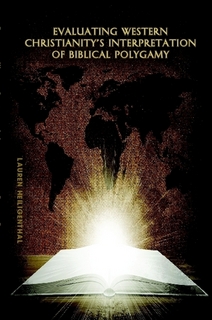
Well I have finally converted my book, Evaluating Western Christianity’s Interpretation of Biblical Polygamy, into an e-book! I’ve talked about the topic of biblical polygamy a little bit on this blog, namely in the post The Story Behind the Book. If you’re interested in this topic or intrigued by the controversy check out http://www.amazon.com/Evaluating-Christianitys-Interpretation-Biblical-Polygamy-ebook/dp/B0106RVRZS/ref=sr_1_fkmr0_1?s=books&ie=UTF8&qid=1435100840&sr=1-1-fkmr0&keywords=evaluating+western+christianity%27s+interpretation+of+biblical+polygamy. If you have any questions or thoughts about biblical polygamy or my book, please feel free to write a message.

E-book cost: Free with Kindle Unlimited! ($3.99 for those without Kindle Unlimited). You can also read a free sample of the book through Amazon.

Print cost: $9.95 (plus shipping)- find on Amazon or at www.patriarchpublishinghouse.com

Serial Polygamy

Thought this was insightful for people of Western culture. Divorce and remarriage have become normalized, but how do they affect families who have to experience them versus households that may have multiple spouses and children and they’re all taken care of? It’s important to analyze our own cultural decisions and observe other cultural practices in light of Scripture. In judging too quickly, we might miss something.

SandreS's avatarThe Patriarchs' Journal

In some societies a man may marry several wives. Western society allows this in a different way, in what is sometimes called “serial polygamy” – a man may marry several wives so long as he legally divorces the current one before marrying the next.

Arguably, the “Christian” form of polygamy is a more primitive and callous arrangement for the man’s existing family than ordinary polygamy. In polygamous societies, the first wife and their children remain viable parts of a viable social entity… In serial polygamy the children are brought up in a broken home, the wife is discarded in a difficult social position.

Understanding Human Behavior
Human Relationships: Man & His Women, Vol. 4, p. 438

View original post

There can be Miracles, When We Believe

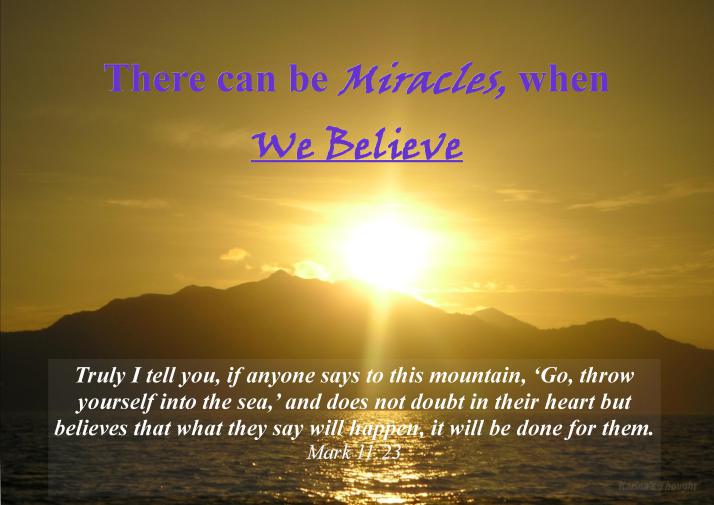
Why are there supposedly less miracles today? Karina from Karina’s Thought provides the answer straight from Jesus’ mouth: unbelief. This is an excellent post that all Christians should read followed by the internal question, “Do I truly believe?”

Karina Lam's avatarKarina's Thought

THERE CAN BE MIRACLES WHEN WE BELIEVE - Karina'sThought

Hello my dear readers! My post this evening inspired by a song that I heard unintentionally when I was in CD music store this afternoon. The song was a movie soundtrack of Prince of Egypt titled “when you believe” There is a part of the song lyric that makes me thinking and ponders something. There is a lyric in the chorus says, “There can be miracles, when you believe”

I am thinking about our life, especially in our Christian life. Belief oftentimes becomes a serious problem. We are really hard to believe when we are talking about God’s miracles. Without we realize God’s miracle often fails to happen not just because God doesn’t care or doesn’t hear our cries, but in fact caused by our doubt or disbelief. There are so many wonderful and amazing God’s promises that are able to provide the salvation assurance and the life full of…

View original post 1,606 more words

Faithfulness

In all out confession I’ve been struggling with my faith and confidence in the Lord. I’ve let worry and stress overtake me, and then I feel awful that my faith wavers so. God has never given me a reason to doubt Him. Rather, when I think about past situations I remember that He’s provided an abundance of reasons to put my hope in Him. More than I deserve, I’m sure. As I’ve been told by the Lord many times through various instances, it’s time for me to grow up. It’s time to be in the world and learn how to function as a Christian among the darkness. It’s time to remember all the words I’ve written on this blog and live and grow in ways I’ve encouraged others to live and grow. As a start to moving forward, I wrote this poem:

Faithful 

I am surrounded by a culture

That loathes my King,

That abhors truth,

That seeks corruption and lawlessness.


Yet I have to be in it

Like all who strive to serve Christ

For it is not the healthy who need healing

But the sick.


To be in the world

I must guard myself

From my sinful nature,

The beast that longs to be set free again.


For Christ has set me free

From sin.

Instead, I have become a slave

To the true Master of all.


Yet the world beckons me to worry,

To fear,

To revert back

To who I once was.


My faith slips,

And I feel ashamed.

How can my confidence in Him be so fragile?

How can I fail my God?


I’ve had faith many times before,

And the Lord never failed me.

Rather, He led me down beautiful paths unknown.

By walking in blind faith I learned to see the truth.


It is time to grow up

And eat spiritual meat,

To be a vessel used

For God’s glory.


I desire to walk in faith again,

To leave the petty worries behind

And remember that the Father has been,

And will always be

Faithful.


Indeed, the Lord is always faithful: It is a trustworthy statement: For if we died with Him, we will also live with Him; If we endure, we will also reign with Him; If we deny Him, He also will deny us; If we are faithless, He remains faithful, for He cannot deny Himself” (2 Timothy 2:11-13 NASB). The Lord is faithful whether I’m faithful or not, but I believe it is a much better journey to have the faith to walk with Him. As another blogger (Unshakable Hope) reminded me today, Therefore we do not lose heart, but though our outer man is decaying, yet our inner man is being renewed day by day. For momentary, light affliction is producing for us an eternal weight of glory far beyond all comparison, while we look not at the things which are seen, but at the things which are not seen; for the things which are seen are temporal, but the things which are not seen are eternal” (2 Corinthians 4:16-18). Sometimes it’s hard to remember that I live for the eternal instead of the temporary, but I must choose this mindset every day. Will it be a struggle? Sure. But I believe it’ll be worth it in the end. 


©Lauren Heiligenthal

What Kind of Tree Are You?

This is a story that has inspired me as I struggle with having faith and confidence in the Lord. I hope it encourages you too. For more encouraging and challenging lessons, check out other posts by Unshakable Hope.

Bill Sweeney's avatarUnshakable Hope

Some might be disappointed, but this is not one of those quizzes like I see posted on Facebook. (There actually is one of those quizzes with this same title, but I didn’t take it because I was afraid that the results would show that I was Charlie Brown’s Christmas Tree).
tree-onlyTen or twelve years ago, let’s just say eleven, Mary and I were shopping at Home Depot. After finishing our shopping in the store, we wandered out to the garden department to look for some small trees. It was November, and most of the plants were marked down because they were making room for Christmas trees.

Mary got hung up looking at wreathes and other boring items, so I cruised my wheelchair over to go look at trees. As it turned out, there were not many trees left, and I didn’t see anything I was interested in. Just when I was…

View original post 542 more words

The Sermon on the Mount: A Message for Jesus’ Disciples- Part 3

Judgment. Not exactly a popular word in the church. Yet this is the topic Jesus talks about next in Matthew 7. I feel like most people want to start and stop in v. 1, “Do not judge so that you will not be judged.” There you have it, folks, the Bible says do not judge! Or does it?

If we read beyond v. 1, we will discover that Jesus gives reasons not to be too hasty to judge. First, by the way I judge others, I will also be judged (v. 2). Does this say that I shouldn’t judge? No. What it does say is to be careful because if I judge harshly, I will also be judged harshly. Second, if I judge others before I recognize and deal with my own sin, I am a hypocrite (vv. 3-4). Notice that vv. 3-4 do not say that we shouldn’t judge; however, we must look at ourselves first before we judge others. Verse 5 clarifies that thought even more, “You hypocrite, first take the log out of your own eye, and then you will see clearly to take the speck out of your brother’s eye.”

Who is the one being judged in these verses? Jesus does not refer to everyone, but refers to one’s brother. Even though the church hasn’t been officially formed yet, I believe that Jesus is talking about other believers. Paul teaches the same thing in 1 Corinthians 5:9-13 after addressing a serious issue of immorality in the Corinthian church:

“I wrote you in my letter not to associate with immoral people; I did not at all mean with the immoral people of this world, or with the covetous and swindlers, or with idolaters, for then you would have to go out of the world. But actually, I wrote to you not to associate with any so-called brother if he is an immoral person, or covetous, or an idolater, or a reviler, or a drunkard, or a swindler—not even to eat with such a one. For what have I to do with judging outsiders? Do you not judge those who are within the church? But those who are outside, God judges. Remove the wicked man from among yourselves.” (NASB)

Seems harsh, but is it? Paul isn’t talking about people who sin and repent. When we repent, we are washed clean. Sins are forgiven and the Father remembers no more. Rather, he’s talking about people who continually sin. They are unrepentant, yet they call themselves Christians. For example, in 1 Corinthians 5 Paul is addressing the church because there is a man who has his father’s wife, and the church has done nothing about it. Paul is angry about that and says in vv. 3-5, “For I, on my part, though absent in body but present in spirit, have already judged him who has so committed this, as though I were present. In the name of our Lord Jesus, when you are assembled, and I with you in spirit, with the power of our Lord Jesus, I have decided to deliver such a one to Satan for the destruction of his flesh, so that his spirit may be saved in the day of the Lord Jesus.” What is the purpose of judgment here? Addressing sin will hopefully lead to repentance and salvation.

Here is another example of judgment with the purpose of helping a fellow Christian:

“Brethren, even if anyone is caught in any trespass, you who are spiritual, restore such a one in a spirit of gentleness; each one looking to yourself, so that you too will not be tempted. Bear one another’s burdens, and thereby fulfill the law of Christ. For if anyone thinks he is something when he is nothing, he deceives himself. But each one must examine his own work, and then he will have reason for boasting in regard to himself alone, and not in regard to another. For each one will bear his own load.” ~ Galatians 6:1-5 (NASB)

Judgment, when used properly, can lead to spiritual growth. It can also weed out the false Christians in the church. Let’s see what Jesus has to say in Matthew 7:15-23:

Beware of the false prophets, who come to you in sheep’s clothing, but inwardly are ravenous wolves. You will know them by their fruits. Grapes are not gathered from thorn bushes nor figs from thistles, are they? So every good tree bears good fruit, but the bad tree bears bad fruit. A good tree cannot produce bad fruit, nor can a bad tree produce good fruit. Every tree that does not bear good fruit is cut down and thrown into the fire. So then, you will know them by their fruits. Not everyone who says to Me, ‘Lord, Lord,’ will enter the kingdom of heaven, but he who does the will of My Father who is in heaven will enter. Many will say to Me on that day, ‘Lord, Lord, did we not prophesy in Your name, and in Your name cast out demons, and in Your name perform many miracles?’ And then I will declare to them, ‘I never knew you; depart from Me, you who practice lawlessness.’”

We should know who true followers of God are because of their fruit. What is good fruit?

But the fruit of the Spirit is love, joy, peace, patience, kindness, goodness, faithfulness, gentleness, self-control; against such things there is no law.” ~ Galatians 5:22-23

People can say all they want. Some may appear righteous–like the Pharisees who had all that knowledge and pomp–but they bear bad fruit and do not follow the Lord’s will. What is bad fruit?

Now the deeds of the flesh are evident, which are: immorality, impurity, sensuality, idolatry, sorcery, enmities, strife, jealousy, outbursts of anger, disputes, dissensions, factions, envying, drunkenness, carousing, and things like these, of which I forewarn you, just as I have forewarned you, that those who practice such things will not inherit the kingdom of God.” ~Galatians 5:19-21

Even worse, false Christians may lead people astray. Here’s some strong words from 2 Peter 2:

But false prophets also arose among the people, just as there will also be false teachers among you, who will secretly introduce destructive heresies, even denying the Master who bought them, bringing swift destruction upon themselves. Many will follow their sensuality, and because of them the way of the truth will be maligned; and in their greed they will exploit you with false words; their judgment from long ago is not idle, and their destruction is not asleep.

For if God did not spare angels when they sinned, but cast them into hell and committed them to pits of darkness, reserved for judgment; and did not spare the ancient world, but preserved Noah, a preacher of righteousness, with seven others, when He brought a flood upon the world of the ungodly; and if He condemned the cities of Sodom and Gomorrah to destruction by reducing them to ashes, having made them an example to those who would live ungodly lives thereafter; and if He rescued righteous Lot, oppressed by the sensual conduct of unprincipled men (for by what he saw and heard that righteous man, while living among them, felt his righteous soul tormented day after day by their lawless deeds), then the Lord knows how to rescue the godly from temptation, and to keep the unrighteous under punishment for the day of judgment, and especially those who indulge the flesh in its corrupt desires and despise authority.

Daring, self-willed, they do not tremble when they revile angelic majesties, whereas angels who are greater in might and power do not bring a reviling judgment against them before the Lord.  But these, like unreasoning animals, born as creatures of instinct to be captured and killed, reviling where they have no knowledge, will in the destruction of those creatures also be destroyed, suffering wrong as the wages of doing wrong. They count it a pleasure to revel in the daytime. They are stains and blemishes, reveling in their deceptions, as they carouse with you, having eyes full of adultery that never cease from sin, enticing unstable souls, having a heart trained in greed, accursed children; forsaking the right way, they have gone astray, having followed the way of Balaam, the son of Beor, who loved the wages of unrighteousness; but he received a rebuke for his own transgression, for a mute donkey, speaking with a voice of a man, restrained the madness of the prophet.

These are springs without water and mists driven by a storm, for whom the black darkness has been reserved. For speaking out arrogant words of vanity they entice by fleshly desires, by sensuality, those who barely escape from the ones who live in error, promising them freedom while they themselves are slaves of corruption; for by what a man is overcome, by this he is enslaved. For if, after they have escaped the defilements of the world by the knowledge of the Lord and Savior Jesus Christ, they are again entangled in them and are overcome, the last state has become worse for them than the first. For it would be better for them not to have known the way of righteousness, than having known it, to turn away from the holy commandment handed on to them. It has happened to them according to the true proverb, ‘A dog returns to its own vomit,’ and, ‘A sow, after washing, returns to wallowing in the mire.’” (Bold print for emphasis)

Jesus also says that before His second coming, “false Christs and false prophets will arise and will show great signs and wonders, so as to mislead, if possible, even the elect. ~ Matthew 24:24

Why must we judge between good and bad fruit? Paul tells the Corinthians in 1 Cor. 5:6-8, “Your boasting is not good. Do you not know that a little leaven leavens the whole lump of dough? Clean out the old leaven so that you may be a new lump, just as you are in fact unleavened. For Christ our Passover also has been sacrificed. Therefore let us celebrate the feast, not with old leaven, nor with the leaven of malice and wickedness, but with the unleavened bread of sincerity and truth.” If we allow even the smallest piece of wickedness to remain in the church, the entire church becomes full wickedness. Scripture is full of warnings to stay away from evil. From Genesis to Revelation, the message does not change: Be holy. Be different from the world and all of its temptations. Show reverence for the Lord God. Live righteously. For our God is a consuming fire (Hebrews 12:29).

If we claim to know and follow truth, why do we not act when there’s wickedness in the church? Why doesn’t it bother us? Why don’t we see the danger in letting the leaven of wickedness permeate the entire church? Why do we let culture dictate what is acceptable?

The idea of judgment is challenging or even uncomfortable because we are taught that we shouldn’t judge. The world preaches tolerance even if something is abhorrent. And the church has chosen to follow this teaching instead of Scripture. When we read Scripture, we learn about grace, forgiveness, mercy, and compassion. But we also learn that there is no tolerance for a person who practices wickedness (1 John 3:4-10). There is a difference between someone who sins and repents and someone who continually sins without repentance. That is why judgment looks different in each circumstance.

In Matthew 7, Jesus warns His disciples to be slow in their judgment toward one another. In the way that I judge someone I should be prepared to receive the same kind of judgment. That thought is humbling. It should make us think before we judge someone. Jesus points His disciples back to themselves first, and since we are also Christ’s disciples, we should first ask ourselves before any kind of judgment, “Do I have sin in my life that I have not asked forgiveness for? Am I walking righteously and in line with God’s will?” Before we can help a fellow Christian with his or her spiritual walk, we better be right with God first. If not, we may be perceived as a hypocrite, or we may fall into temptation when trying to help. Once we are in right-standing with God, we can restore someone in gentleness if they are caught in sin (Gal. 6).

If someone in the church continues to sin without repentance, they need to be removed. The purpose for their removal is so that their wickedness does not permeate the church, and it is also for them to recognize their sin and repent. Our motivation should not be out of malice but for that person to come back to Christ.

Now there are those who actively work against God. They are the wolves in sheep’s clothing. We know them by their fruit, and if this fruit is bad, they must be thrown out. They do not follow God’s will but lead the flock astray. This is not tolerable. Peter says that judgment is already reserved for them.

The people that we shouldn’t judge are those in the world. This doesn’t mean that we should be ignorant or walk into wickedness. This also doesn’t mean that we accept what they do. We judge the church because the church knows the truth. We should know better. We do not judge the world because the world doesn’t know the truth. As Jesus and Paul indicate, disciples are supposed to be in the world as witnesses of the gospel. Paul makes it clear that God judges non-Christians. But we should be able to determine the good and bad fruit amongst the body of Christ.

Even though “judgment” isn’t the only message in Matthew 7 I believe it is important for the church to understand. We are accountable for what we let into our lives. If we don’t judge between good and bad fruit, we will suffer spiritually. We may possibly face God’s wrath for not seeing what should be obvious and acting upon it.

Judgment is not something to take lightly. In truth, it should direct us to ourselves first. But it also isn’t evil if our motives are in line with God’s will. The Word teaches us to always be ready for Christ’s return. Part of being ready is judging what is good and evil so that we may not be lead astray. And what better way for the enemy to lead Christ’s bride astray than to do it from within the body of Christ.

The Sermon on the Mount- Part 1

The Sermon on the Mount- Part 2

©Lauren Heiligenthal


The Sermon on the Mount: A Message for Jesus’ Disciples- Part 2

In my last blog about the Sermon on the Mount, I highlighted a few important details from Matthew 5:

• The context of Matthew 5-7 is Jesus speaking to His disciples (more than the chosen 12)
• Jesus is not changing the Law. Jesus is God. He understands the Law better than anyone else. Following the Law isn’t just about following the letter, but about paying attention to one’s motives.
• Jesus instructs His followers to be different from the world which includes being different from the religious leaders of His day. They may appear righteous, but their actions do not honor God.
• Disciples are called to be in the world as lights to the nations.

In Matthew 6, Jesus continues His teaching with a warning:

“Beware of practicing your righteousness before men to be noticed by them; otherwise you have no reward with your Father who is in heaven.” ~ Matthew 6:1 (NASB)

He further explains how His disciples are supposed to be different from religious hypocrites by using three examples: almsgiving, prayer, and fasting. Jesus initially instructs His disciples about what not to do. When someone gives to the poor, he shouldn’t make a spectacle of it (Matt. 6:2). What would be a person’s motive for doing so? To be honored by men. Jesus explains that since he wants to be honored by men, he already has his reward- an instant, temporary, human-centered reward. In contrast, Jesus conveys that one’s giving should be done in secret, and in this case, it is the Father who sees and gives a reward. It may not be an instant reward, but it is eternal and God-centered. What is this person’s motive for acting in secret? To honor God.

Sometimes I think there’s too much of a spectacle made with giving. Maybe we feel like we have to share what we’ve done for God so that people will know that we’re being good Christians. The Pharisees acted this way, and Jesus was not pleased with them (that’s putting it lightly). It doesn’t matter if anyone else knows what we’ve given because the Father does. He knows our actions and motivations. Our reward either comes from Him or from man. Not all sharing is bad, but it’s important to ask ourselves, “What’s my motive in sharing this information or presenting my gift in this way? Does it honor God? Do I feel like I have to give an account of my actions in order to be perceived a certain way?”

The next example is about prayer. Jesus tells His disciples to not be like the hypocrites who stand in obvious places to be heard and seen by men when they pray. Again, some of the religious leaders of Jesus’ day liked to make themselves known (and maybe not just back then…). Jesus demonstrates the importance of one’s motivation and humility in prayer in Luke 18:10-14:

“Two men went up into the temple to pray, one a Pharisee and the other a tax collector. The Pharisee stood and was praying this to himself: ‘God, I thank You that I am not like other people: swindlers, unjust, adulterers, or even like this tax collector. I fast twice a week; I pay tithes of all that I get.’ But the tax collector, standing some distance away, was even unwilling to lift up his eyes to heaven, but was beating his breast, saying, ‘God, be merciful to me, the sinner!’ I tell you, this man went to his house justified rather than the other; for everyone who exalts himself will be humbled, but he who humbles himself will be exalted.”

In Matthew 6:6 Jesus instructs His disciples to go pray in secret. The Father sees what is done in secret, and He will give a reward. Is it wrong to pray in a group setting? No, I don’t believe so. But no one should make a spectacle of himself, for he is only exalting himself, not God. Jesus not only makes an example of the Pharisees and scribes, but also of the Gentiles. He conveys to His disciples that they shouldn’t pray with meaningless repetition like the Gentiles in order to be heard by God. And this is the beautiful reason why: “for your Father knows what you need before you ask Him” (Matt. 6:8).

I wrote a paper for one of my Greek courses about this particular passage. One of the questions I researched was “What does ‘use meaningless repetition’ mean, and why is it significant for the context of prayer in Matthew 6? Georg Strecker provides a concise, clear explanation that I believe fits with the context:

“In the present context, the verb (the Greek verb for ‘use meaningless repetition’) is characterized by πολυλογίᾳ (many words), so that the NEB translation ‘go babbling on’ is appropriate. The point is that the Gentile practice of prayer is characterized by garrulous speech. Exactly what is covered thereby can only be guessed: perhaps the recitation of countless names of the ancient pantheon or incantation formulas that turn prayer into a magical art with which one seeks to control the deity. In any case, our example presupposes that the many petitionary words of the Gentiles are brought forth out of uncertainty as to whether one’s prayer will be heard at all. Contrasted with this is the confidence of the believing community: anyone who places his trust in the power and goodness of God knows that the heavenly Father cares for his children beyond all asking and understanding. Such trust is the right presupposition for praying the Lord’s Prayer.” (Words in parentheses added for explanation)

Jesus is telling His disciples to trust in the Father and to honor Him by not exalting themselves. They should also have confidence that He hears them when they pray because He already knows what they need. Sounds so simple, right? We don’t need to repeat words and phrases over and over to be more spiritual or for God to hear us. If we are in right-standing with Him, He hears as soon as we say, “Father…” This is why Jesus provides what we have named the Lord’s Prayer. It’s a simple prayer that recognizes who the Father is, addresses the importance of His (not our) will being carried out, demonstrates confidence that the Lord will provide what we need, and indicates the necessity of asking the Lord for forgiveness whenever we pray. In the context of this prayer Jesus also warns that if we do not forgive others, the Lord will not forgive us. We have all been shown God’s grace and mercy. To receive that from the Lord but not offer it to another person is unacceptable to God.

The final example is fasting. There are a number of different views, books, programs, etc. on fasting. One teaching I have held onto about fasting is that no one should know I am fasting except the people that absolutely have to know. Jesus teaches that His disciples should not make it appear as though they are fasting. Some of the religious leaders in His day would change their demeanor and appearance to demonstrate their fasting to others. As with almsgiving and prayer, such people already receive their reward from men, not God. In contrast, Jesus’ disciples should clean themselves up and make an effort to not look like they’re fasting. Again, what is done is secret is noticed by the Father, and He will give a reward.

After reading through these three examples, I believe Jesus’ teaching can be summed up in two commands: 1) Honor God and 2) Trust Him.

To drive these points home even further, Jesus says in vv. 19-21:

“Do not store up for yourselves treasures on earth, where moth and rust destroy, and where thieves break in and steal. But store up for yourselves treasures in heaven, where neither moth nor rust destroys, and where thieves do not break in or steal; for where your treasure is, there your heart will be also.”

I don’t believe these verses represent a new thought, but rather, a continuation from what Jesus has already been teaching. What is important to us? Earthly, temporary treasures or heavenly, eternal ones? Who is more important to us? People and their approval, or the Father and His approval? And as Jesus conveys in vv. 22-23, are we full of light or darkness? Even if there’s a little darkness, then we’re full of darkness! There is no middle ground with Jesus. We either serve God or the world, which is where v. 24 comes in:

“No one can serve two masters; for either he will hate the one and love the other, or he will be devoted to one and despise the other. You cannot serve God and wealth.” ~ Matt. 6:24

This passage isn’t saying that having wealth is bad despite what some people might teach. What it is saying is that we can only serve one or the other. Wealth should not dominate our lives. Our service is to God, and vv. 25-34 explain that if we choose to serve the Lord, He will take care of our needs. This coincides with Jesus’ teaching in v. 8 about having confidence in the Father. There’s no need to place wealth or anything else above God in order to survive this life. Rather, the Father should come first because He already knows what we need! Think about Jesus’ disciples. Many of them have left their livelihoods at this point (We learn about this when Jesus calls the chosen 12). It seems like they’re getting worried about how to live, but Jesus says, “Look at the birds of the air, that they do not sow, nor reap nor gather into barns, and yet your heavenly Father feeds them. Are you not worth much more than they?” (v. 26). He further shares that God clothes the grass of the field even though it is so quickly destroyed. Will He not take care of us even more so? Therefore, we should not worry about food, drink, or clothing. Jesus explains that the Gentiles (or the world) seek these same things, but the Father already knows we need them. That’s three times now that Jesus’ disciples have been reassured of the Father’s provisions if–and here’s the caveat–they “seek first His kingdom and His righteousness, and all these things will be added to you” (v. 33). This verse refers back to everything Jesus just said. What kind of righteousness will we practice (Matt. 6:1-23)? Who will we serve (v. 24)? Will we seek God’s kingdom or the kingdom of this world for temporary gain?

As disciples, we will go through trials. There will be times when everything seems hopeless. But if we take to heart and practice Jesus’ simple instructions, we have nothing to fear. Our trust is in the Lord; therefore we should not worry about tomorrow (v. 34).

After reading Jesus’ teaching to His disciples so far, we may want to ask ourselves the following:

• What is my motive for doing _________?
• Am I honoring God or myself with my actions?
• Am I confident that the Lord hears me?
• Am I willing to trust God to take care of my needs?
• Is there anything keeping me from seeking the Lord’s kingdom and His righteousness?
• Am I trying to serve two masters?

More lessons and questions to come from Matthew 7.

©Lauren Heiligenthal

A Simple Hello

I love this story shared by Stuart M. Perkins (storyshucker.wordpress.com). Maybe you’re one to meet and greet everybody, or maybe you keep to yourself most of the time, but this story is a reminder of how a simple greeting could be the start of a new friendship. What kind of difference could we make if we took more of an interest in the people around us? Maybe there wouldn’t be so many strangers after all…

Stuart M. Perkins's avatarStoryshucker

The evening commute home was a scramble as people rushed and crushed onto the train fighting for a place to sit or stand.  A last-minute couple pushed through the door dropping tourist maps in their haste. Forced by the crowd to split up, the man went one way and the woman another.

The woman sat down in the last vacant seat next to where I stood and began to refold maps. Beside her sat a well-dressed business woman who appeared to read something work-related even after a day at the office. The two glanced briefly at each other, said nothing, and went back to their tasks of reading and map folding.

Things calmed as the train doors shut and people settled into seats or places to stand. As we waited for the train to depart, only the rustling of newspapers or the occasional ring of a cell phone could be heard…

View original post 489 more words

Tend the Garden

A wonderful, thought-provoking story. Sometimes we dismiss people because they seem hopeless. Maybe they’re caught up with the wrong crowd, or they’re misbehaving in some way. Maybe their deeds have led to some disastrous situations. But if no one takes the time to reach out to them, what gift will we be missing? Perhaps they are meant to impact others’ lives one day. Although Stuart M. Perkins’ story may not be about Christ, I couldn’t help but think about our Savior’s desire to seek out the lost and bring them into His fold. Is this not what we are to do too?

Stuart M. Perkins's avatarStoryshucker

A longtime friend commented during dinner that her next door neighbor’s son was on the path to nowhere and constantly in trouble. She thought herself clever referring to him as “a weed in the garden of life”. Although an avid fan of barbed words and wit, I found her comment harsh directed at a kid who was barely a teenager. He was dismissed and labeled as worthless. A weed.

“But maybe he’s a pokeweed!” I said in a positive tone.

She rolled her eyes. I recognized the look of resignation on her face. The look many of my friends have when I spit out a puzzling one-liner and they know a story is coming. She sipped her drink and grinned, arms crossed in silent permission for me to proceed.

Years ago I had a yard packed with plants. It was full of boxwoods, azaleas, and geraniums surrounding a dogwood centerpiece…

View original post 611 more words

Celebrating New Life

How can I ever express how grateful I am for Christ’s sacrifice? Nothing I say seems like enough, yet Jesus simply says, “Follow Me.” In John 17 Jesus prays for His disciples before He’s betrayed. He’s always thinking about His creation. Always asking the Father on our behalf. Because He loves us tremendously! The greatest act I could ever do to express my gratitude is to live my life like Christ and follow His truth:

This is the message we have heard from Him and announce to you, that God is Light, and in Him there is no darkness at all. If we say that we have fellowship with Him and yet walk in the darkness, we lie and do not practice the truth; but if we walk in the Light as He Himself is in the Light, we have fellowship with one another, and the blood of Jesus His Son cleanses us from all sin. If we say that we have no sin, we are deceiving ourselves and the truth is not in us. If we confess our sins, He is faithful and righteous to forgive us our sins and to cleanse us from all unrighteousness. If we say that we have not sinned, we make Him a liar and His word is not in us.” ~ 1 John 1:5-10 NASB

Beloved, let us love one another, for love is from God; and everyone who loves is born of God and knows God. The one who does not love does not know God, for God is love. By this the love of God was manifested in us, that God has sent His only begotten Son into the world so that we might live through Him. In this is love, not that we loved God, but that He loved us and sent His Son to be the propitiation for our sins. Beloved, if God so loved us, we also ought to love one another. No one has seen God at any time; if we love one another, God abides in us, and His love is perfected in us. By this we know that we abide in Him and He in us, because He has given us of His Spirit. We have seen and testify that the Father has sent the Son to be the Savior of the world.”~ 1 John 4:7-14

Whoever believes that Jesus is the Christ is born of God, and whoever loves the Father loves the child born of Him. By this we know that we love the children of God, when we love God and observe His commandments. For this is the love of God, that we keep His commandments; and His commandments are not burdensome. For whatever is born of God overcomes the world; and this is the victory that has overcome the world—our faith. Who is the one who overcomes the world, but he who believes that Jesus is the Son of God? This is the One who came by water and blood, Jesus Christ; not with the water only, but with the water and with the blood. It is the Spirit who testifies, because the Spirit is the truth. For there are three that testify: the Spirit and the water and the blood; and the three are in agreement. If we receive the testimony of men, the testimony of God is greater; for the testimony of God is this, that He has testified concerning His Son. The one who believes in the Son of God has the testimony in himself; the one who does not believe God has made Him a liar, because he has not believed in the testimony that God has given concerning His Son. And the testimony is this, that God has given us eternal life, and this life is in His Son. He who has the Son has the life; he who does not have the Son of God does not have the life.” ~ 1 John 5:1-12

Simple, straightforward, wonderful truth! In the Son we have life and only through Him.

Below is a poem I’ve posted before, but I’d like to share it again as a testament to Christ’s great love for us. May we follow Him wholeheartedly today and remember the cost of having our sins washed away.

Beauty

Beauty is not characterized

by the efforts of my appearance,

but was borne upon two wooden beams

and through three piercing nails.


With each drive of a nail

faces line up in the mind of the Savior,

one after another,

each with a mask of his own:

deception, shame, pride.


With each tear being shed

and every cry screaming from the cross,

women fall into the arms of men,

hoping to find true love and longing to hear

“You are beautiful.”


With each dig from the thorns

and tearing of flesh,

men seek fortune and fame,

believing that power can only be obtained through ambition and violence.


“It is finished.”

The world with its

tainted love and enticing roads to death

stands still.


Divine blood pours over

the lost and broken,

vain and deceptive,

young and aged.


It penetrates every evil,

wipes off each mask,

exposes truth

and defines true love.


This beauty can only be found

through such brokenness,

through such sacrifice,

with the invitation of accepting it for myself.


Beauty is the power of Your love

that flows through my veins

and enraptures all of who You are

in me.


©Lauren Heiligenthal